The one thing you cannot buy later.
Japan is a country where a foreign family walks into a hospital as a full-fee paying patient, at full price, usually paying on the spot. Most families never need to test that. The ones who do are almost never the ones who planned for something dramatic. It is a kid with a temperature on day three, or a cancelled trip nobody saw coming.
This is what we bought, and how to sort it out if you are travelling from somewhere other than Australia.
Free ambulance. Very unfree hospital.
Japan has no reciprocal healthcare agreement with Australia, the United States, the United Kingdom or Canada. A Japanese resident pays a fraction of their medical bill because the national system carries the rest. A visiting family pays all of it.
The quirk everyone finds surprising is that calling an ambulance is free, for visitors as much as residents. That is genuinely reassuring, right up until you remember the treatment at the other end is billed in full. Hospitals commonly ask a foreign patient to settle up front, sometimes before treatment and often in cash, and travel insurance works by reimbursing you afterwards rather than paying the hospital directly.
So the practical shape of this is simple. You want cover with a serious medical and evacuation limit, a card with real headroom on it, and your insurer's 24 hour assistance number saved in your phone before you fly. That number is the one that can sometimes arrange a payment guarantee with the hospital so you are not funding an emergency out of your own account.
We used Tick.
Tick is an Australian travel insurance brand. Worth knowing who you are actually dealing with. The policy is issued, distributed and administered by Europ Assistance Australia Pty Ltd (AFSL 552106), which is part of the Generali group. If you are reading this from outside Australia, you cannot buy it, so skip ahead to your own country below.
The reason we rate it for a family trip is the medical cover. Overseas medical, surgical, hospital, repatriation and ambulance costs are all unlimited, and that applies on every level of cover including the cheapest one. Given the whole point of insuring a Japan trip is the hospital bill, starting from unlimited is a good place to be. Dental is capped at $500 across the board, which is worth knowing before someone chips a tooth on a ski day.
Where the levels genuinely differ is cancellation and luggage, and the age limit on the cheaper tiers is lower than people expect.
| Level | Overseas medical | Cancellation | Baggage | Age limit |
|---|---|---|---|---|
| Basic | Unlimited | Nil | $2,000 | 69 or under |
| Budget | Unlimited | $5,000 | $2,500 | 79 or under |
| Standard | Unlimited | $10,000 | $5,000 | 100 or under |
| Top | Unlimited | $20,000 | $7,500 | 100 or under |
Figures are per insured person per trip, in Australian dollars, taken from the Single-Trip Product Disclosure Statement effective 1 April 2026. Sums insured and terms change, so check the current PDS before you buy rather than trusting a table on a travel blog, including ours.
On kids, and the bit worth reading twice
Financially dependent children and grandchildren are covered on a family policy if they are under 18 when you apply, and any dependant under 16 has to be supervised by an adult on the trip. Two things to watch. A pre-existing condition on a child can still attract an extra premium even though the cover itself is free, and pre-existing conditions are only assessed at all on the Standard and Top levels. The Basic and Budget tiers do not cover them.
Six gaps worth five minutes.
- I
The claim you are most likely to make is a sick kid
Not a dramatic accident. A temperature that will not shift, an ear infection, a stomach bug halfway through a food trip. Japanese clinics are excellent and everywhere, but you are a full-fee patient and you generally pay on the spot, then claim it back. Keep every receipt, and get the diagnosis written down before you leave the clinic, because a claim without paperwork is a claim you will lose.
- II
Cancellation is the money you are really protecting
The biggest number at risk on a family trip is usually not a hospital bill, it is the flights and accommodation you have already paid for when someone gets sick a week before you fly. Cancellation cover only protects what you could still lose after the policy starts, so a policy bought the week of departure protects almost nothing. This is the single strongest argument for buying early.
- III
Bags, cameras and consoles have their own small limits
Baggage cover sounds generous until you read the sub-limits. Electronics are usually capped well below the headline figure, and there is often a separate single-item limit that a decent camera or a laptop will blow straight through. If your family travels with real gear, check the electronics sub-limit rather than the big number on the front page.
- IV
Typhoons and earthquakes, and the known-event trap
Japan gets typhoons from roughly June to October and earthquakes year-round. Natural disaster cover is a separate paid upgrade on plenty of policies. More importantly, almost every insurer excludes an event that was already known when you bought. Once a storm has a name, it is too late. Buy the day you book, not the week you fly.
- V
The excess is charged per person, per section
This is the one that surprises families. An excess is generally applied per section of the policy, per person, per event. A single incident that hits three people and two sections of cover can trigger the excess several times over, not once. Check whether an excess waiver is worth it for a family of four.
- VI
Free kids cover has an age cut-off, and they are all different
Most family policies cover dependent children at no extra cost, but the definition varies a lot. Under 18 is common, some go to 20, some stop at 19. Children usually have to be financially dependent, named on the policy and travelling with you. A pre-existing condition on a child can still attract a premium even where the cover itself is free.
The one line version
Buy it the day you book, not the week you fly. Read the excess. Check the age cut-off for your kids. Add snow cover only if snow is actually on the itinerary.
Two very different trips.
Almost everything above applies to any Japan trip. The one place families genuinely need a different policy is snow, so here is the split. If there is no skiing on your itinerary, the left column is your whole job.
A city and culture trip
Tokyo, Kyoto, Osaka, the theme parks, the shinkansen between them. This is what most Japan family trips look like and a standard policy covers it.
- Medical cover is the part that matters. Check the limit and that it includes getting you home.
- Buy early so cancellation actually protects your flights and accommodation.
- Theme park rides are not usually treated as a hazardous activity, but the hazardous-activities list is worth a skim before you assume.
- Check the electronics sub-limit if you are carrying a camera, a laptop or the kids’ consoles.
- Travelling in typhoon season means natural disaster cover is worth pricing.
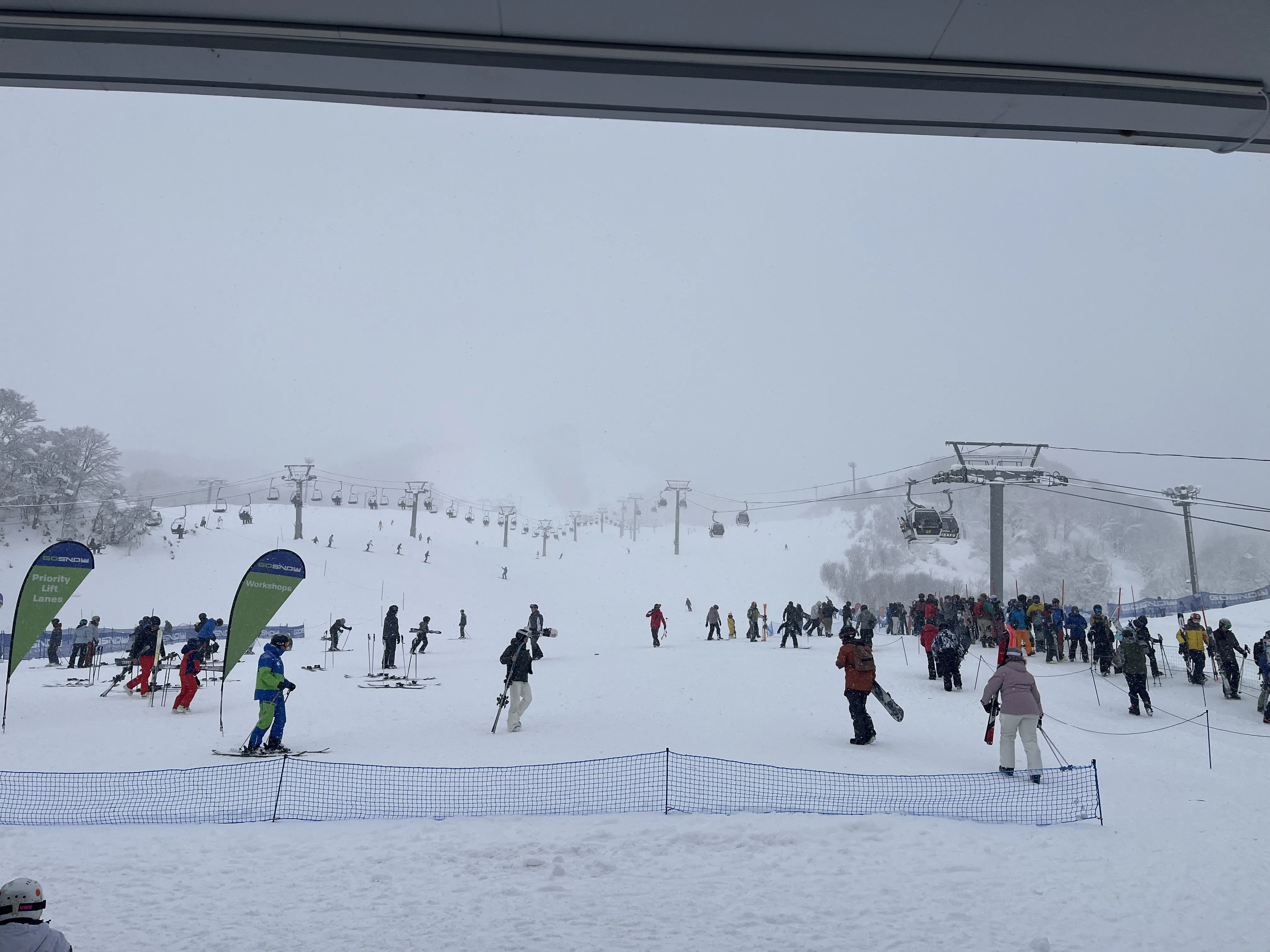
A trip with snow in it
Niseko, Hakuba, Nozawa, even a single lesson day tacked onto a city trip. This is where standard policies stop working.
- Winter sports is a paid add-on almost everywhere. Without it, a snow claim is simply not covered.
- Off-piste is a separate step again. On Tick’s policy it is covered only with a professional instructor or guide, and excluded without one.
- Terrain parks, freestyle and racing, including training, are commonly excluded outright. Worth knowing if your kids head for the fun park.
- One lesson counts. If anyone clips on skis at any point, you need the add-on for the whole trip.
- Helmets are a condition of cover on some policies, not a suggestion.
Sorting it from your side of the world.
Tick only sells to Australians, so here is the honest version for everyone else. We have named insurers whose family terms we could read directly on their own websites, and we have said so plainly where we could not. None of the links in this section are affiliate links and we earn nothing from any insurer named below. Quote at least two, and read the winter sports wording if you are going anywhere near snow.
United States
米Your domestic health plan almost certainly does not follow you to Japan, and Medicare does not cover care overseas at all. The US market is comparison-shopped, so Squaremouth and InsureMyTrip are the usual starting points rather than going direct.
What to watch. Ask whether the medical cover is primary or secondary. Secondary cover makes you claim on your home health plan first, which is slow and pointless if that plan covers nothing abroad anyway.
- AIG Travel Guard
One child aged 17 or under is included in the rate for each paying adult on the Deluxe, Preferred and Essential plans. The catch to check is that the child’s trip cost has to be equal to or less than the adult’s.
- Travelex
Their Ultimate plan includes one traveller aged 17 or under free per insured adult, and is the one to look at for a big medical limit, with $250,000 emergency medical written as primary cover, plus $1,000,000 medical evacuation. The cheaper Advantage and Essential plans do not include kids.
Also worth a quote. Also worth quoting. We could not read their current family terms on their own sites, so get the numbers from them rather than from us.
Compare across insurers. Most US families shop these through a comparison marketplace rather than going direct. Same price either way.
Canada
加Your provincial health plan is close to useless abroad. British Columbia, for example, reimburses emergency hospital care outside Canada at a fixed daily rate that is a tiny fraction of a real hospital bill. The Government of Canada advises travellers to Japan to carry cover that includes hospital stays and medical evacuation.
What to watch. Credit card travel cover is unusually common in Canada and is genuinely useful, but check the stability clause on pre-existing conditions. A recently changed medication or a newly investigated symptom can quietly void it, and that is one of the most common reasons a claim gets knocked back.
- TuGo
Runs a Family and Friends plan covering two adults aged 59 or under travelling with up to six dependent children. Ask them directly for the medical limit and the child pricing.
Also worth a quote. The other established Canadian options, worth quoting alongside TuGo. Both keep the detail behind a quote form, so we are not going to put numbers in their mouths.
United Kingdom
英The single most useful thing to know is that your GHIC or EHIC card does nothing in Japan. It covers the EU and EEA, not Asia. The FCDO simply advises appropriate travel insurance covering your itinerary and planned activities.
What to watch. If your travel insurance comes bundled with a packaged bank account, read it before you rely on it. The FCA has found real problems with how those policies were sold, particularly around pre-existing conditions and age limits that were never explained.
- AllClear
A family policy takes up to two adults and up to eight children, all of whom must be under 18, and there is no upper age limit on the adults. Their Gold, Gold Plus and Platinum policies carry a Which? Best Buy.
- Post Office
Children under 18 with no pre-existing conditions travel free, and single parents can take a family policy. Emergency medical runs to £5m, £10m and £15m across Economy, Standard and Premier. Note their own wording, which says specialist cover is mandatory for skiing and snowboarding.
Also worth a quote. The other mainstream UK name worth a quote for a family policy. We could not verify their current family terms directly, so treat it as a lead rather than a recommendation.
New Zealand
新A big Japan ski market, so the snow question matters more here than almost anywhere. Every major NZ insurer treats winter sports as a paid add-on, and they draw the on-piste and off-piste line differently.
What to watch. If you are heading through the Niseko gates, the level of snow cover you buy is the whole ballgame. One tier of cover for groomed runs is not the same as cover for the terrain beyond the boundary.
- Southern Cross
The clearest kids deal of the group, with no extra cost for dependent children aged 20 and under who are on your policy and not in full-time work. Their ski option is a paid add-on covering on-piste skiing, with off-piste excluded and a helmet required.
- Cover-More
Sells snow cover at two levels, and the higher Snow Sports+ tier is the one that adds off-piste and guided heli trips. Accompanying children need to be under 21, financially dependent and on the same itinerary.
- 1Cover
Their Winter Sports Pack sits on the Comprehensive policy and covers on-piste plus a short distance beyond the resort boundary on patrolled, groomed terrain. Backcountry is excluded. Watch the dependant age, which stops at under 19, lower than their rivals.
Singapore
星One of the biggest Japan travel markets in the region, and one where family policies tend to be generous on the number of children.
What to watch. Check how the policy treats leisure activities. Some Singapore insurers fold winter sports into their standard terms, while others only cover them on the higher tiers, which is a real difference for a ski trip.
- Income
The most family-friendly structure we found, covering one or two adults plus any number of their children on the same policy, with children under 21. Their own product page lists winter sports among the activities covered in the standard policy terms, which is unusual and worth having for a snow trip.
- MSIG
The TravelEasy family plan covers a couple and up to five children, aged above one month and below 23, with under-12s needing to be accompanied. Adventurous activities cover sits on the Elite and Premier tiers, so check the wording for your specific activity before assuming a ski day is included.
Also worth a quote. The other well-known Singapore option, worth a quote. Their family terms were not readable on their own site when we checked, so confirm the child age limits with them.
Do I actually need travel insurance for Japan?
It is not required to enter the country, but there is no reciprocal healthcare agreement between Japan and Australia, the US, the UK or Canada. That means you are a full-fee paying patient. Japanese hospitals commonly expect a foreign visitor to pay upfront, and travel insurance is reimbursement-based rather than something the hospital bills directly.
Are ambulances free in Japan?
The ambulance itself is widely reported to be free, for visitors as well as residents, which surprises most people. The treatment waiting at the other end is not. Do not let the free ride talk you out of cover.
We are not going near snow. Does any of this change?
It gets simpler. Skip the winter sports add-on entirely and put the attention on the parts that apply to every trip. That means a medical limit that includes getting you home, buying early enough that cancellation cover is worth something, the excess structure for a family, and the age cut-off for free child cover. Most Japan family trips are cities, food and trains, and a standard policy handles that.
Are theme park days covered?
Standard rides at places like Tokyo Disneyland and Universal Studios Japan are not usually treated as hazardous activities the way skiing or diving are, so an ordinary policy generally covers a park day. Policies define this in their own hazardous-activities list though, so have a quick look at that list rather than assuming.
Does normal travel insurance cover skiing in Niseko?
Usually not on its own. Winter sports is a paid add-on with most insurers, and off-piste terrain is often a separate step above that again. Niseko’s gated backcountry is exactly the terrain that standard snow cover tends to exclude, so read the winter sports wording rather than assuming.
When should I buy the policy?
The day you book, not the week you fly. Cancellation cover only protects money you might lose after the policy starts, and natural disaster claims are typically excluded if the event was already known when you bought. During typhoon season that timing gap is the difference between a paid claim and a declined one.
Are the kids covered for free?
On most family policies, dependent children are included at no extra cost, but every insurer draws the line somewhere different. Under 18 is the most common cut-off, some go to 20 or 21, and at least one stops at 19. Children generally need to be financially dependent and travelling with you, and a child’s pre-existing condition can still affect the price.
What about earthquakes and typhoons?
Japan is earthquake and typhoon country, and some policies sell natural disaster cover as an upgrade rather than including it. The critical rule everywhere is the known event exclusion. Once a storm is named or an event has started, cover bought after that point will not respond to it.
General advice warning
This page is general information only. It does not take into account your objectives, financial situation or needs, and it is not personal financial or insurance advice. We are a travel family, not licensed advisers.
Cover, limits, exclusions and prices change. Before buying any policy, read the current Product Disclosure Statement, policy wording or equivalent document from the insurer, and consider whether it is right for your family. If you are not sure, speak to a licensed adviser or broker in your own country.
Being straight about the money, our link to Tick is an affiliate link, so if you buy a Tick policy through this page we earn a commission at no extra cost to you. We are not paid by any of the other insurers named here, and none of the overseas providers are affiliate links. We chose Tick because we used it, and the details we have published about it come from its Product Disclosure Statement, not its marketing. More in our affiliate disclosure. Product details were last reviewed in August 2026.
Plan it the way we would.
We planned this trip ourselves, paid for it ourselves, and wrote down what worked and what did not. All of it is on the site, free, with nothing to sign up for.
- Where to go, and how long to give each place
- What to book ahead, and what to skip
- Getting around with kids, without the guesswork
- What it actually cost us
The planning guides
Flights, trains, money, food, insurance and where to stay. Written after the trip, not before it.
Read the guides → Browse destinations