Getting around was the easy part.
No rental car, no tour bus. We crossed the country on trains, tapped through the gates with IC cards, and here is exactly how we moved a family of four around Japan.
Worried about the trains? Don't be.
The thing people warn you about, those tangled Tokyo subway maps, turned out to be a non-event. The Shinkansen put Kyoto two hours from Tokyo.
We never hired a car. Once you have the rhythm of it, moving around becomes part of the fun rather than the hard bit.
Booking the trains. Shinkansen seats, regional rail passes and IC cards can all be sorted before you fly, which is worth doing for the reserved seats alone when you are travelling with kids and luggage.
- The trains go everywhere
- Fast, frequent, spotless and almost always on time. You can reach most of the country without ever needing a car.
- One card does it all
- A Suica or Pasmo IC card taps you onto trains, subways and buses, and buys drinks from the machines too. No fumbling for tickets.
- It is built for families
- Lifts and escalators at the big stations, priority seats, quiet carriages, and station staff who will point you the right way.
- You do not need the language
- Signs and announcements are in English on every line that matters, and Google Maps tells you the platform and the carriage.
The daily workhorse.
Subways and JR lines did almost all the heavy lifting. Trains every few minutes, and carriages clean enough to eat off.
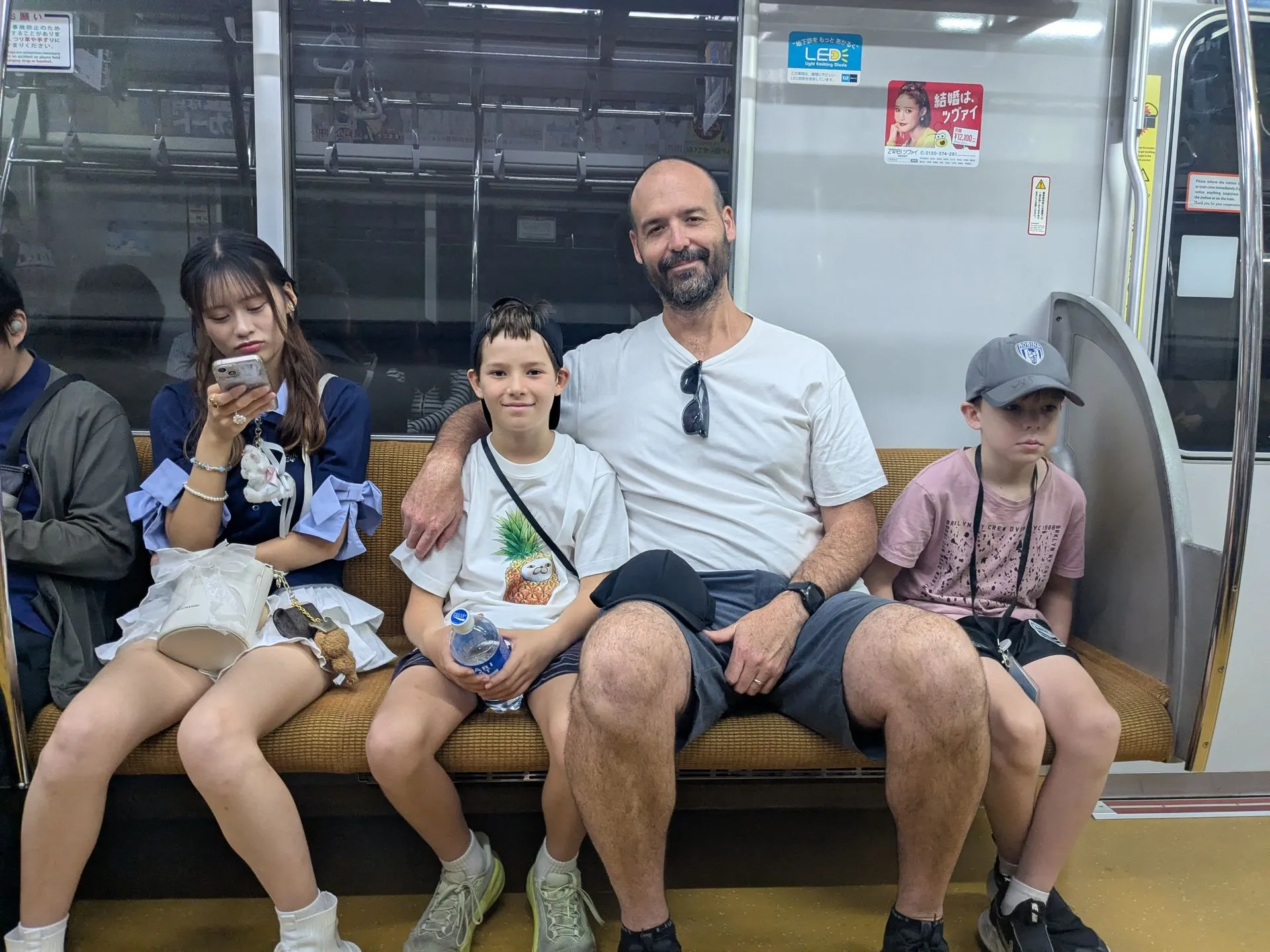
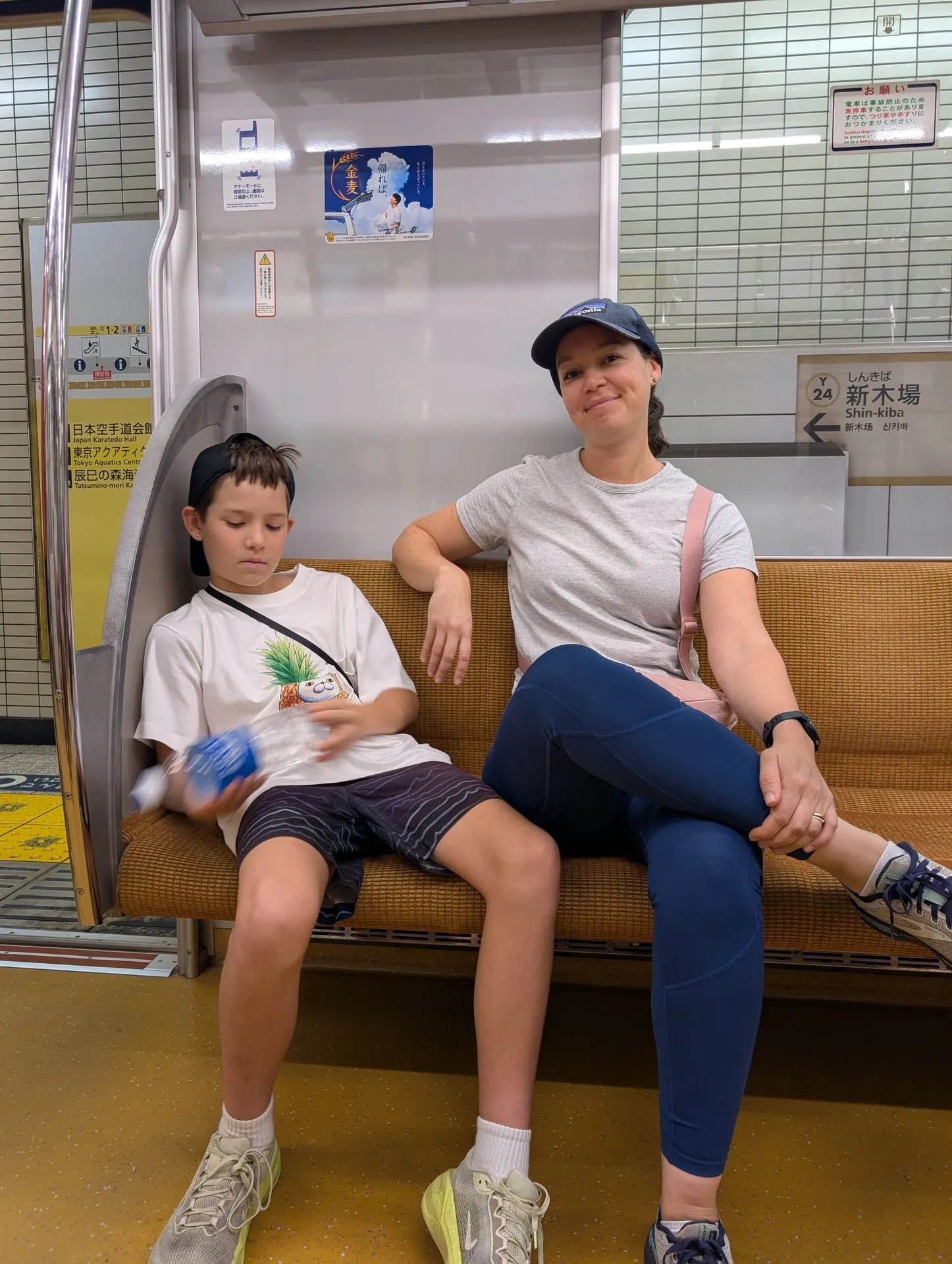
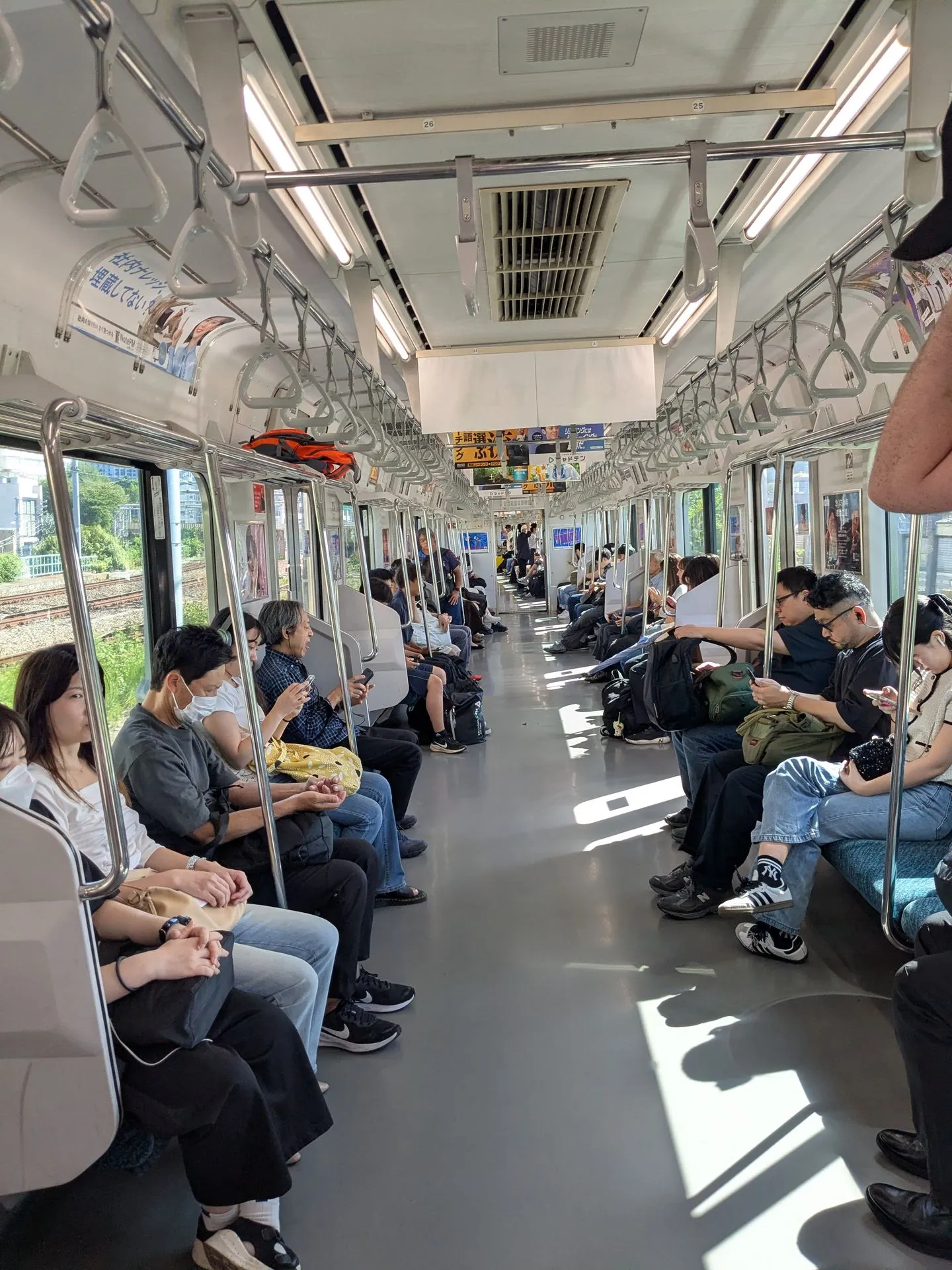
Easy, once you know the carriage bit.
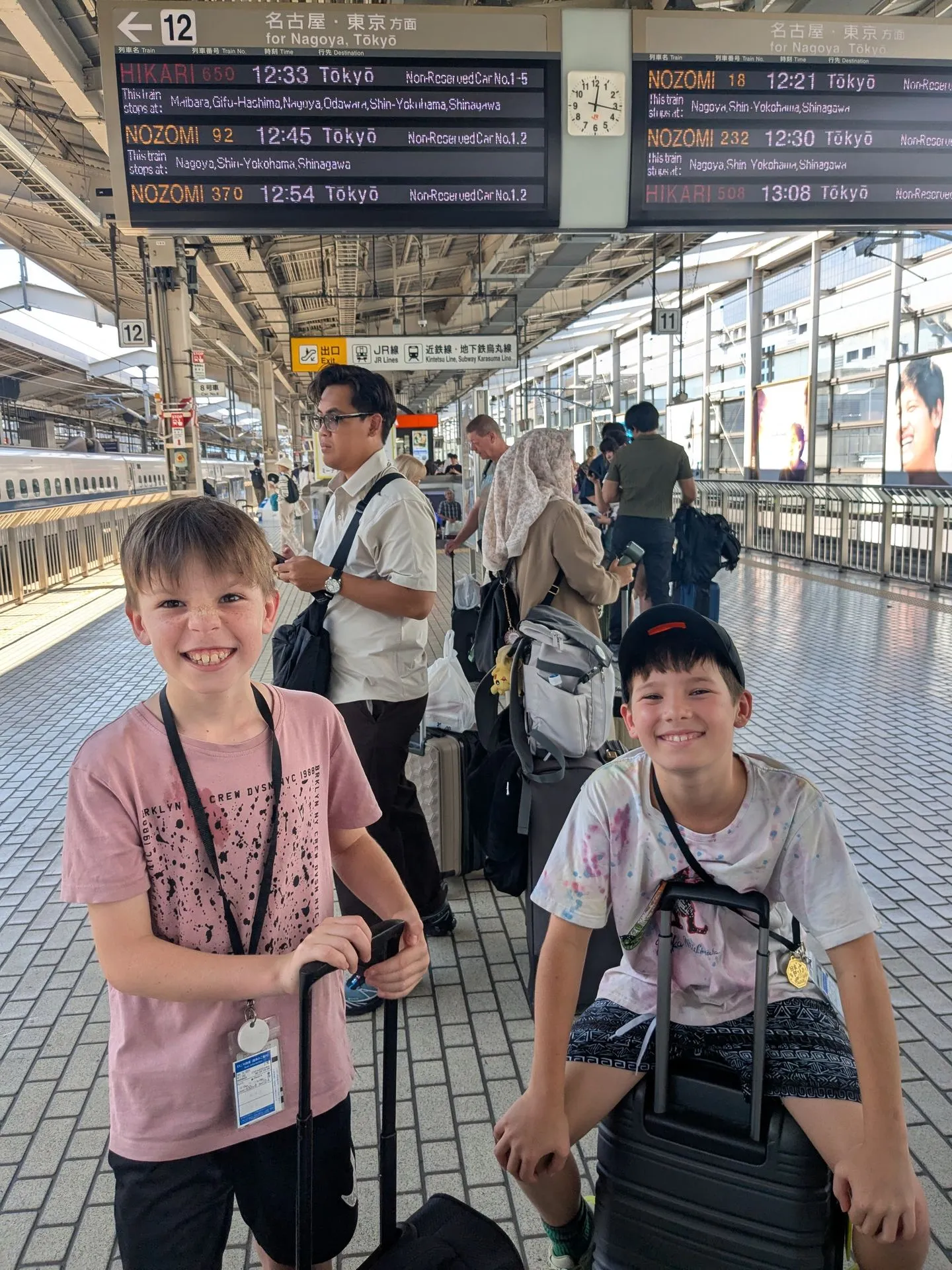
The bullet train is the least stressful part of moving a family around Japan, with one exception nobody warns you about. Your seats are in a specific carriage, and the platform is marked with where each carriage will stop. That goes for any train with reserved seats, not just the Shinkansen. We learned it on the Romancecar from Odawara to Shinjuku. We very nearly missed the train, and once aboard realised we were in carriage 6 when we were booked into carriage 1. Check the number on your ticket, find the matching mark on the platform, and stand there.
Your carriage number matters
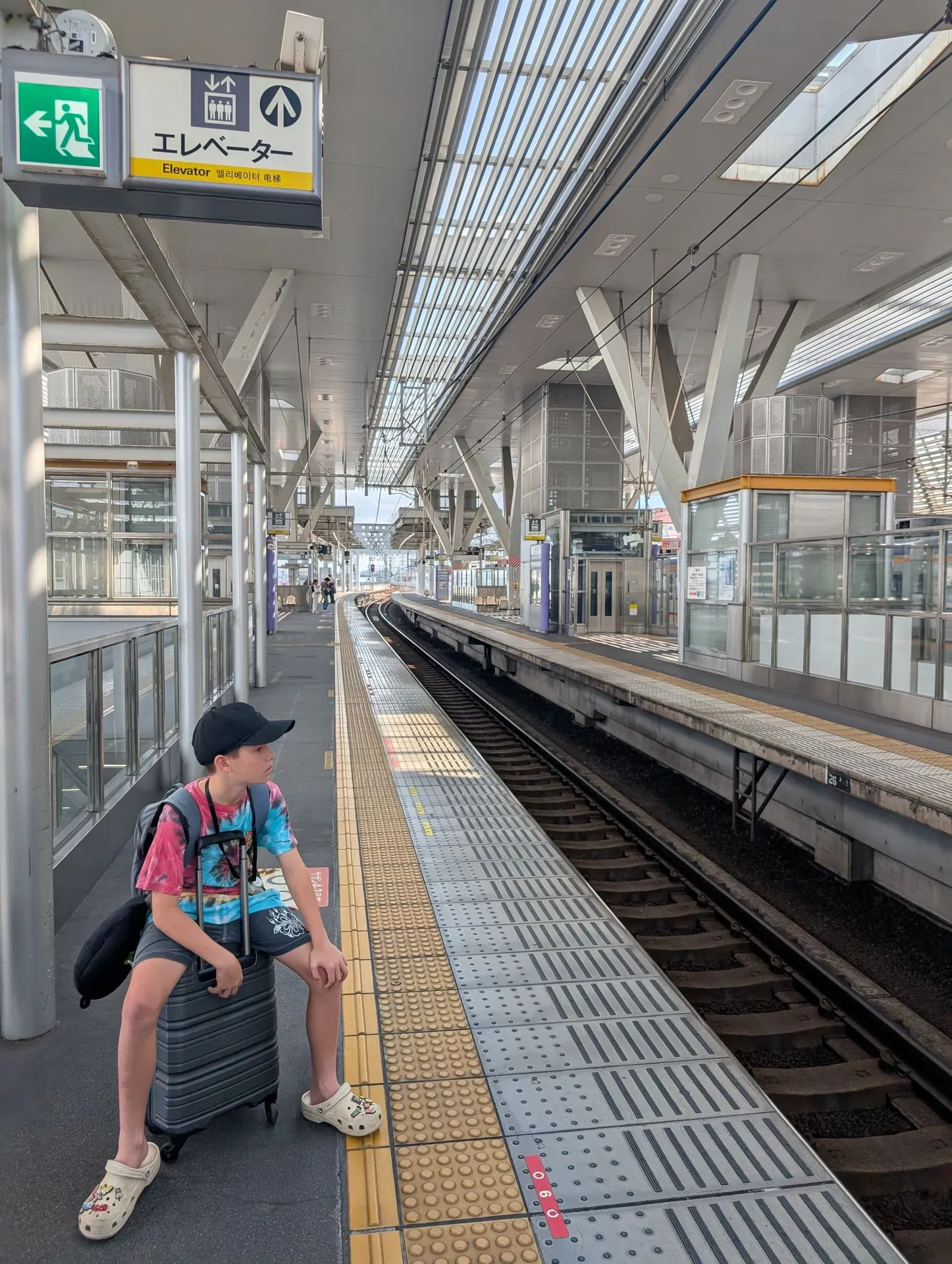
Platforms are marked with where each carriage stops. Find your number on the ticket, stand on that mark, and boarding is trivial.
The Green Car has more room
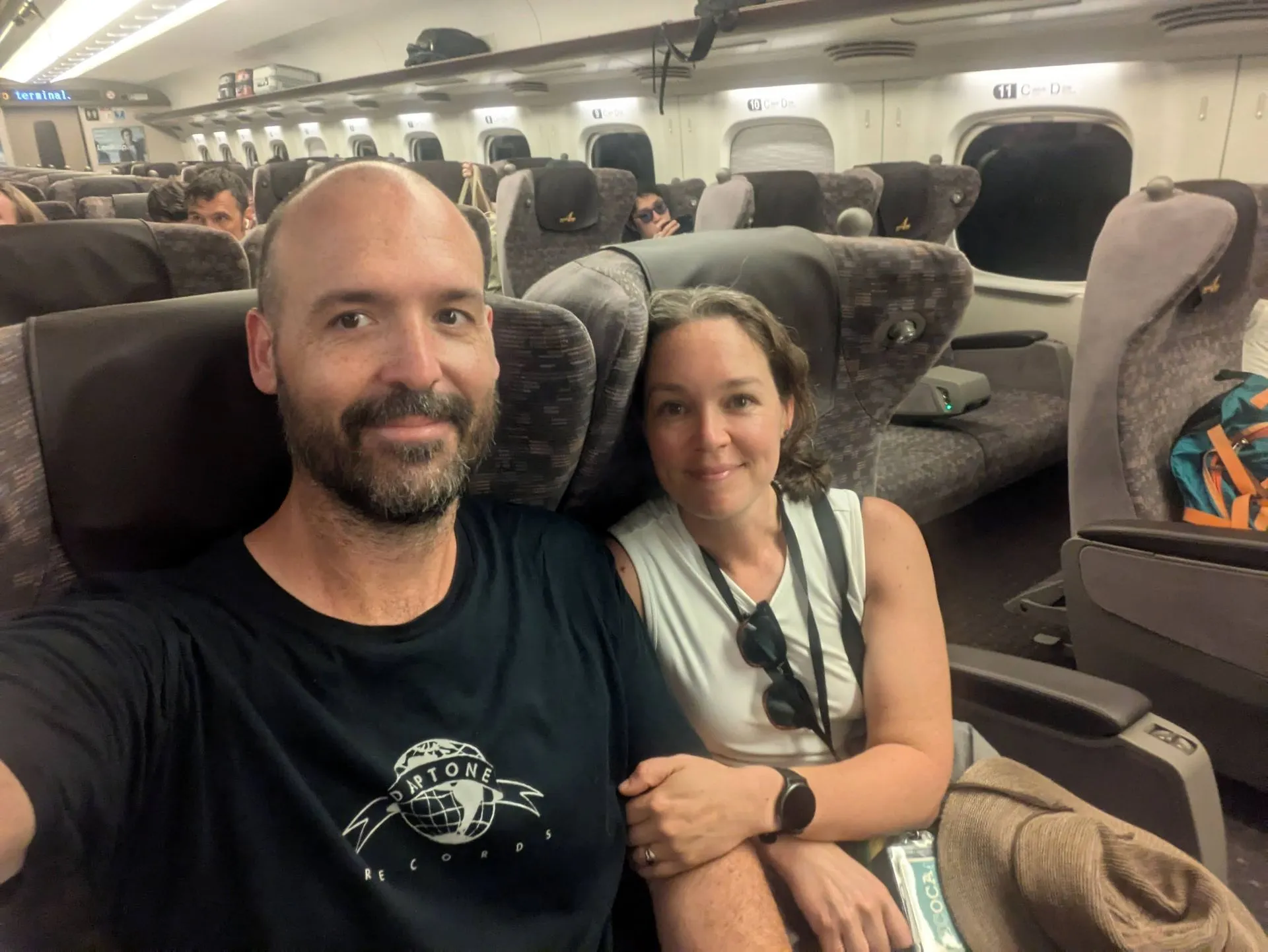
It is the premium carriage, with noticeably more space. We booked it from Kyoto to Odawara.
Buy the bento after the gates
The proper ekiben shops sit inside the Shinkansen gates, so leave ten minutes on the platform side. It is half the fun of the journey.
Do not count on the waiting rooms
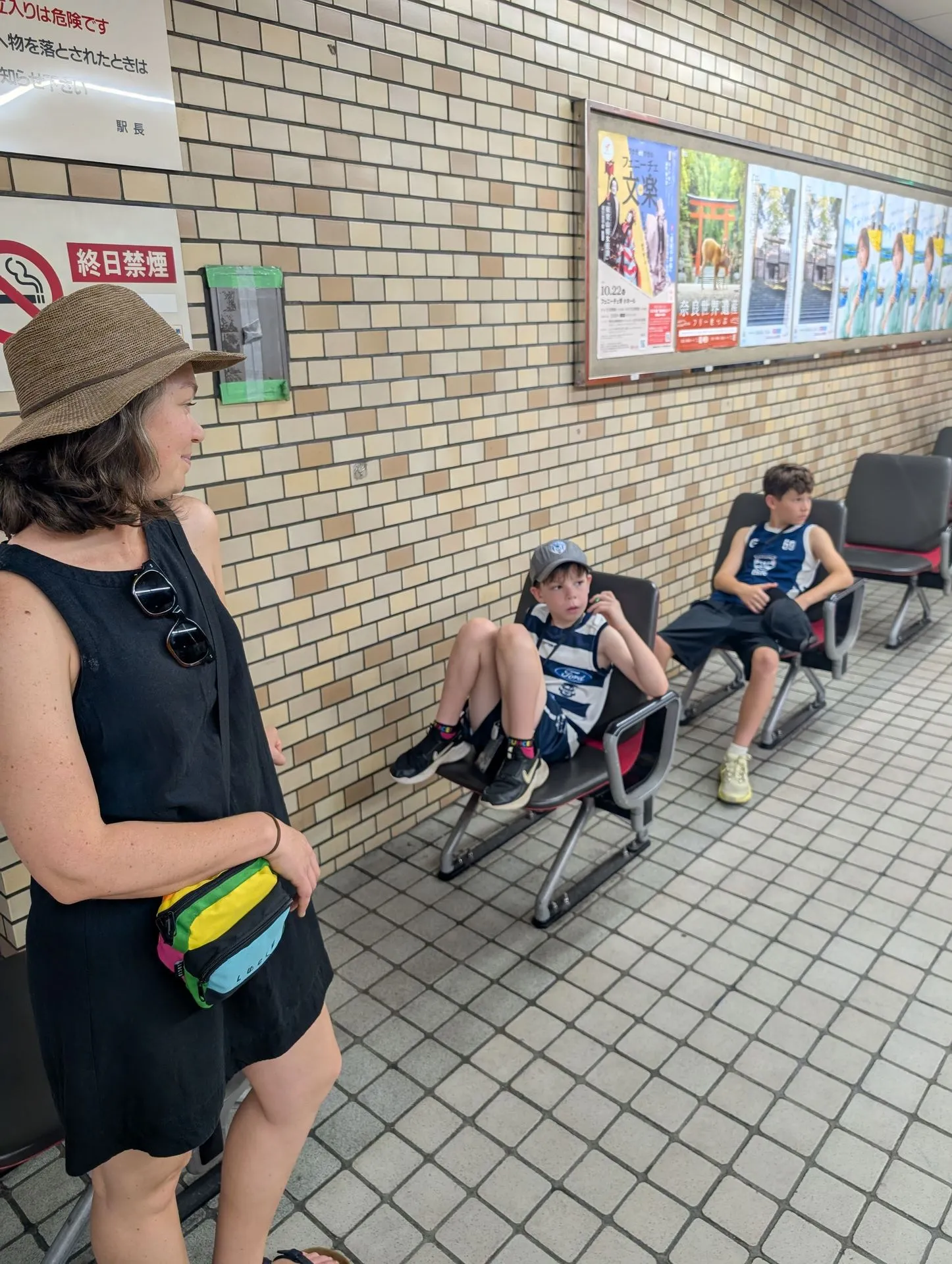
They exist, and on a busy afternoon they fill up. Assume you may be standing.
A day ahead was enough for us
We booked the night before and had no trouble. That will not hold over Golden Week, New Year or the summer holidays.
Bags go with you
Overhead racks take a cabin bag; the space behind the back row takes the big ones. Oversized luggage needs a reserved spot on some services.
The Romancecar, the easy train to Hakone.
If you are heading to Hakone from Tokyo, the Romancecar is the simple way in. It is Odakyu's limited express from Shinjuku, and the Hakone-Yumoto services run straight through in about 80 minutes with no change. It is the train we took back to Shinjuku from Odawara at the end of our Hakone leg.
Every seat is reserved, and you pay twice, the normal Odakyu fare plus a limited express fee. Book online and you buy only the fee, then pay the fare with your IC card at the gate. From Shinjuku the fee is ¥1,200 per adult and ¥600 per child to Hakone-Yumoto, or ¥1,000 per adult to Odawara, as at 16 October 2026.
- Book online and save a little. Seats go on sale at 10am Japan time a month ahead, on Odakyu's EMot online ticket site, at station machines and at the ticket windows. Booking online takes ¥50 off the fee.
- The observation seats are worth chasing. The GSE trains have 16 seats at the very front and 16 at the very back, with a driver's-eye view through the end windows. They cost nothing extra, so they go first.
- Passes don't cover the fee. The Hakone Free Pass from Shinjuku covers the normal fare but not the limited express fee, and the Romancecar is an Odakyu train, so the JR Pass doesn't cover it at all. We worked through whether the Free Pass is worth it in our Hakone guide.
- Kids under 6 ride free unless they need their own seat. Children 6 to 11 need a child ticket.
- Stand at your carriage number. It is printed on the ticket. Learn from us and check it before the train pulls in.
Romancecar seats. If you'd rather sort the train with the rest of your bookings, Klook lists Romancecar seats from Shinjuku to Hakone. Check whether the normal fare is included or paid separately on your IC card.
One card, the whole trip.
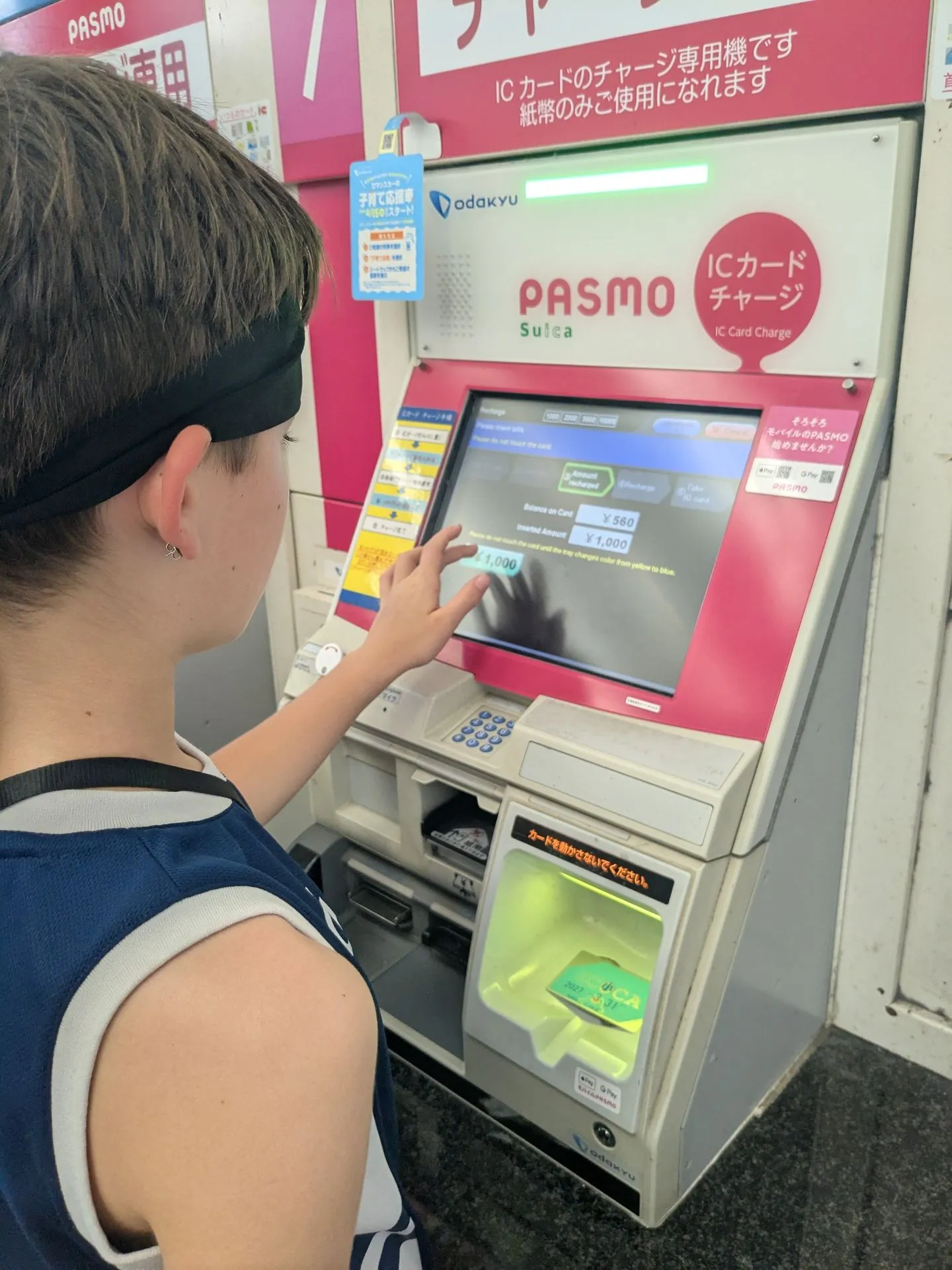
Get an IC card the moment you land. Suica, Pasmo and Icoca all do the same job. Tap on, tap off, no working out fares. The same card opens the subway gate, pays the bus driver and buys a drink from the machine on the platform.
We gave the boys their own and topped them up at any station machine when they ran low. It removed the single most fiddly part of getting around, and it turned every gate into a one-second tap rather than a queue at a ticket window.
For the bits the trains don't reach.
Kyoto runs on its buses. Board, tap your IC card or show a day pass, and watch the screen for your stop. And on a hot departure day with four sets of luggage, a taxi is cheap insurance. Clean, metered, and the doors open themselves.
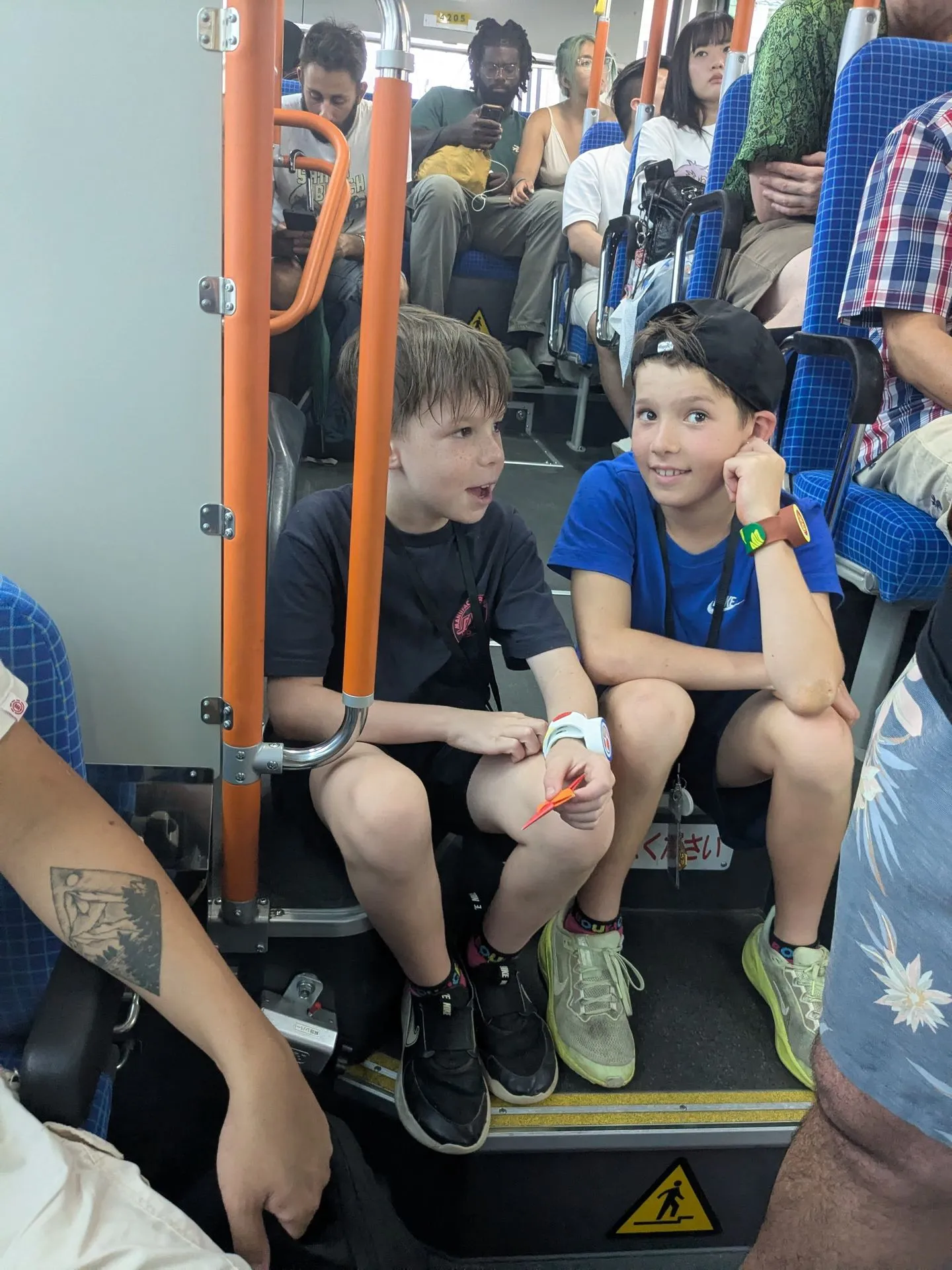
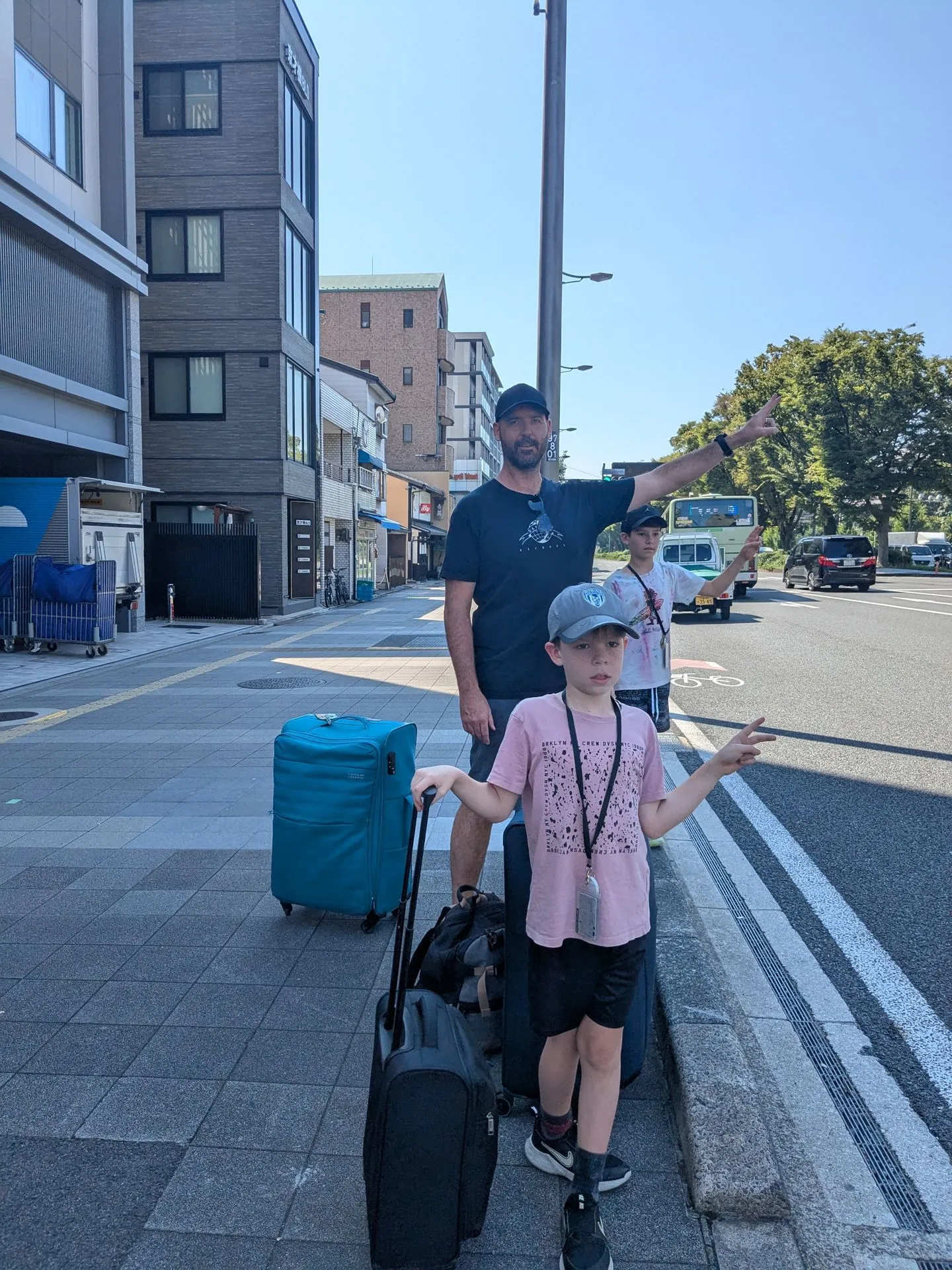
The big stations look scary. They aren't.
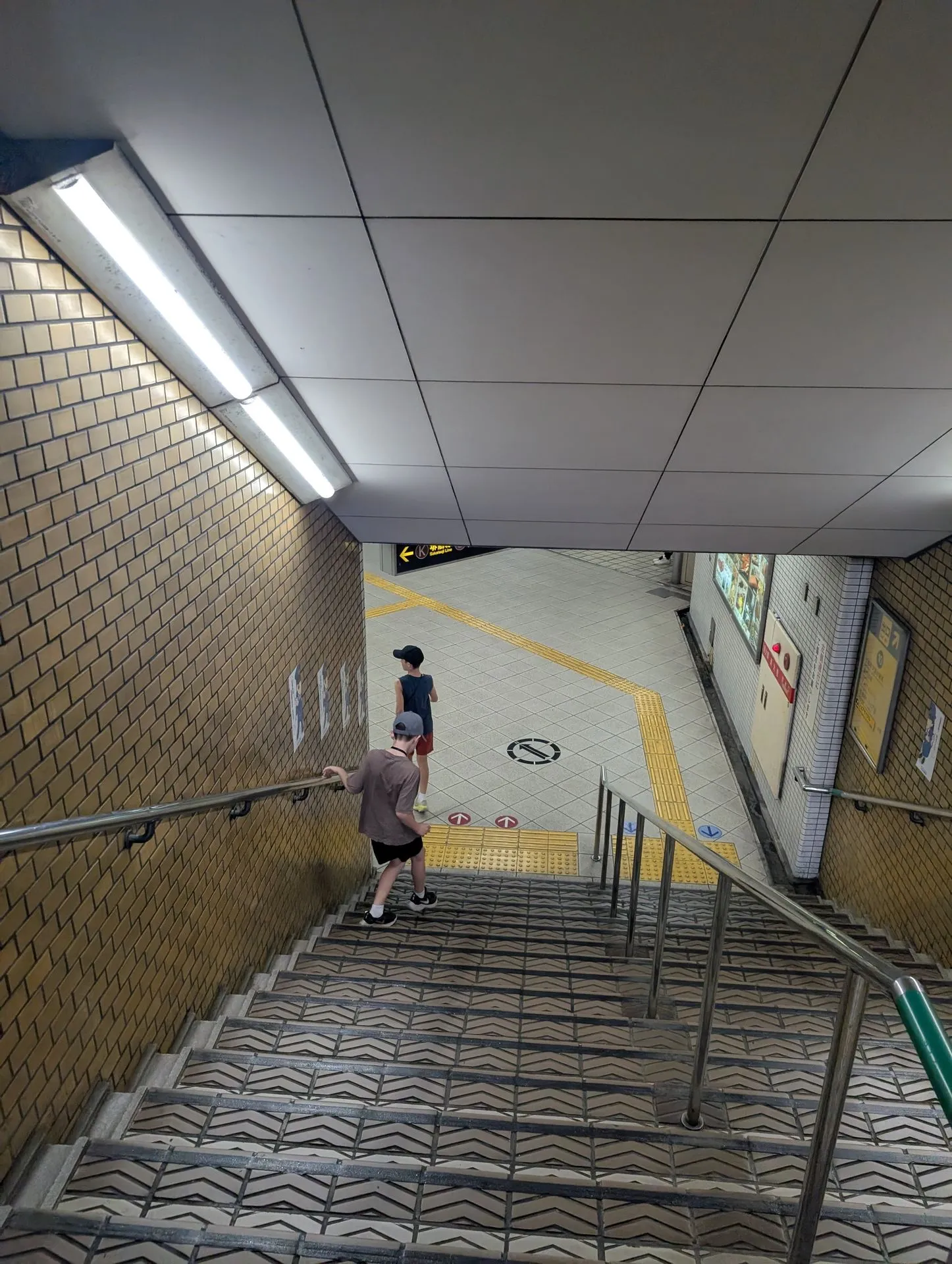
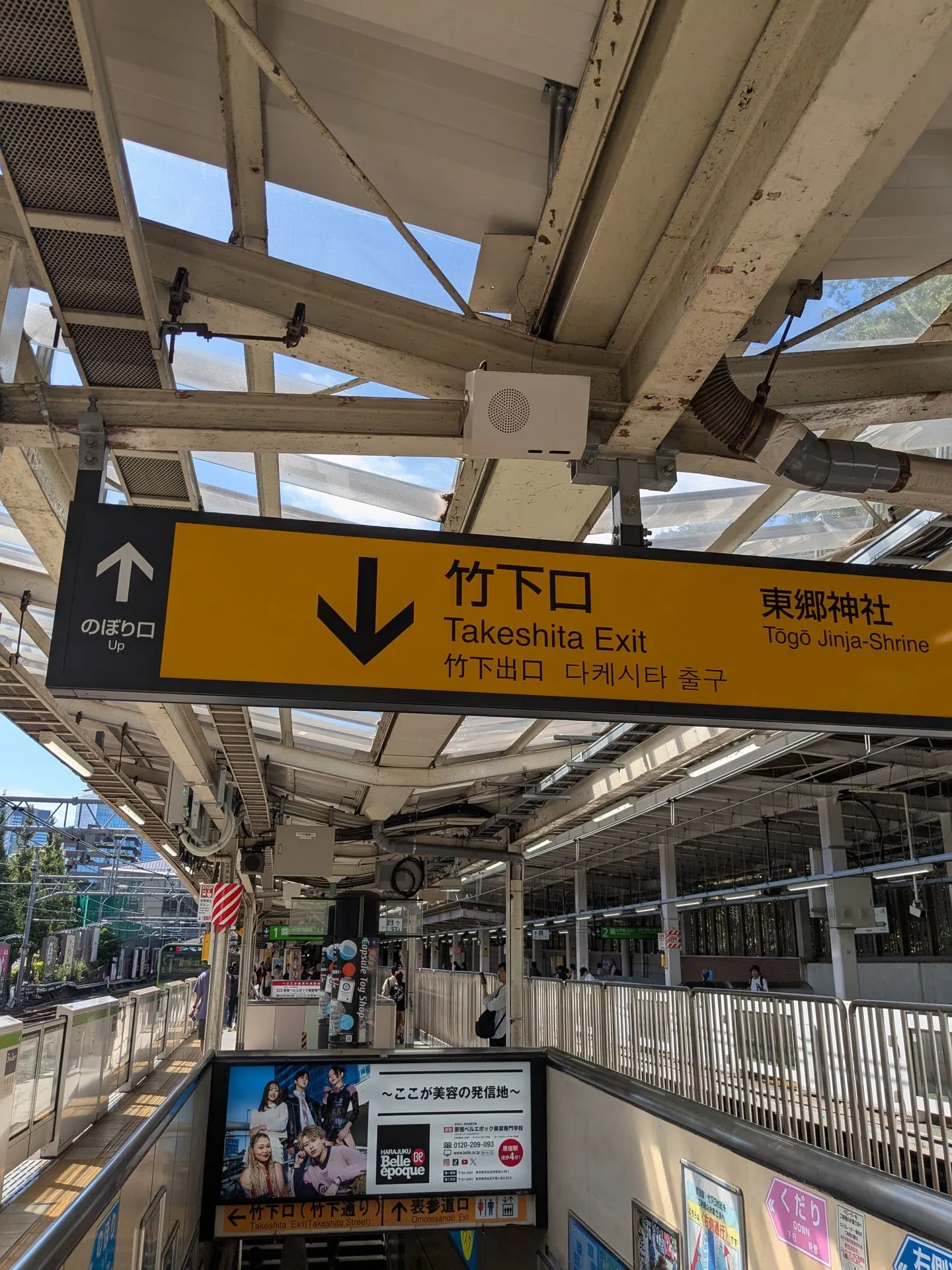
Kyoto and Shinjuku stations are enormous, but everything is signed in English, colour coded by line, and numbered by exit. Match the exit number on Google Maps to the sign overhead and you pop up exactly where you meant to.
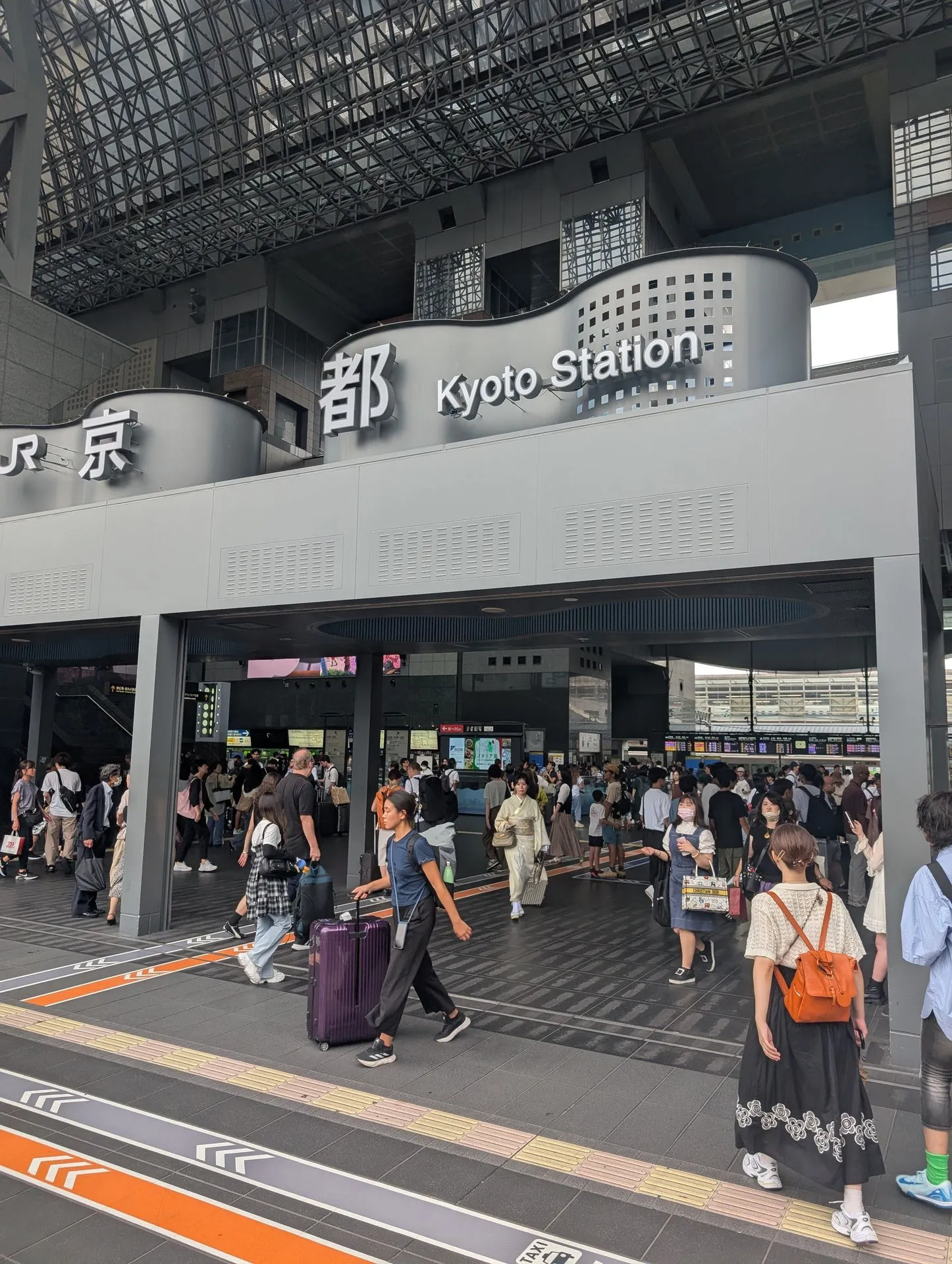
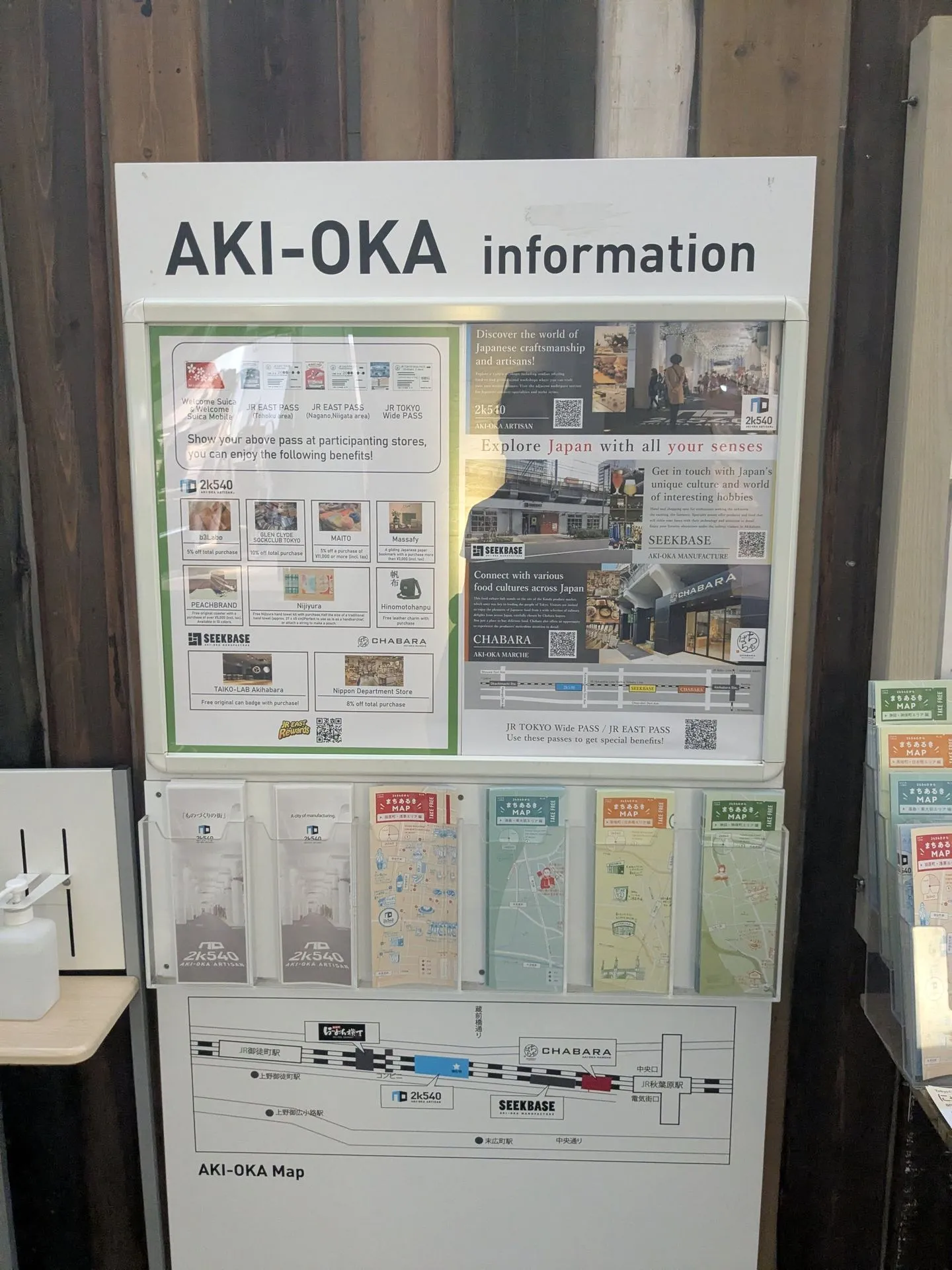
Sometimes the slow train is the point.
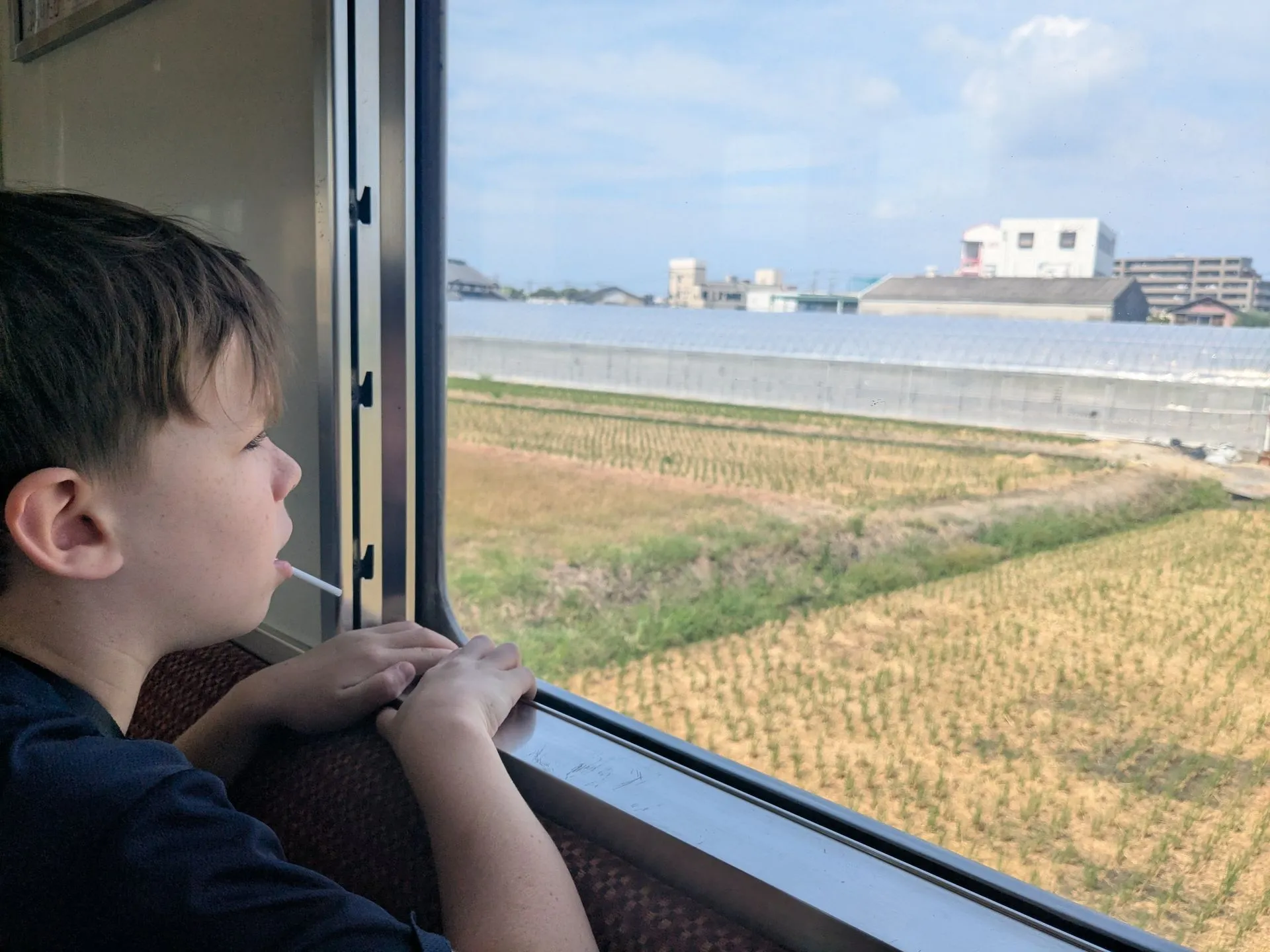
Not every leg should be a bullet train. The local Kii line down through Wakayama is all rice fields and quiet country platforms, the kind of ride where the window does the entertaining and nobody asks if we are there yet.
What we wish we'd known on day one.
- Use Google Maps for everything
- It gives you the line, the platform, the departure time and which carriage to board for the fastest exit. It is uncannily accurate in Japan.
- Get IC cards on day one
- Suica, Pasmo or Icoca. Load one at any machine and stop thinking about tickets. The kids can have their own.
- Travel light through stations
- Not every station has a lift, and stairs with suitcases get old fast. Pack light, or forward your bags hotel to hotel with takkyubin.
- Dodge the rush hour with kids
- Roughly 7:30 to 9am and 5:30 to 7pm the big-city trains pack out. Travel either side of it and everyone has a better time.
- Reserve Shinkansen seats ahead
- Especially with a family and bags. A reserved seat means you sit together, guaranteed, with room for the luggage.
- Put a tracker on the kids’ cards
- We kept a Bluetooth tracker in each boy’s card holder. One card went missing in Kyoto and the tracker showed us it had been handed in at a police station.
Plan it the way we would.
We planned this trip ourselves, paid for it ourselves, and wrote down what worked and what did not. All of it is on the site, free, with nothing to sign up for.
- Where to go, and how long to give each place
- What to book ahead, and what to skip
- Getting around with kids, without the guesswork
- What it actually cost us
The planning guides
Flights, trains, money, food, insurance and where to stay. Written after the trip, not before it.
Read the guides → Browse destinations