Why Tokyo works so well for families
Tokyo is 14 million people living at high density in almost complete order. The trains run to the second, the streets are spotless, nobody raises their voice, and children are welcomed everywhere. For families visiting from Australia, the contrast with what we expect from a major city is immediate and profound, you arrive braced for chaos and find something closer to the world’s most efficient machine, operating at human scale.
What makes it extraordinary for kids is the sheer variety. Tokyo Disneyland is consistently rated the best Disney park in the world. TeamLab Planets is an immersive digital art experience that adults struggle to describe to people who haven’t been. Akihabara’s gaming arcades stack floor on floor of machines your kids have never seen. A sumo show lets them climb into the ring. A dog cafe lets them play with puppies. At Shibuya Crossing a whole crowd crosses from every direction at once, every time the lights change. Tokyo does not run out of things to notice.
Disneyland
Give the park a full day minimum. Arrive at opening, but check the wait times in the app before you pick a first ride. We went straight to Big Thunder Mountain and it was our longest queue of the day. The evening light show on Cinderella’s Castle is the park’s big night-time moment. We left at 6pm, so we saw the castle at dusk but not the show.
Akihabara and TeamLab
Akihabara in the morning for arcades and Pokemon. TeamLab Planets in the afternoon. Book tickets online before you go, because they are not sold at the door.
Shibuya, Harajuku and Shinjuku
Shibuya Crossing in the morning. Harajuku’s Takeshita Street. Shinjuku Chuo Park for lunch. Kabukicho neon district in the evening, then yakiniku dinner.
Ueno and Sumo
Ueno Park and Ameyoko Market in the morning. A sumo show, booked in advance. Explore Ueno’s streets in the evening before departure the next day.
Planning your own Japan trip? Our planning guides cover flights, trains, food, where to stay and what it cost, all from one family's trip.
Tokyo Disneyland
Tokyo Disneyland is consistently voted the best Disney park in the world. The reputation rests on the finish, every detail is precisely maintained, the staff are committed, and walking through the gates feels like stepping into a different dimension rather than a large theme park.
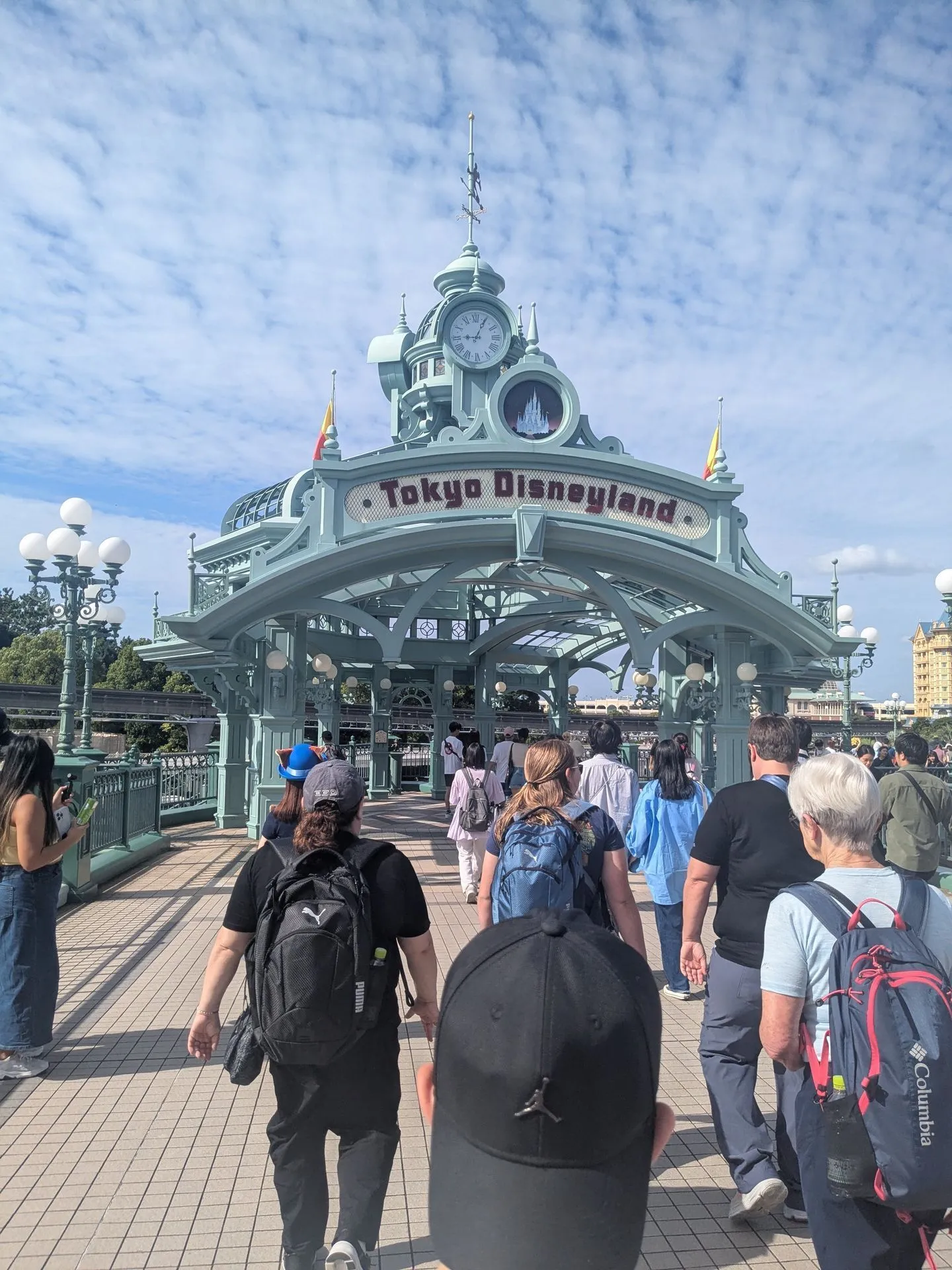
The classics are all here, Big Thunder Mountain and the Haunted Mansion among them, though Space Mountain is closed for a rebuild and due back in 2027. Big Thunder Mountain was super fun and we rode it twice. Toontown is arguably the most kid-friendly area in any Disney park, and for younger children it’s the heart of the visit. We left at 6pm, so we saw Cinderella’s Castle at dusk rather than the evening light show.
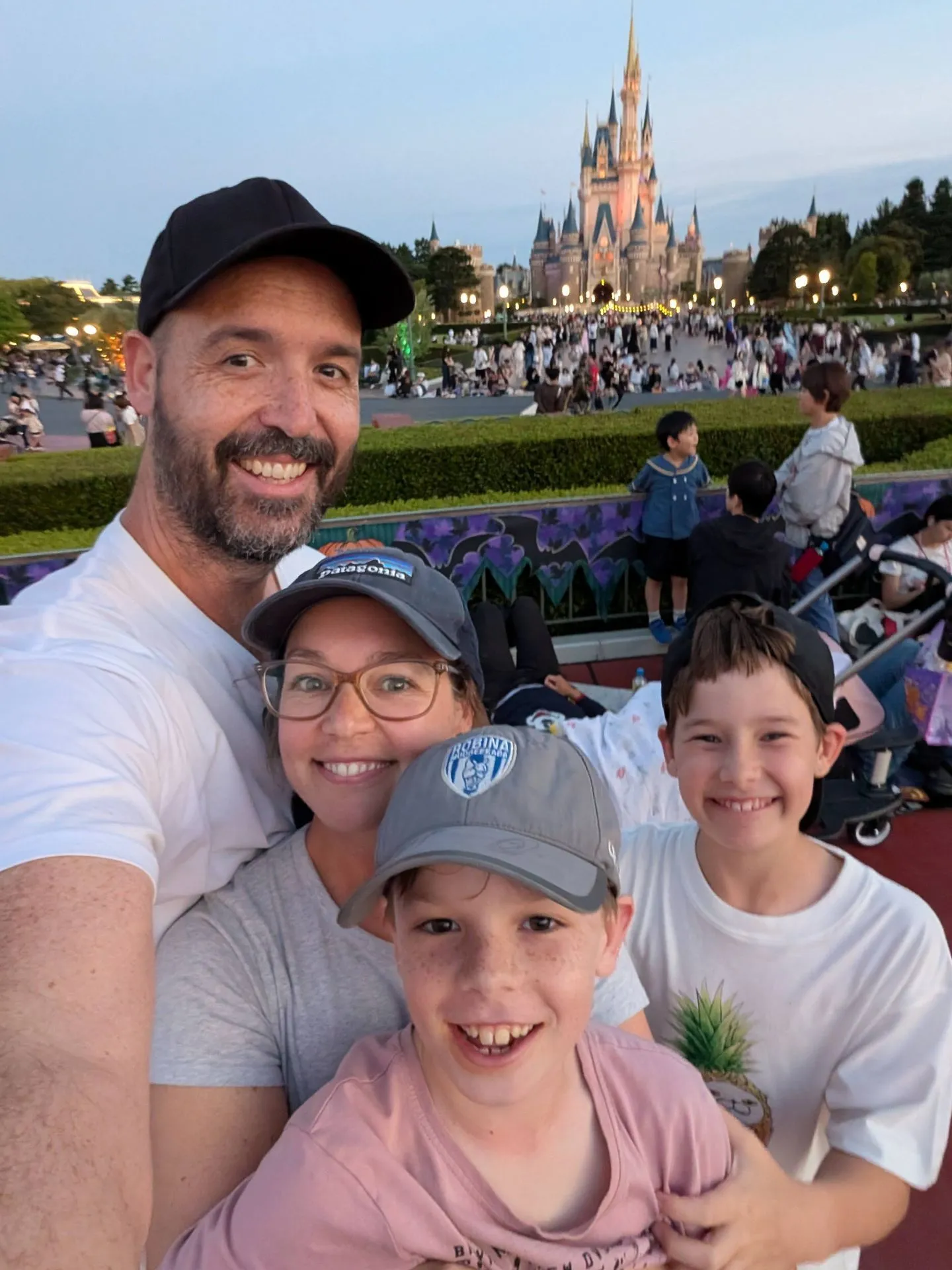
Disneyland is worth a full day and a guide of its own, so we wrote one. It covers the rides worth queuing for, Toontown for the little ones, the castle and the evening show, and how the queue-skipping system works now that the free Priority Pass has ended.
Planning a full Disney day? Our complete guide walks through the best rides, what replaced the free Priority Pass, tickets and getting there, and how to beat the queues with kids.
TeamLab Planets
TeamLab Planets is a digital art museum in Toyosu where you walk barefoot through a series of large-scale immersive rooms. The experience is unlike anything a description can convey. You wade through knee-high water reflecting a universe of light, you lie in a room where flowers bloom and dissolve in infinite mirrors, you draw a fish that swims into a room-sized ocean. Children experience it at a different level to adults, less self-conscious, more physically engaged, and we spent about two and a half hours inside.
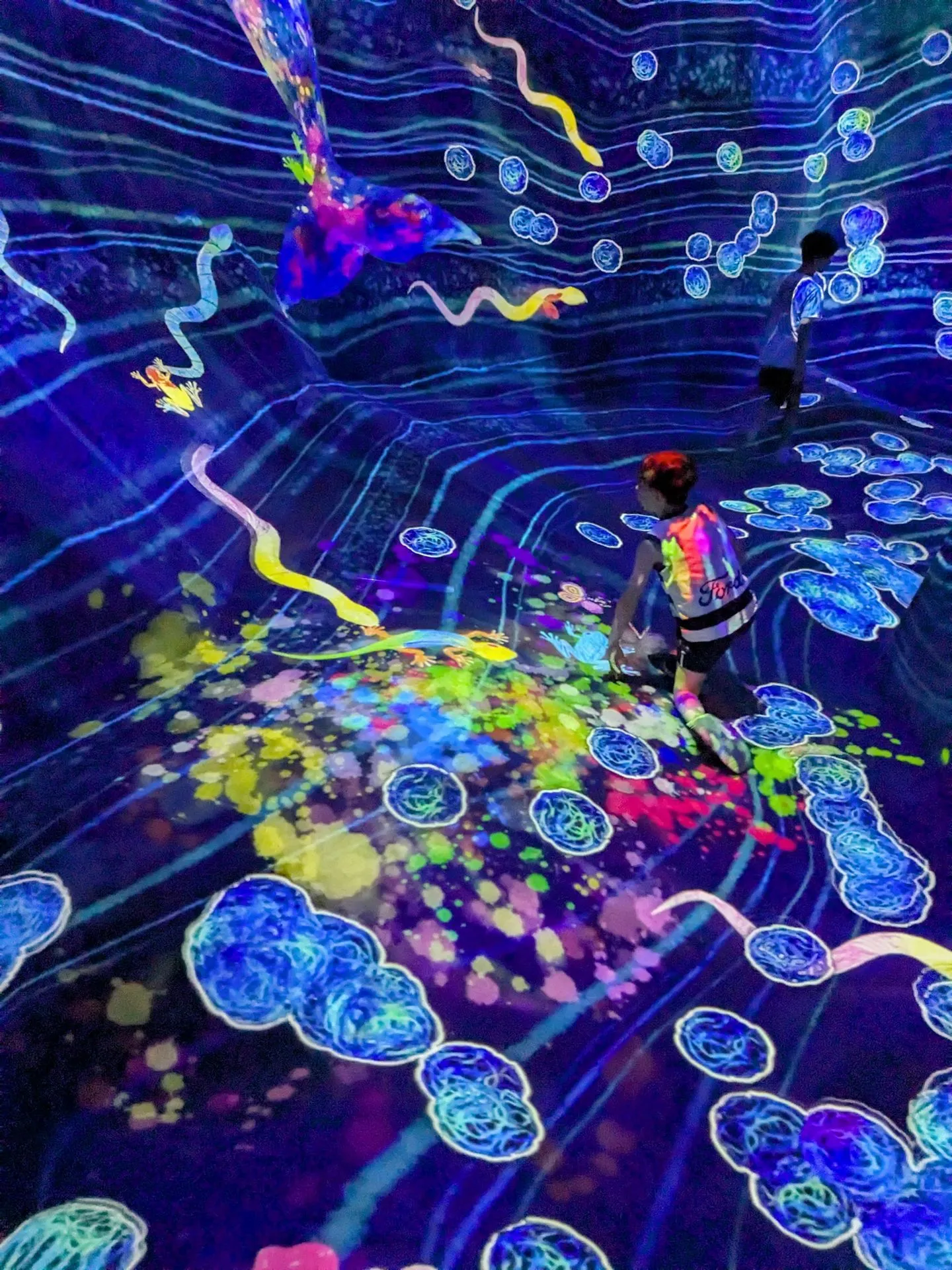
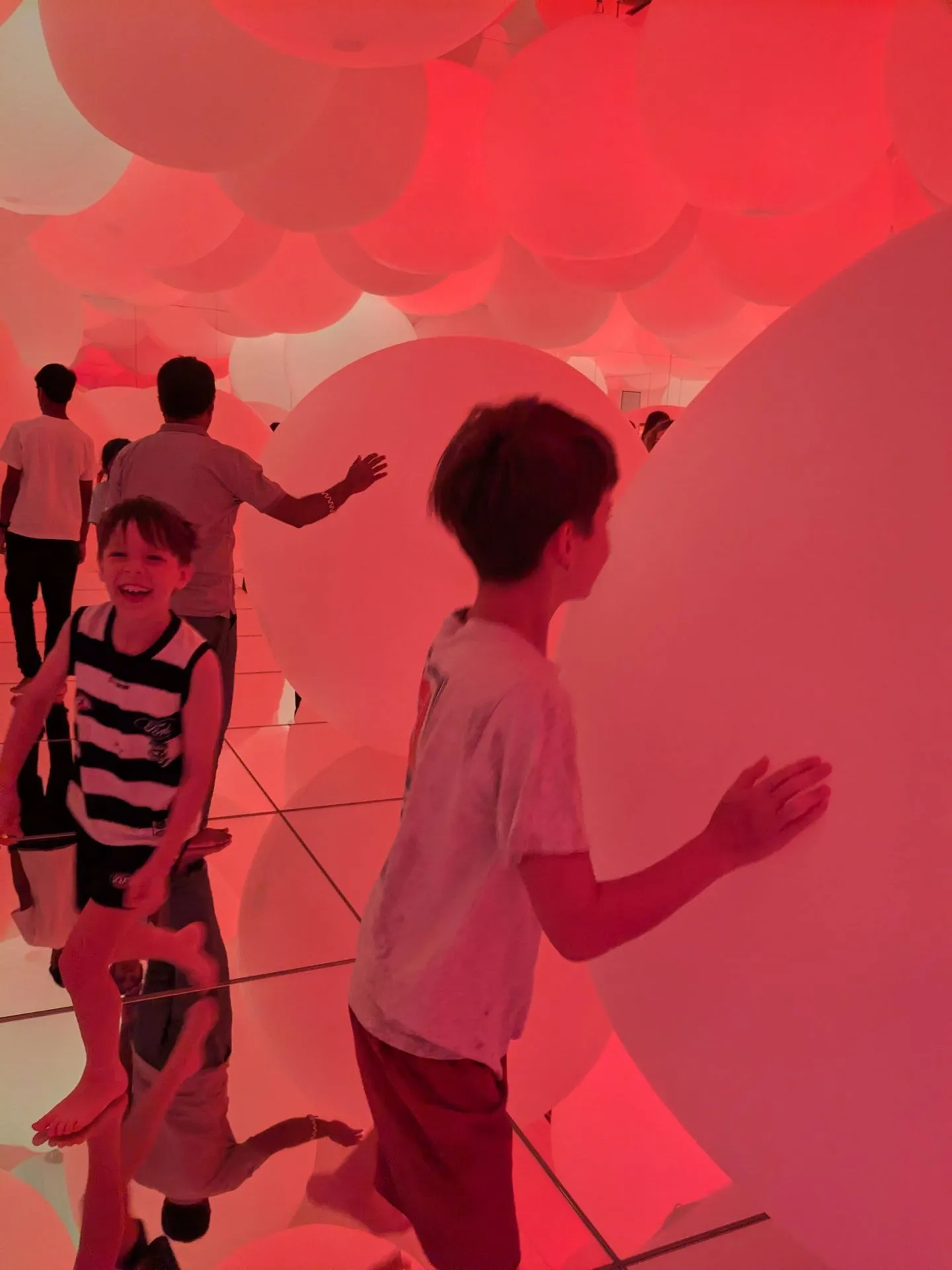
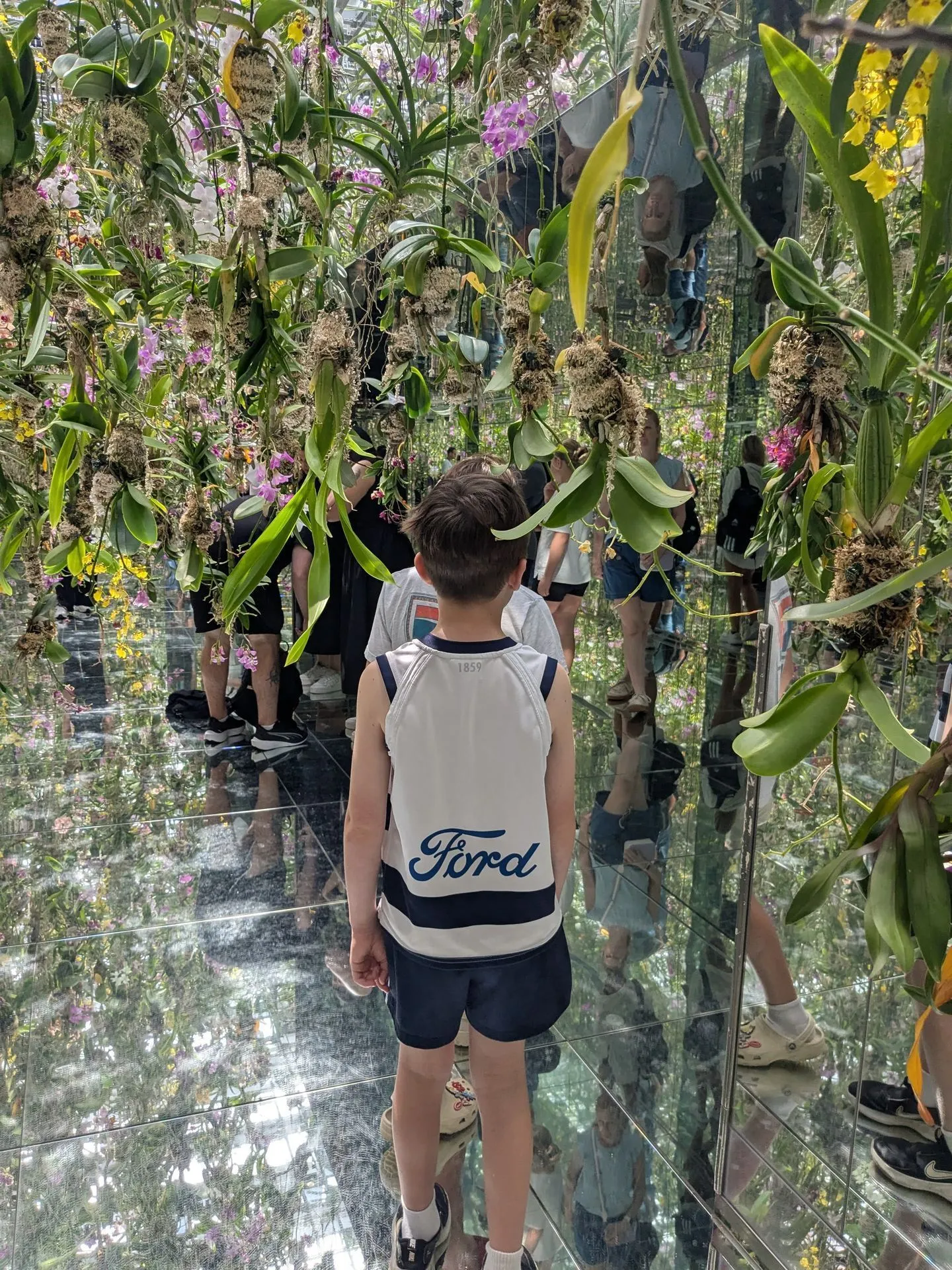
Worth booking before you fly. TeamLab is the one Tokyo attraction we would not leave to chance on the day.
Akihabara, gaming and anime
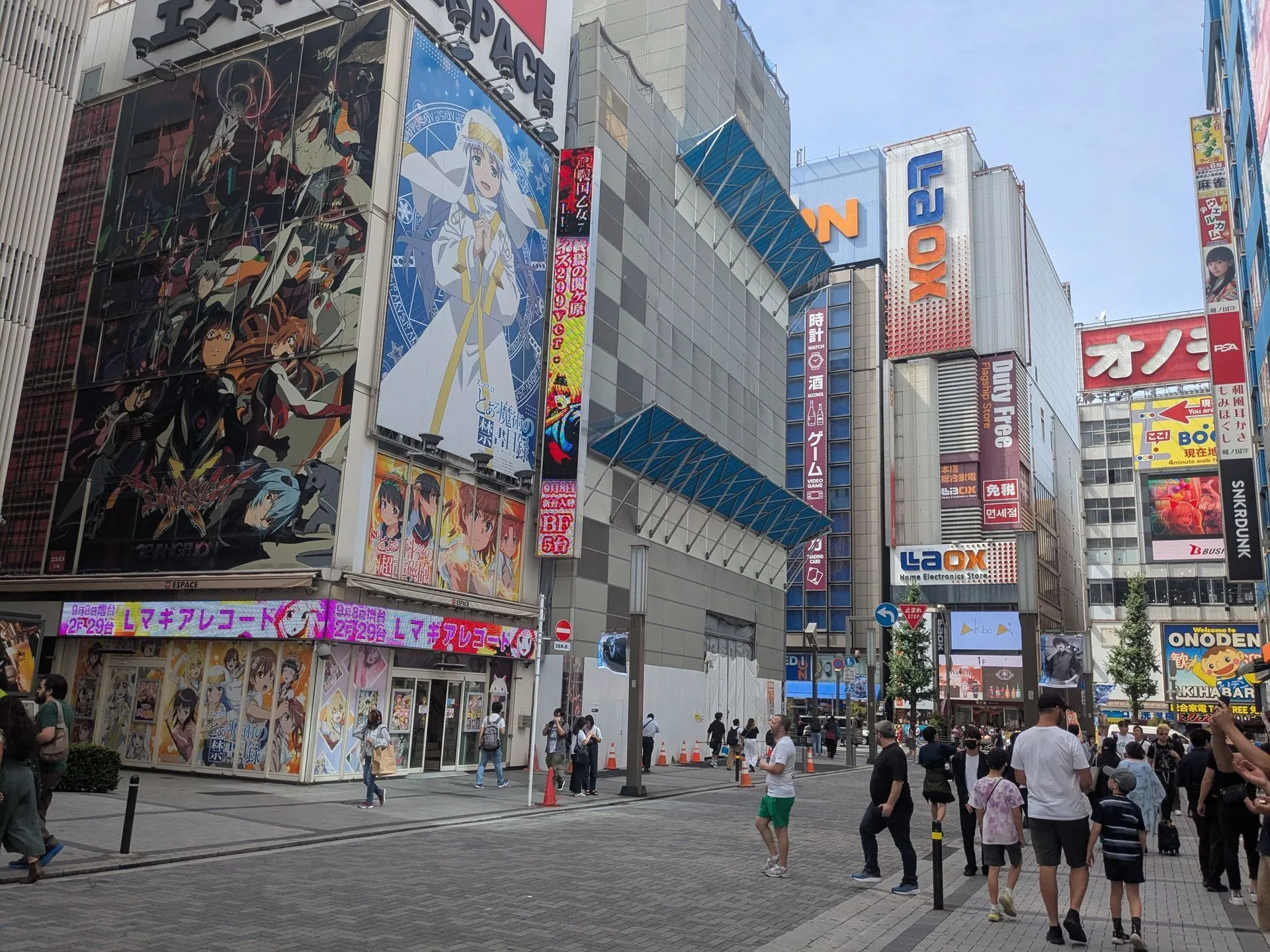
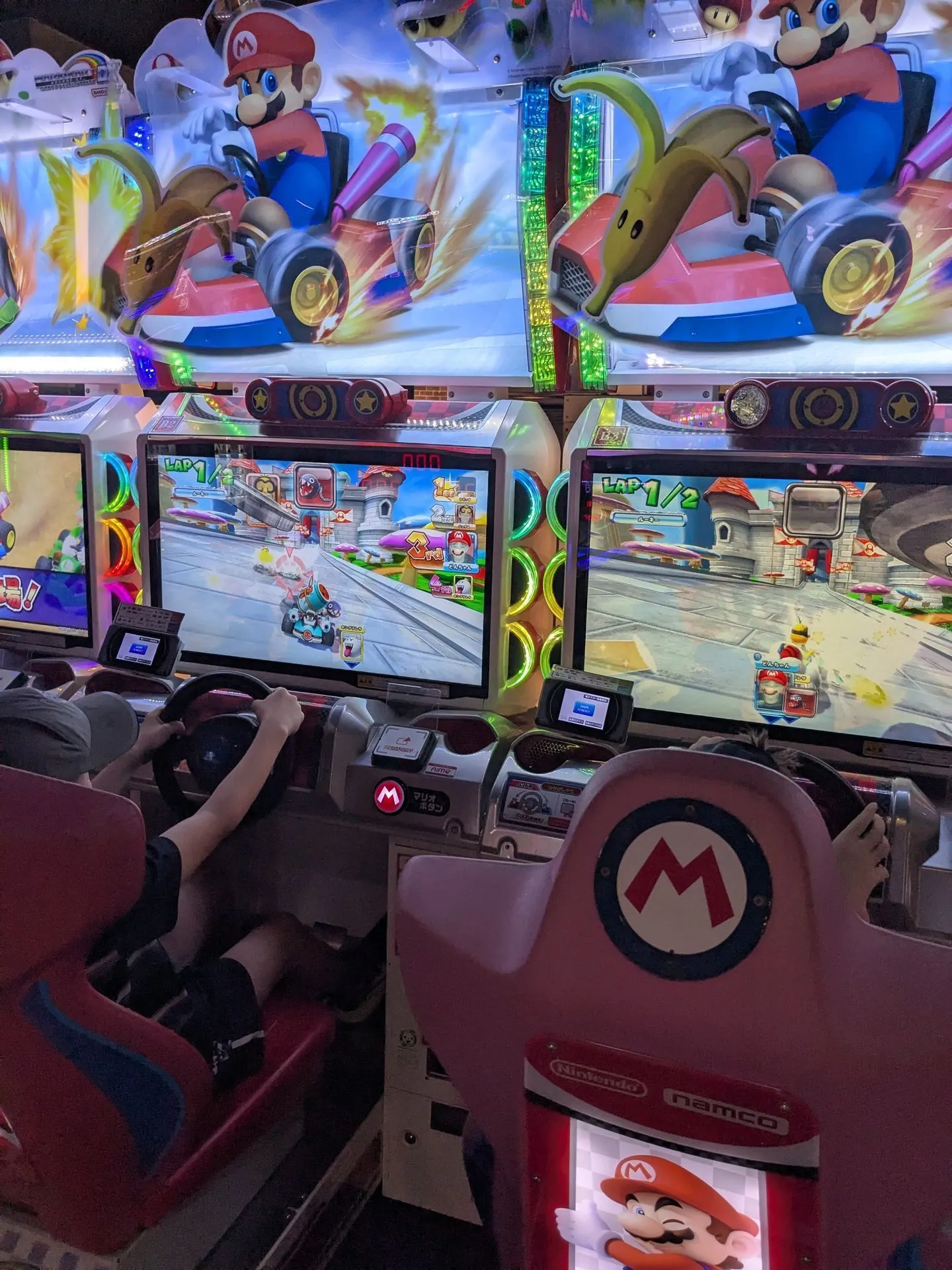
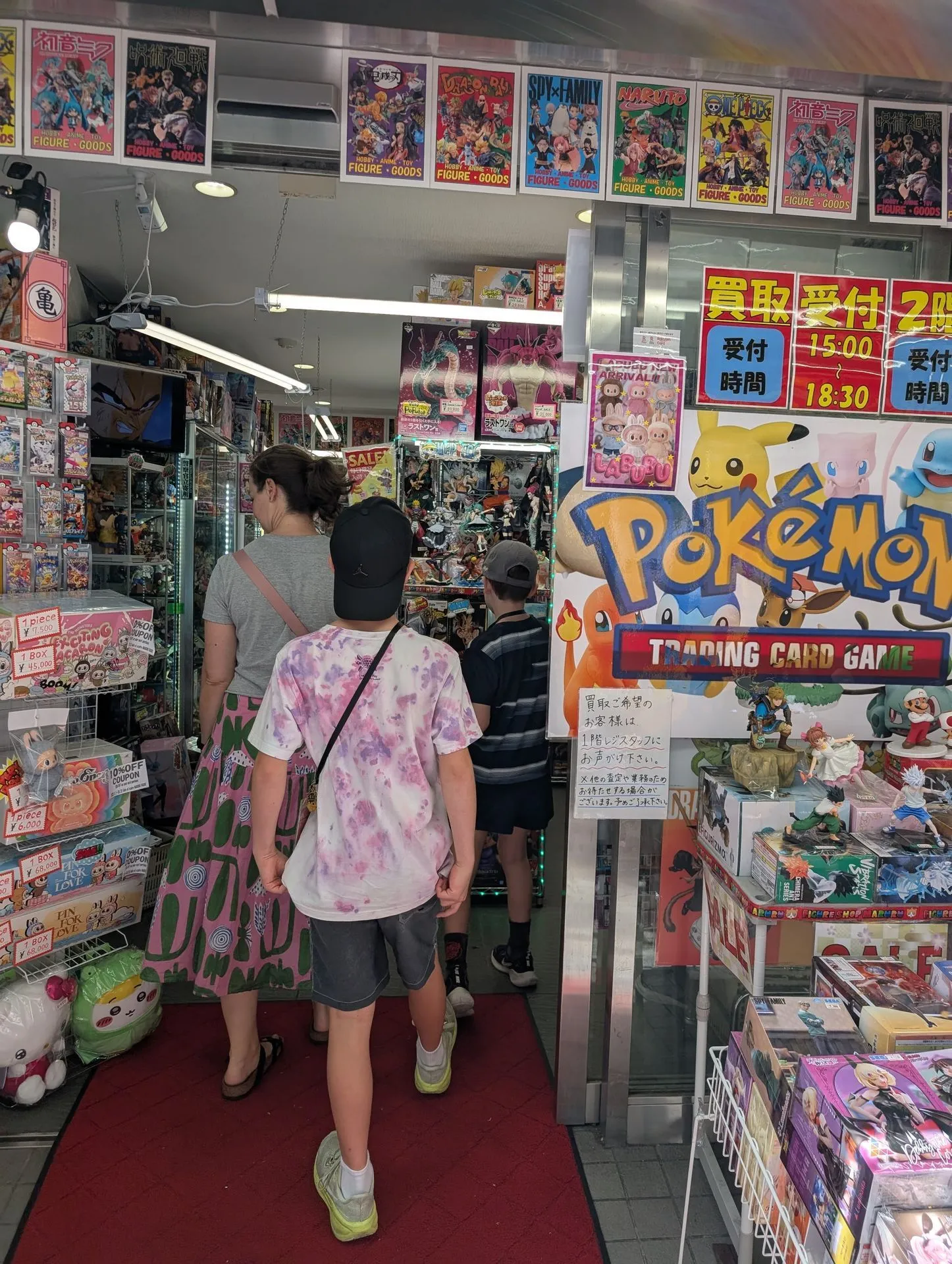
Akihabara is Tokyo’s electronics and gaming district, multi-floor arcades, Pokemon card shops, anime merchandise covering every surface, retro game stalls and crane machines stacked against every wall. For kids who play video games, it’s the closest thing to a pilgrimage. For parents, it’s deeply entertaining even without that context. The GIGO arcades have racing simulators, fighting games, Mario Kart cabinets and an entire floor of medal games that you can spend an afternoon at for almost nothing.
The arcade we spent longest in ran to seven floors, each themed differently, and the boys liked the modern and retro floors best. Most machines run on a coin or two per play, so an afternoon costs very little. Worth knowing before you go in, the machines take IC cards as well as coins, which is either convenient or a problem depending on how much you want your children to know. We did not mention it.
Shibuya
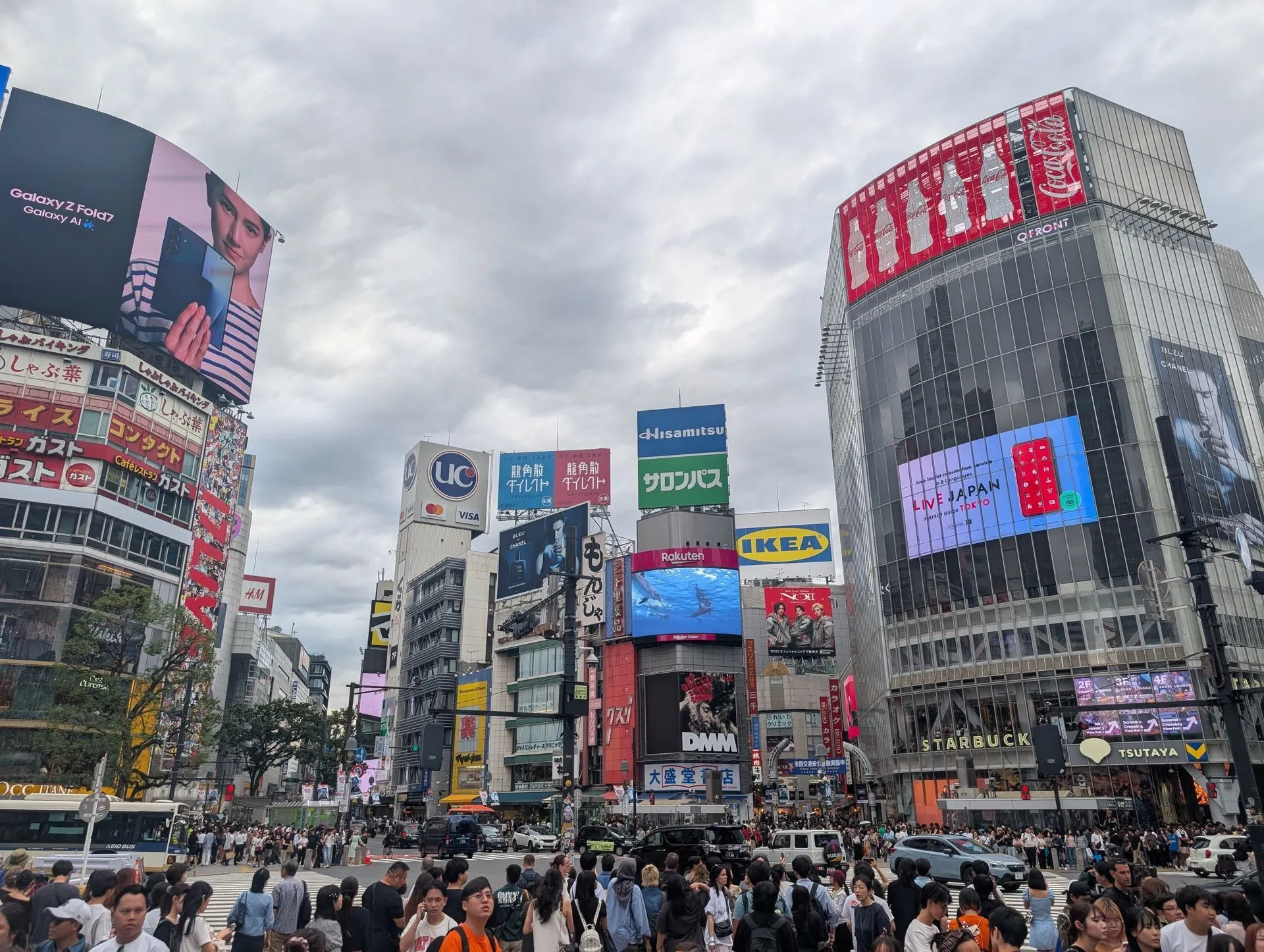
Shibuya Crossing is Tokyo’s most famous intersection. Every time the lights change a crowd crosses at once from every direction, and they do it in near-perfect synchronisation. Watching from the Starbucks above or from the Mag’s Park viewing area, you see the crossing fill, then flow, then flow back from every direction without collision. It looks impossible, and then the lights change and it happens again. Kids are transfixed.
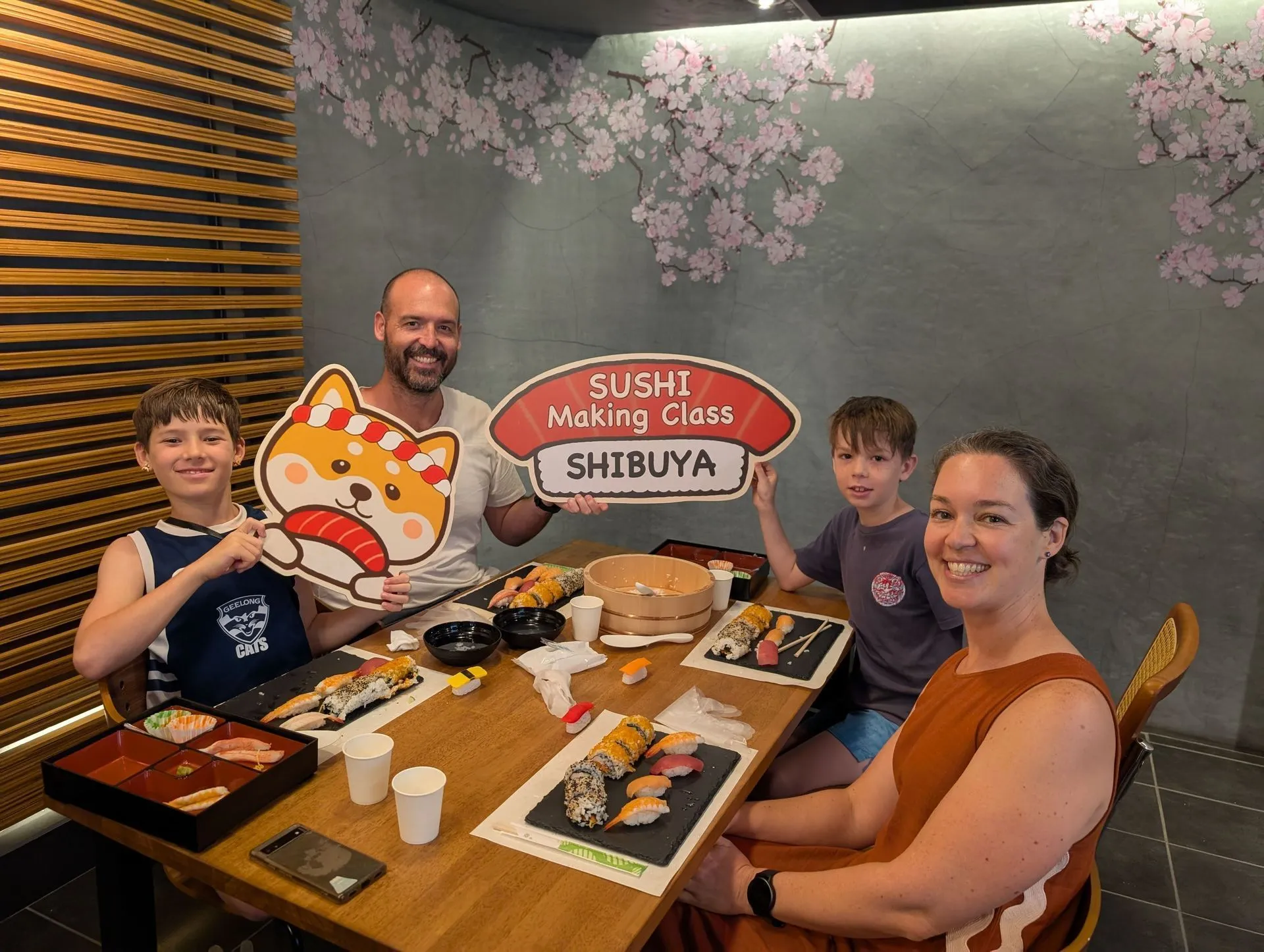
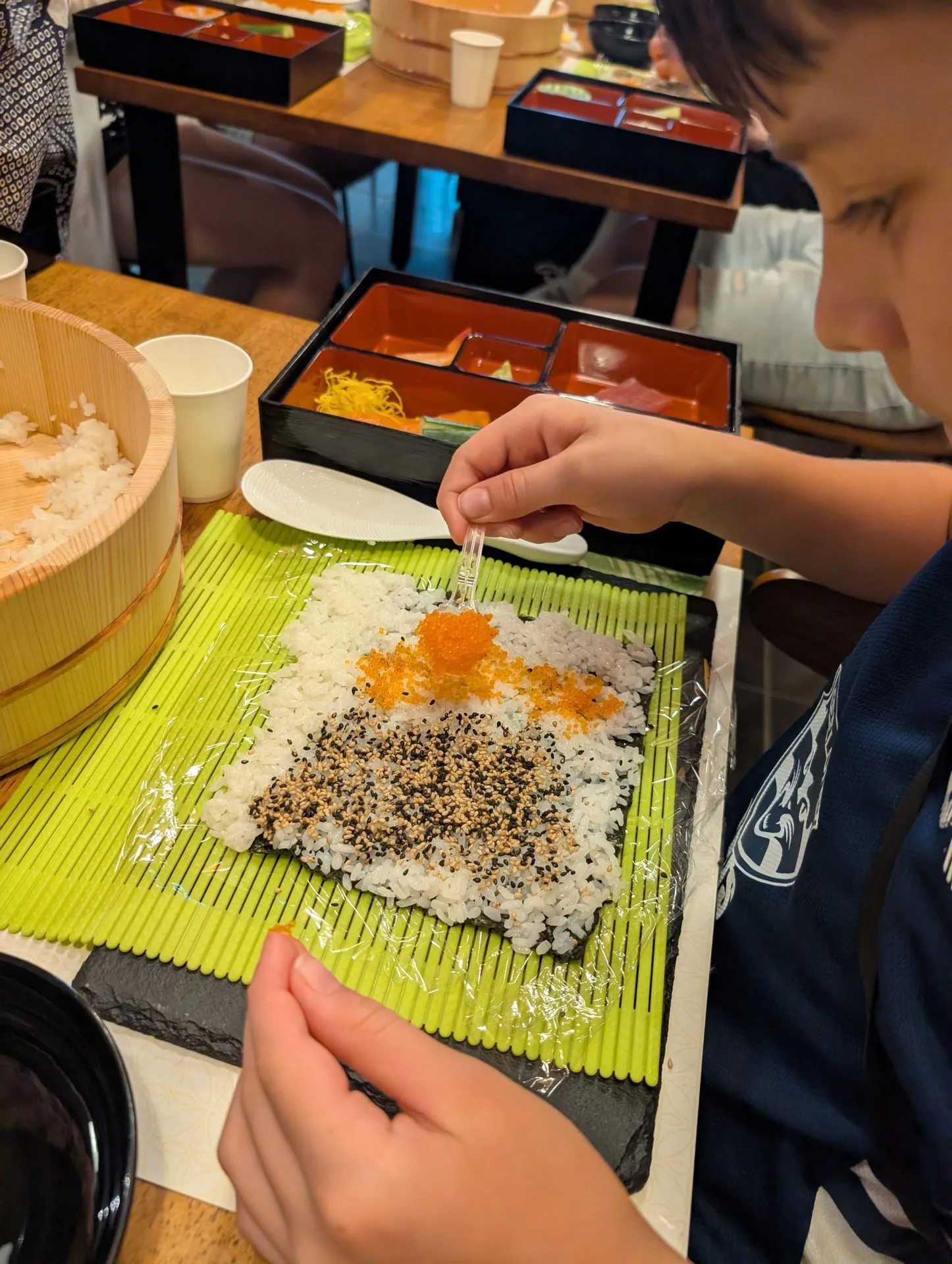
A sushi making class is one of the best family activities in the Shibuya area, hands-on instruction where everyone rolls their own maki and nigiri, eats what they make and leaves with a skill they’ll actually use. Everyone really enjoyed it.
Shinjuku
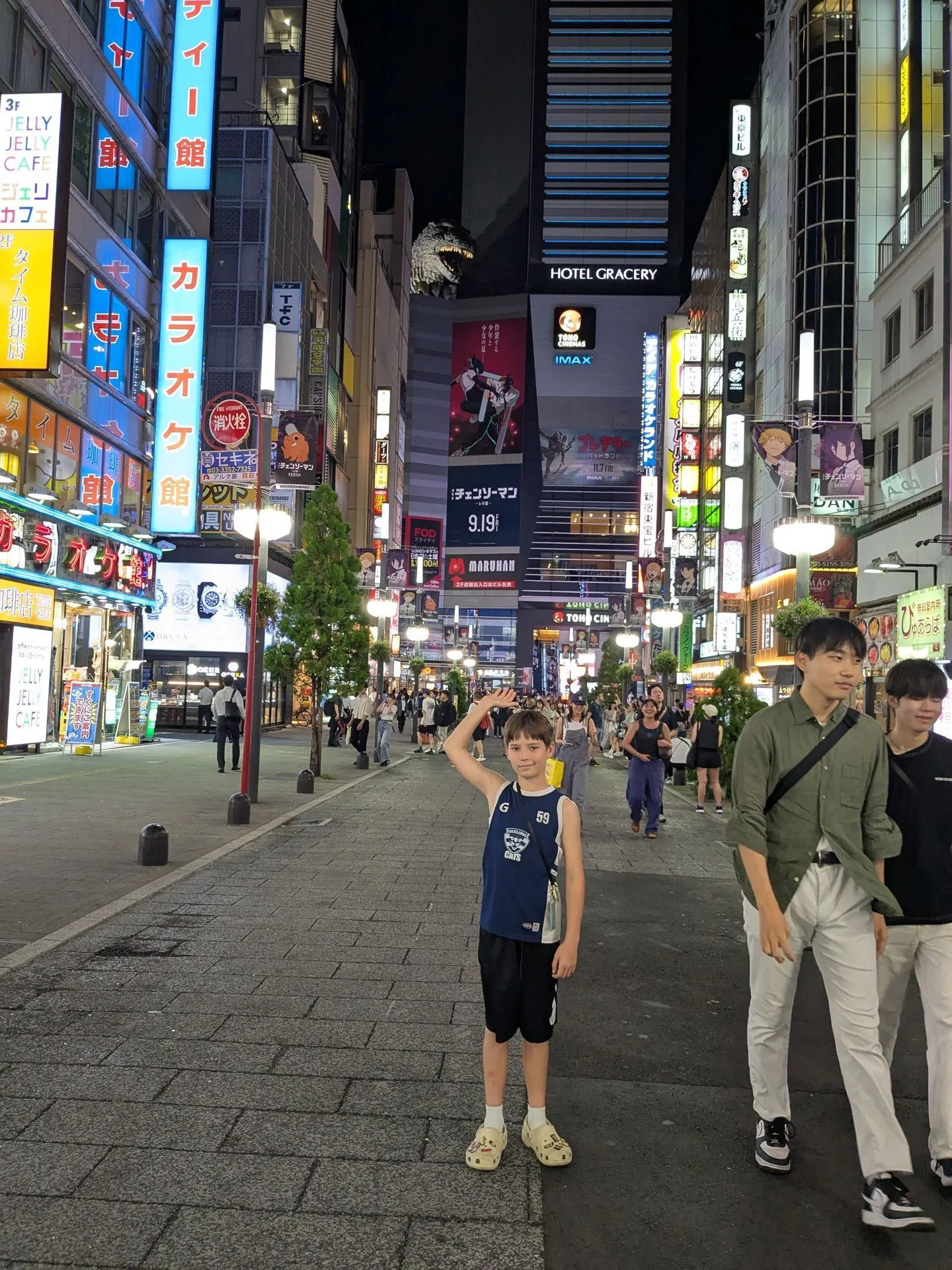
Shinjuku is Tokyo’s largest entertainment district and operates at a different register to the rest of the city, noisier, brighter, more compressed and more overwhelming in the best possible way. Kabukicho, the neon entertainment quarter to the north of the station, is spectacular at night, an absolute wall of light, signs and movement that makes Times Square look understated. It’s safe to walk through with older kids and is one of the great visual experiences of any city.
Shinjuku is not only neon, though. Shinjuku Chuo Park, a few minutes west of the station, is a proper free playground with shade and space, and there are turtles in the water on the way in. On a long Tokyo day it is the reset the itinerary never has room for, and it costs nothing.
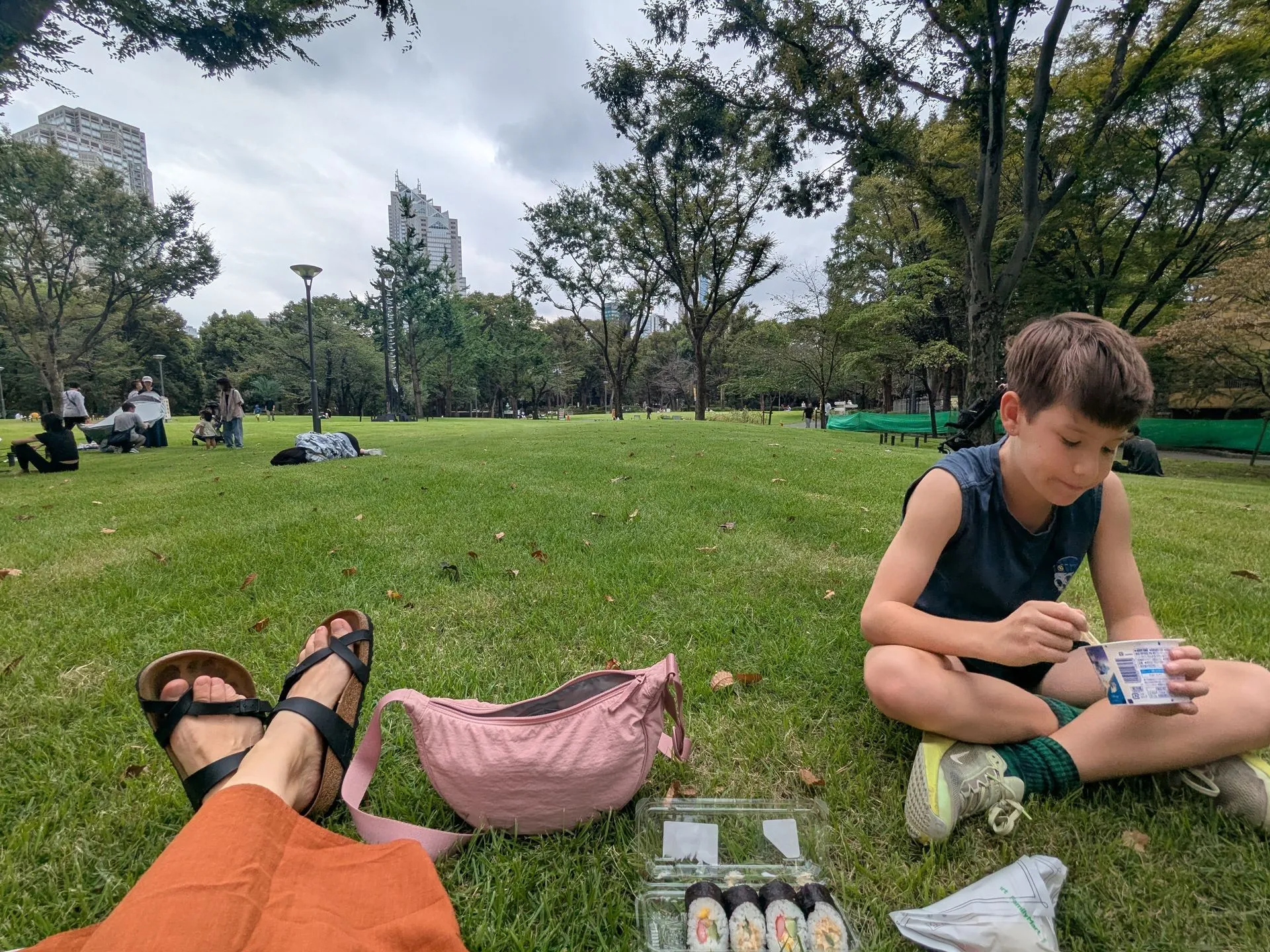
If you want a formal garden rather than a playground, Shinjuku Gyoen, the national garden, is the antidote to Kabukicho. A vast, beautifully maintained park with French formal gardens, an English landscape section and a Japanese garden all within the same grounds. It’s a good place in central Tokyo for a slow morning, and the contrast between the park’s quiet and the surrounding city is itself remarkable.
For dinner in Shinjuku, yakiniku (Japanese BBQ) is the best family option in the area. You cook strips of wagyu beef, pork belly, vegetables and offal on a table grill at your own pace, and the whole meal becomes a shared activity rather than just eating.
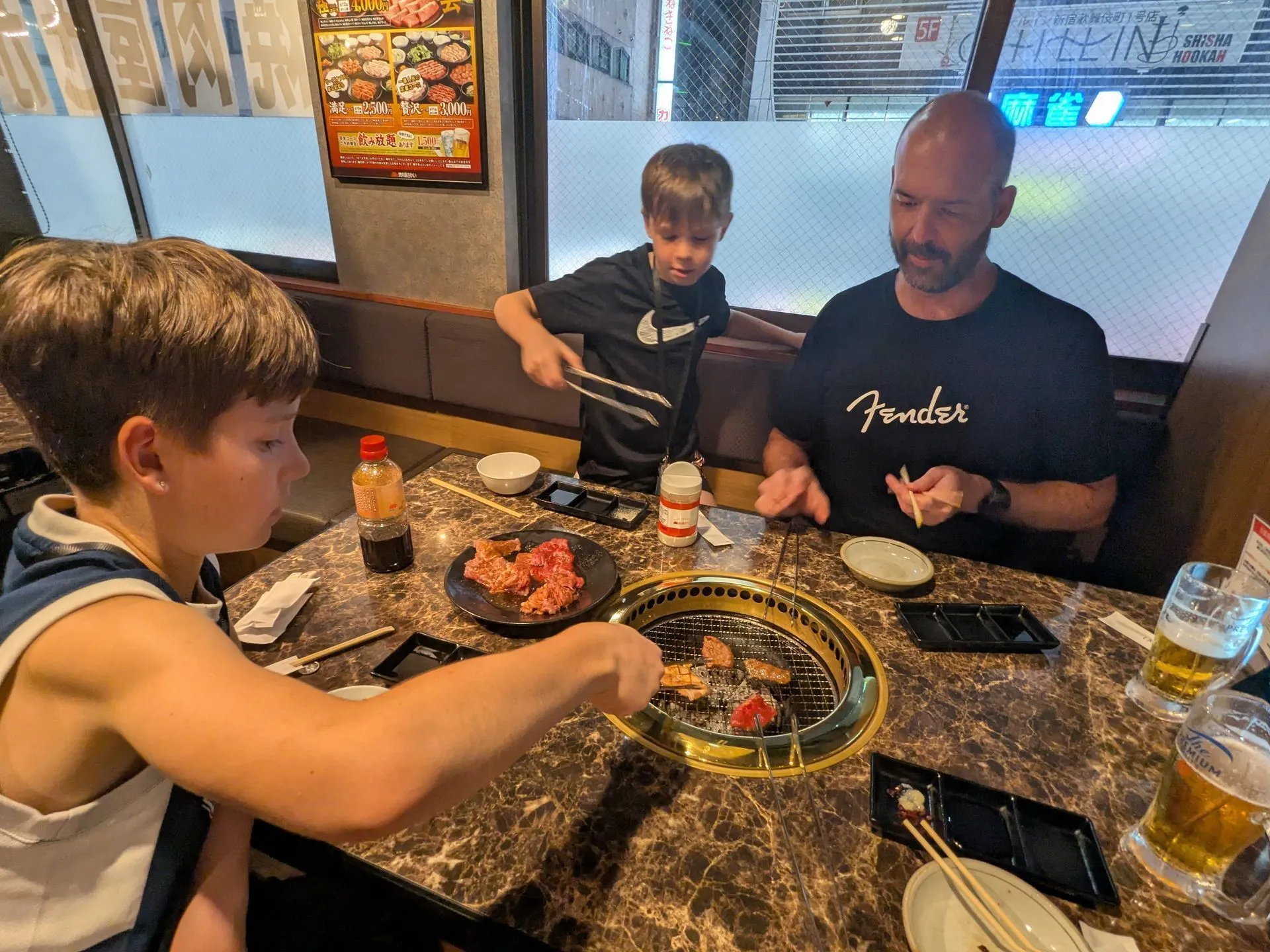
Staying in Tokyo? Shinjuku and Shibuya are the most central bases for families, on major train lines, walking distance to key sights, and surrounded by food options at every price point.
Harajuku
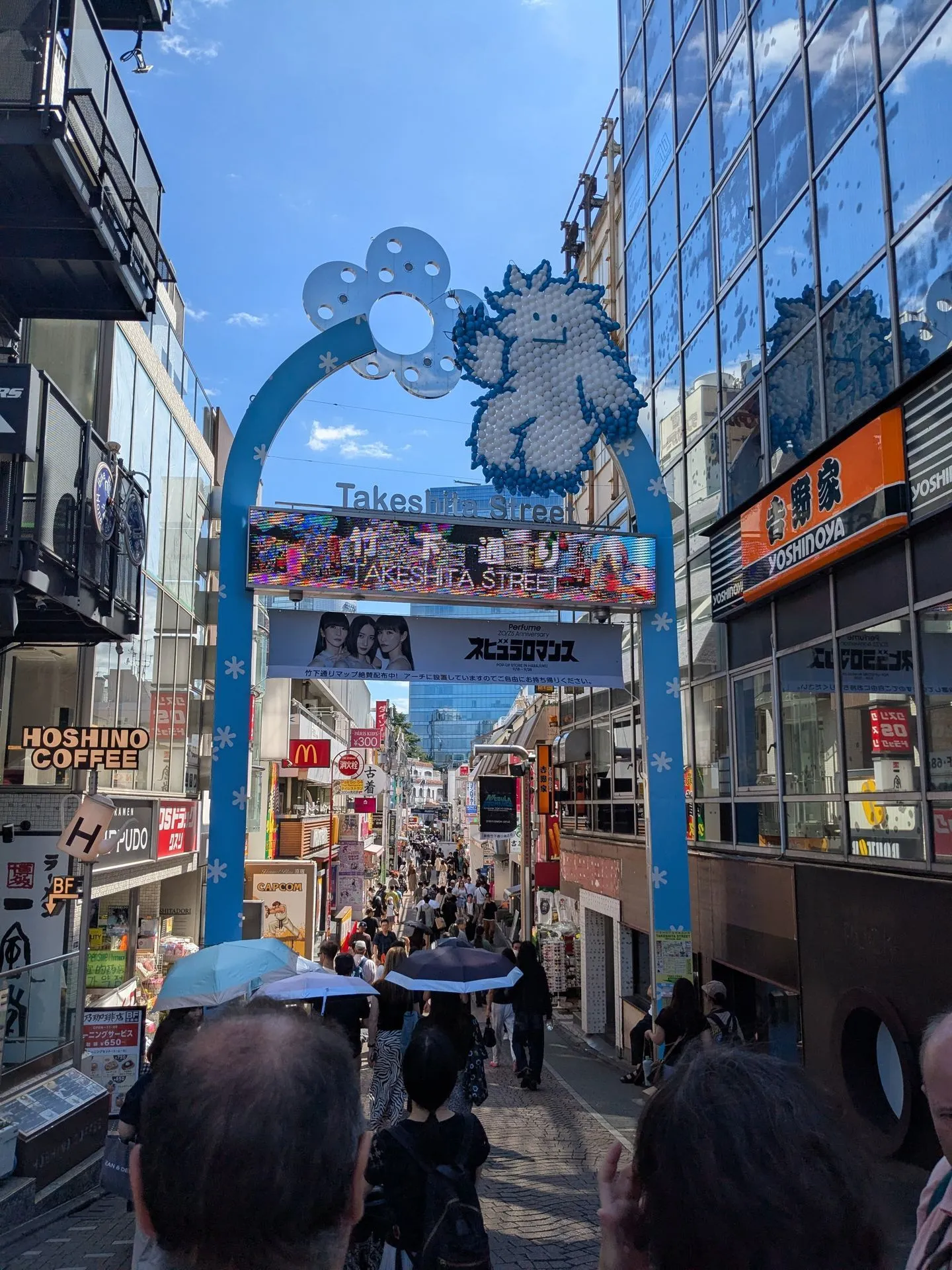
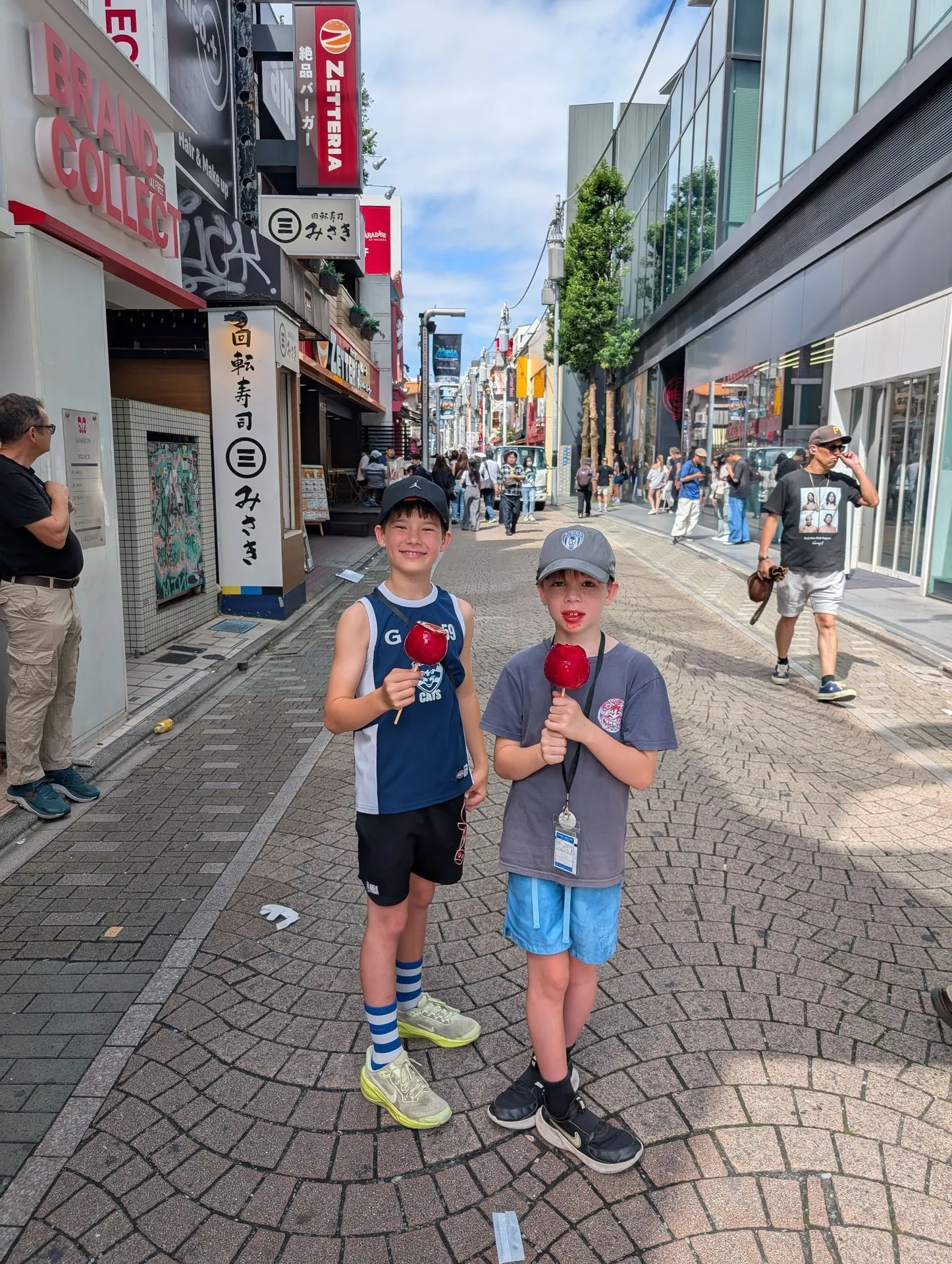
Harajuku’s Takeshita Street is one of those places that has to be experienced rather than described. A narrow pedestrian lane lined with extreme fashion shops, candy apple stalls, crepe vendors, rainbow coloured everything and teenagers dressed in elaborate costumes. The sheer visual density is extraordinary. Older kids think it’s the best street in Tokyo. Younger kids want one of everything from every food stall.
One timing note. We walked Harajuku and Shibuya on a Sunday before 11am and a lot of it was still shut, with line-ups outside lots of the shops. Tokyo retail starts late. If shopping is the point, go after 11am and accept the crowds; if you want the streets quiet for photographs, early is exactly right and you just will not get inside anything.
Ueno Park and Ameyoko Market
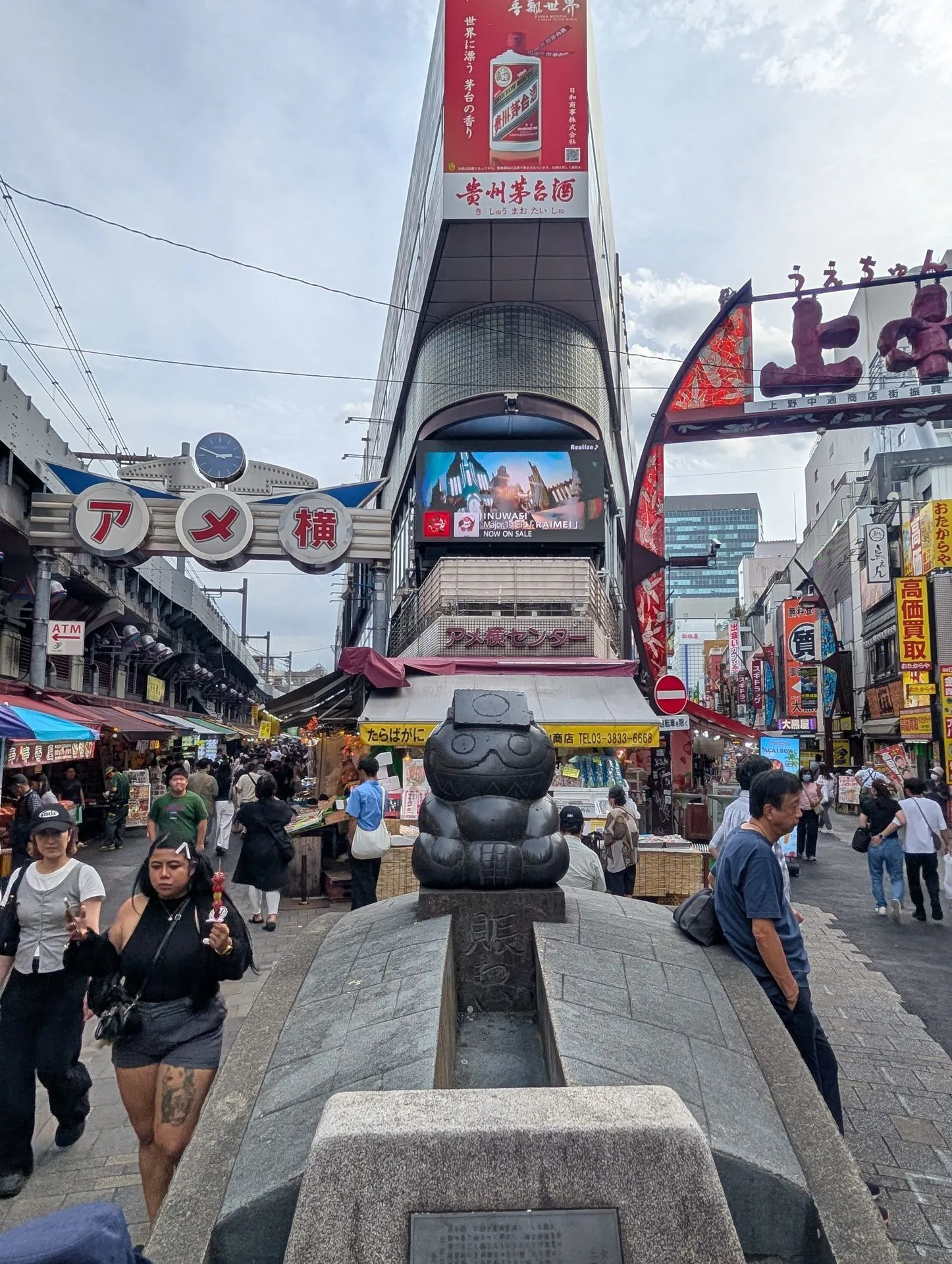
Ueno is one of Tokyo’s oldest and most spacious parks, with a broad central path lined with cherry trees, a lake, a zoo and several of the city’s major museums. It’s a good slow-morning destination, the kind of place where you sit on a bench, eat something from a nearby stall and watch Tokyo go about its Saturday. If your family is into Japanese art and history, the Tokyo National Museum at the north end is the one to look at.
The Sumo Show
Interactive sumo experiences in Tokyo let children step onto the dohyo (the ring) and meet sumo wrestlers up close. At ours the boys watched a match, then dressed up and had a match of their own. The gap between how effortlessly the wrestlers move and how impossible it looks from the outside is the entire joke. The costume dress-up is optional but the kids will want it.
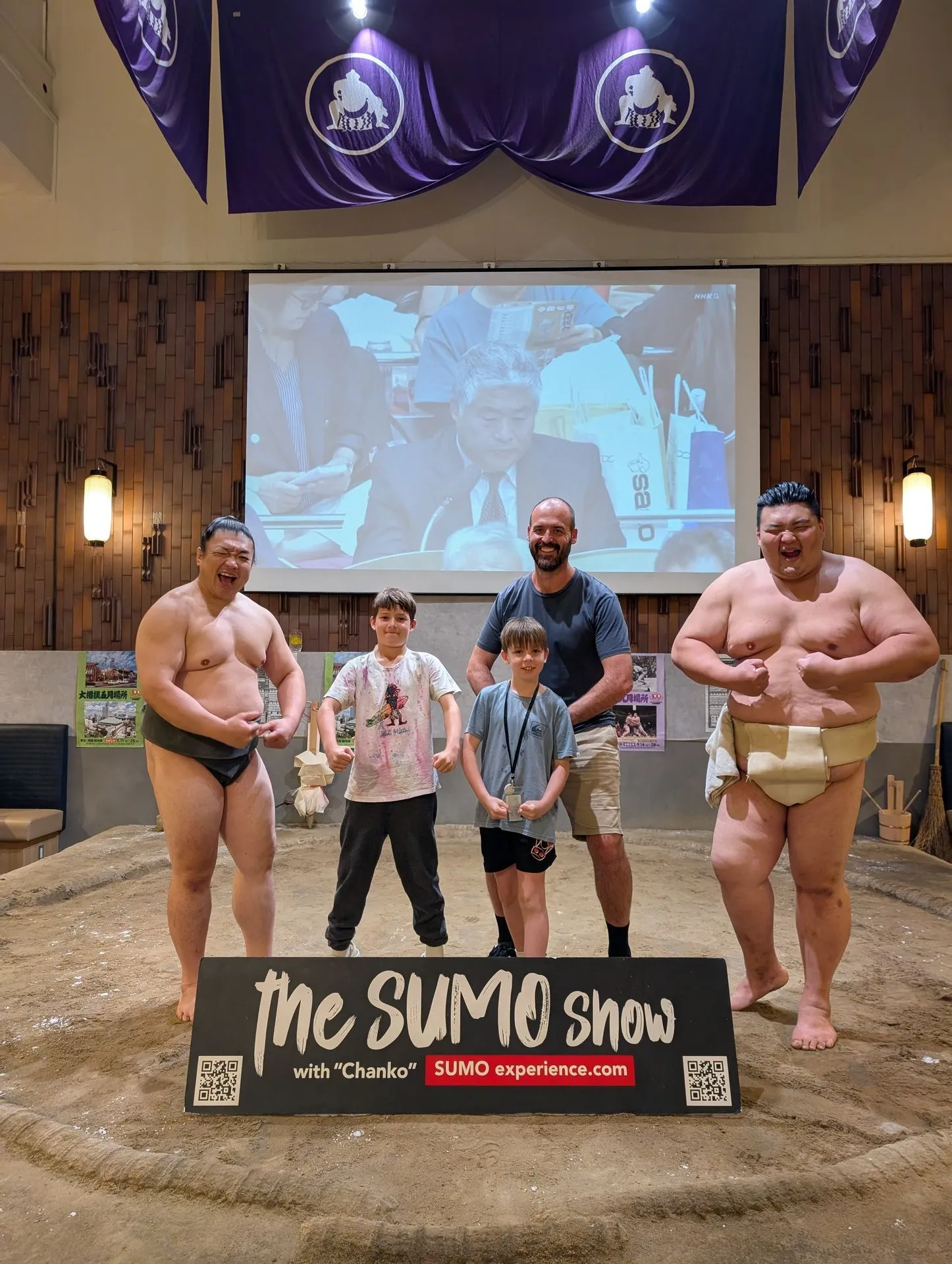
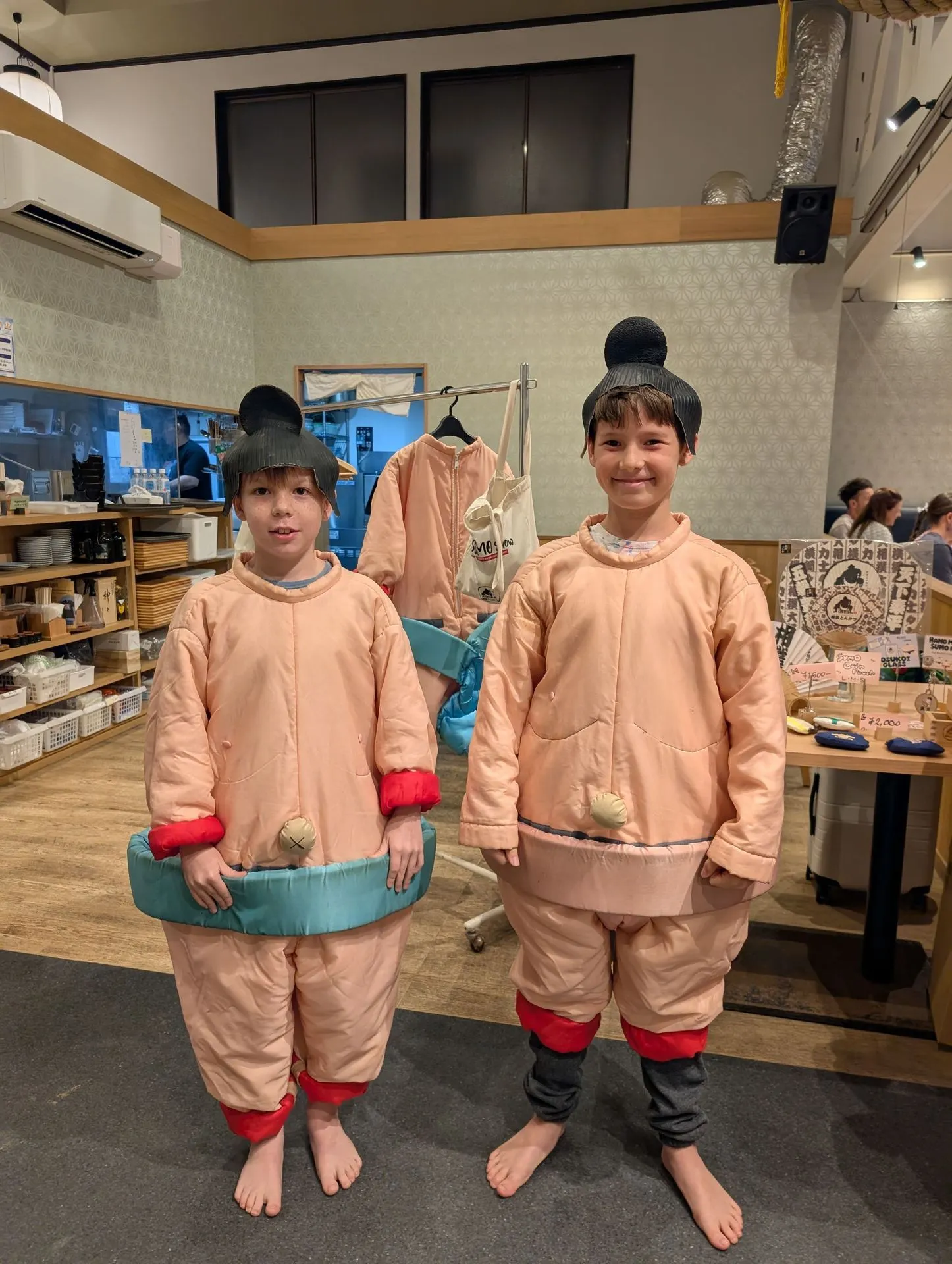
The show we did was a sumo dinner experience in Tokyo, which is where the photos above are from. Several operators run variations on it, so compare a few before you book.
Dog cafes
Tokyo has an enormous range of animal cafes, cats, owls, hedgehogs, capybaras, and the dog cafes are worth knowing about for families with kids who will be extremely, vocally delighted by them. You pay a time-based entry fee, get a drink, and spend your session with a room full of small dogs who are uniformly well-socialised and available for patting. It’s as simple and as effective as it sounds.

What to eat in Tokyo
Tokyo has more Michelin-starred restaurants than any other city in the world and also has the best convenience store food in the world, and for families, the second category matters more. 7-Eleven and FamilyMart are genuinely excellent, with fresh onigiri, yakitori, hot ramen pots, pastries and dozens of varieties of snack. The kids will have firm preferences by day two. Our guide to eating in Japan with kids goes further on the picky-eater question, which is a common worry.
🍱 Convenience store food
7-Eleven and FamilyMart in Japan are a different category from their counterparts anywhere else. Fresh onigiri, steamed buns, fried chicken, good pastries. Breakfast, lunch or a 2am snack, all solved within 30 seconds of entering.
every format
Conveyor belt (kaiten) sushi is excellent and cheap. Standing sushi bars are fast and cheap. Sit-down omakase is extraordinary and expensive. Tsukiji Outer Market is the classic spot for breakfast sushi if you are up early.
🍜 Ramen
Ichiran, the ramen chain, has solo booth seating where you customise your broth on a form. The booths are a novelty for kids, and the broth is a rich tonkotsu. Many locations across Tokyo.
🥩 Yakiniku
Japanese table BBQ, you cook your own beef, pork, seafood and vegetables on a grill set into the table. A relaxed, sociable dinner format that works well for families with varying appetites.
Where to stay in Tokyo
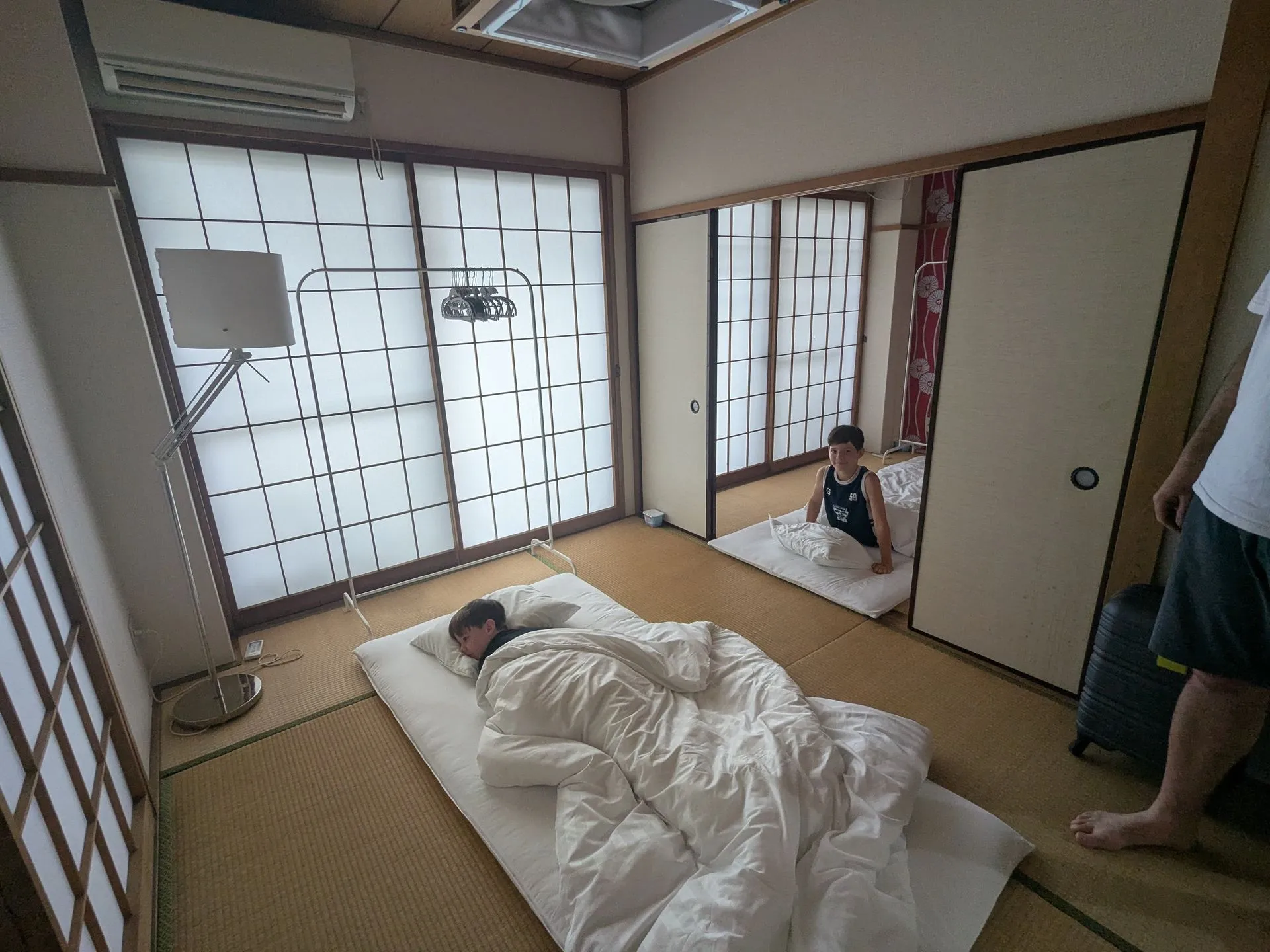
Tokyo accommodation ranges from tiny pod hotels to large family apartments, and the price variation is enormous. Shinjuku and Shibuya are the best bases for families, both are major transport hubs on multiple train lines, close to central attractions and surrounded by food options at every price point. For families needing multiple rooms, serviced apartments in the Akihabara and Asakusa areas offer more space at better value than central hotels. We have written up hotels against apartments, and what we actually booked, in where to stay with a family.
Still looking for somewhere to stay? Shinjuku and Shibuya have the best range of family-friendly hotels at every price point, and both put you on the doorstep of everything.
Want Tokyo guided? Day tours covering Disneyland, TeamLab, Akihabara and Shibuya with English-speaking guides, useful for a first visit when the scale of the city is genuinely overwhelming.
Practical tips for Tokyo with kids
The things we would tell a friend the week before they fly. Two of them have guides of their own, getting around Japan and paying for things once you land.
🚇 Get an IC card first
Suica or ICOCA IC cards handle every train, bus and most convenience store purchases in Tokyo. Load them at any ticket machine. Without one you’ll be buying individual tickets constantly, time-consuming and unnecessarily complicated.
📱 Google Maps is reliable
Google Maps works accurately for Tokyo trains, including real-time schedules and platform numbers. Download the offline map before you land. The trains are so reliable that you can plan your day around departure times to the minute.
🎟️ Book major attractions ahead
Disneyland, TeamLab Planets, sumo shows and the more popular restaurants all need advance booking. Disneyland and TeamLab both sell out on peak days. Make reservations before leaving home, not after landing.
🌡️ Tokyo in summer
July and August in Tokyo are genuinely hot and very humid. Plan indoor activities (TeamLab, Disneyland, aquariums, museums) for the hottest parts of the day. Carry water constantly.
🧳 Luggage forwarding
Takkyubin luggage forwarding (Yamato Transport or Sagawa) lets you send bags between hotels. The price depends on bag size and distance, so check Yamato’s rate table before you book. Use it when moving between cities, the Shinkansen is much more enjoyable without large cases.
🗺️ Get an eSIM before you fly
Reliable data is essential for navigation, translation (Google Translate’s camera mode reads menus and signs in real time) and communicating. We used an Airalo eSIM on our two phones and it worked the whole trip. Install it at home so it is ready when you land. If a phone can’t take an eSIM, a pocket WiFi from the airport covers the whole family on one device.