Two weeks in Japan. The route we actually walked.
Most two-week Japan itineraries are assembled from other itineraries. This one is a real trip: two adults, an eight year old and a ten year old, nineteen days in September, self-planned, no tours. What follows is that route trimmed to fourteen days, so the days we would cut are already cut.
Every stop below is somewhere we went. The places we did not reach are listed separately at the end, so you always know which is which. Nothing here is recommended on reputation and then written up as though we had done it.
-
Osaka
大阪Where we landed. Smaller and gentler than Tokyo, which made the jet lag easier.
- 4 nights
- Nara and USJ from here
Train -
Kyoto
京都Temples, the monkey park, and a deliberately empty day in the middle.
- 4 nights
Shinkansen -
Odawara
小田原Our base for Hakone. Cheaper than staying up the mountain.
- 2 nights
- Hakone from here
Train -
Tokyo
東京teamLab, Shibuya, and the flight home.
- 3 nights
Day by day, in order.
Four nights in Osaka, four in Kyoto, two in Odawara for the Hakone loop and three in Tokyo. Nara and Hakone are day trips from bases you are already sleeping in, which is why five stops fits into fourteen days without living on trains.
What the trip cost us →- Days 1–2 Osaka 大阪
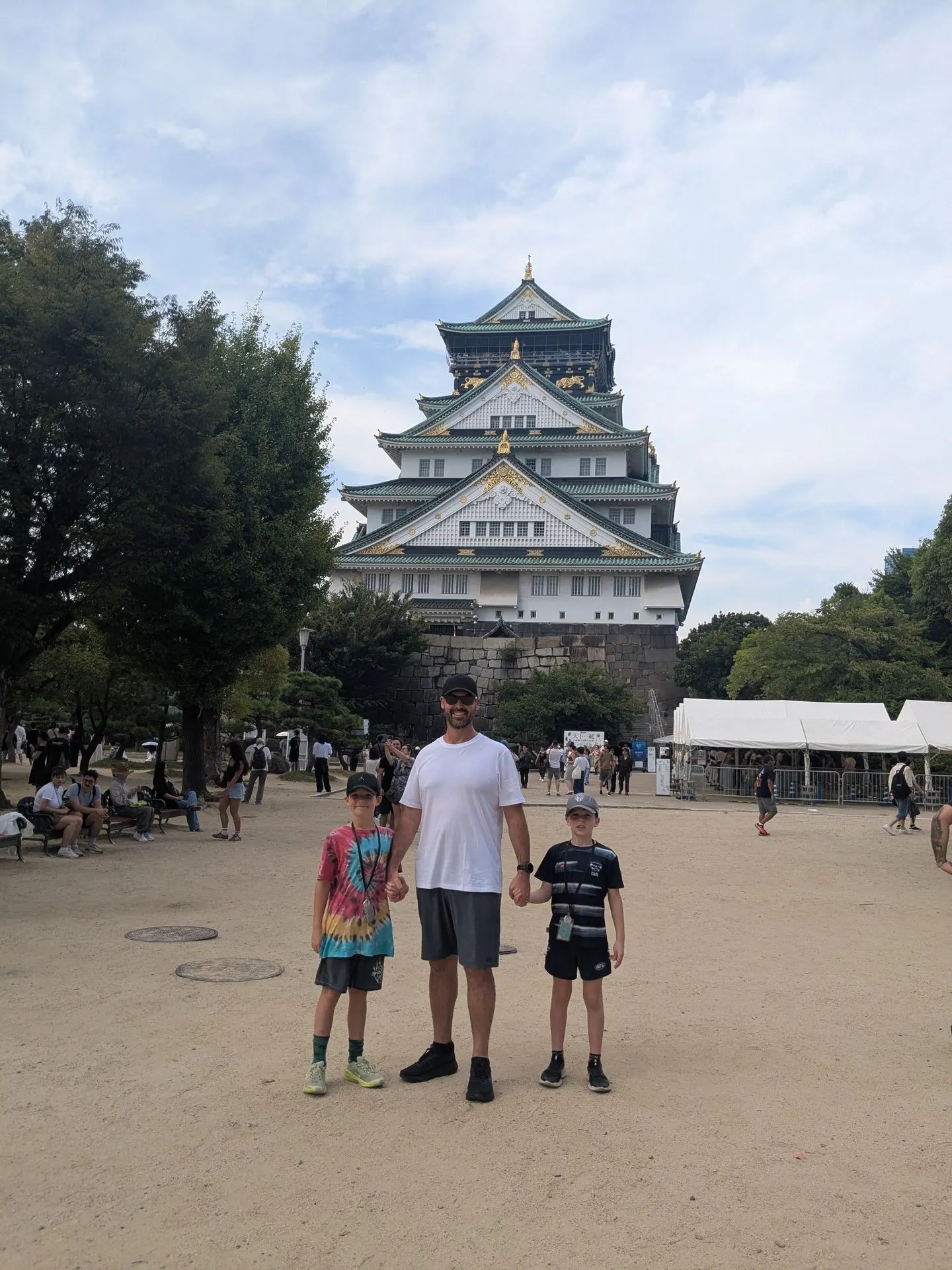
Land and plan nothing. We spent the first night in a simple hotel near the airport with a convenience store dinner, then moved into the city: Osaka Castle, the playground in the grounds, and Dōtonbori after dark for ramen and the lights.
- Day 3 Nara 奈良
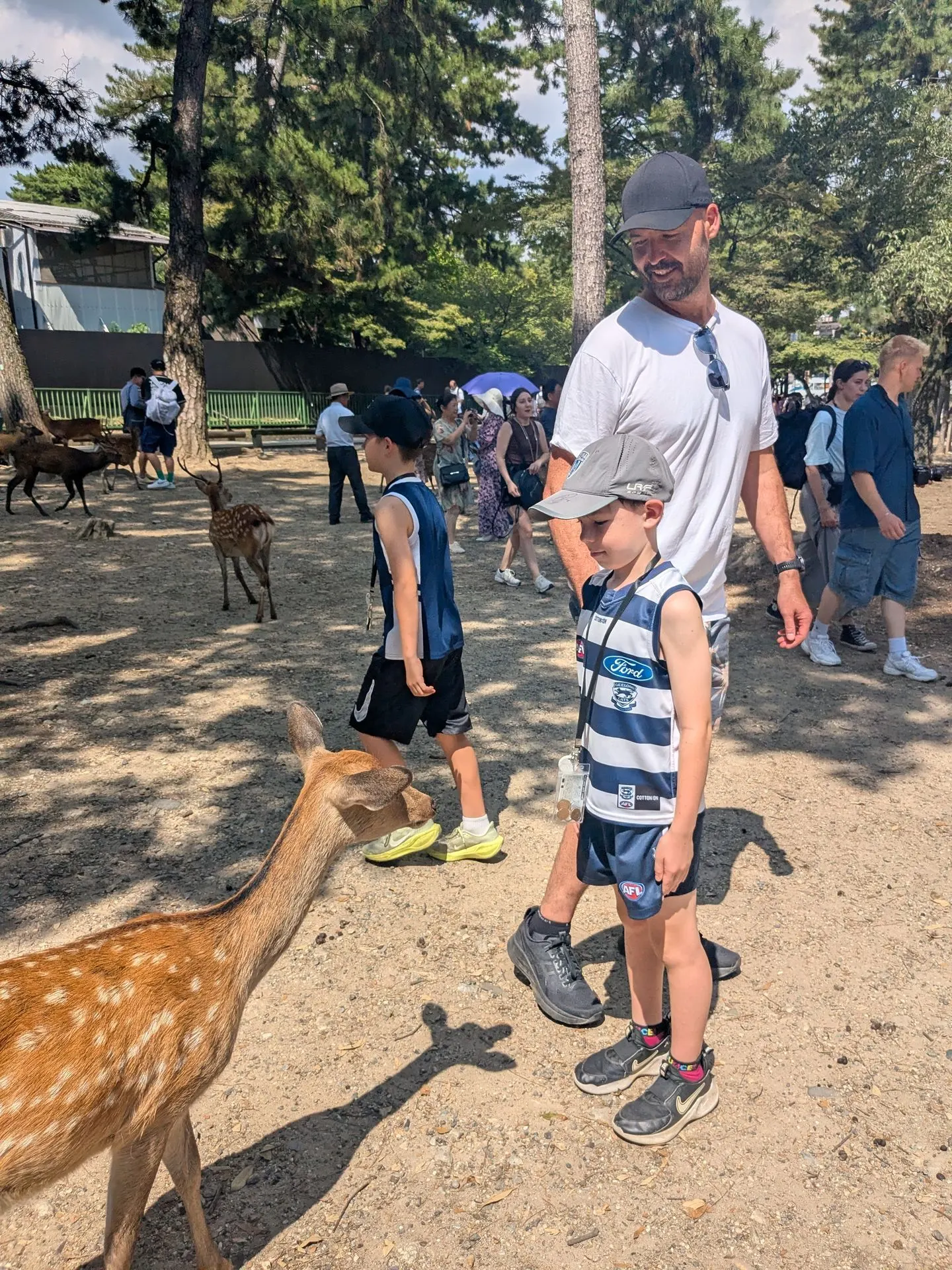
Day trip from Osaka. Tōdai-ji and the Great Buddha, Kasuga Taisha, and the deer, which are bolder than you expect. One of them bit Matt. Go early, this was one of the hottest days we had.
- Day 4 Osaka 大阪
The aquarium, which is built as a walk down and around the tanks so you see the whale sharks from several levels. The big ferris wheel next door, then the Umeda Sky Building facing west for sunset.
- Day 5 Universal Studios ユニバ
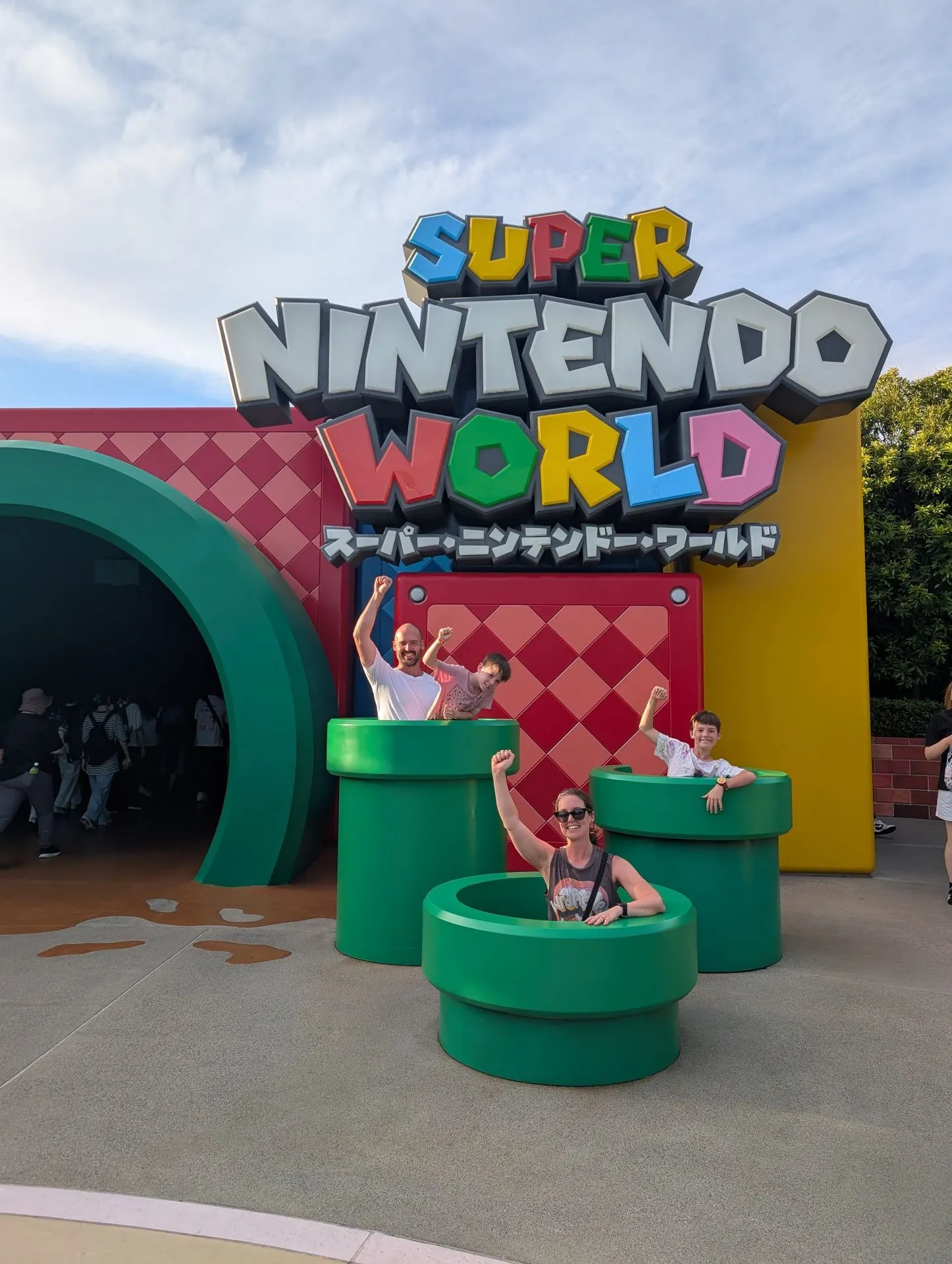
One full park day, through the gates at opening. The interactive zones, Super Nintendo World and the Wizarding World, are what the boys still talk about. Express passes earn their money on a busy day. Tickets and passes.
- Days 6–8 Kyoto 京都
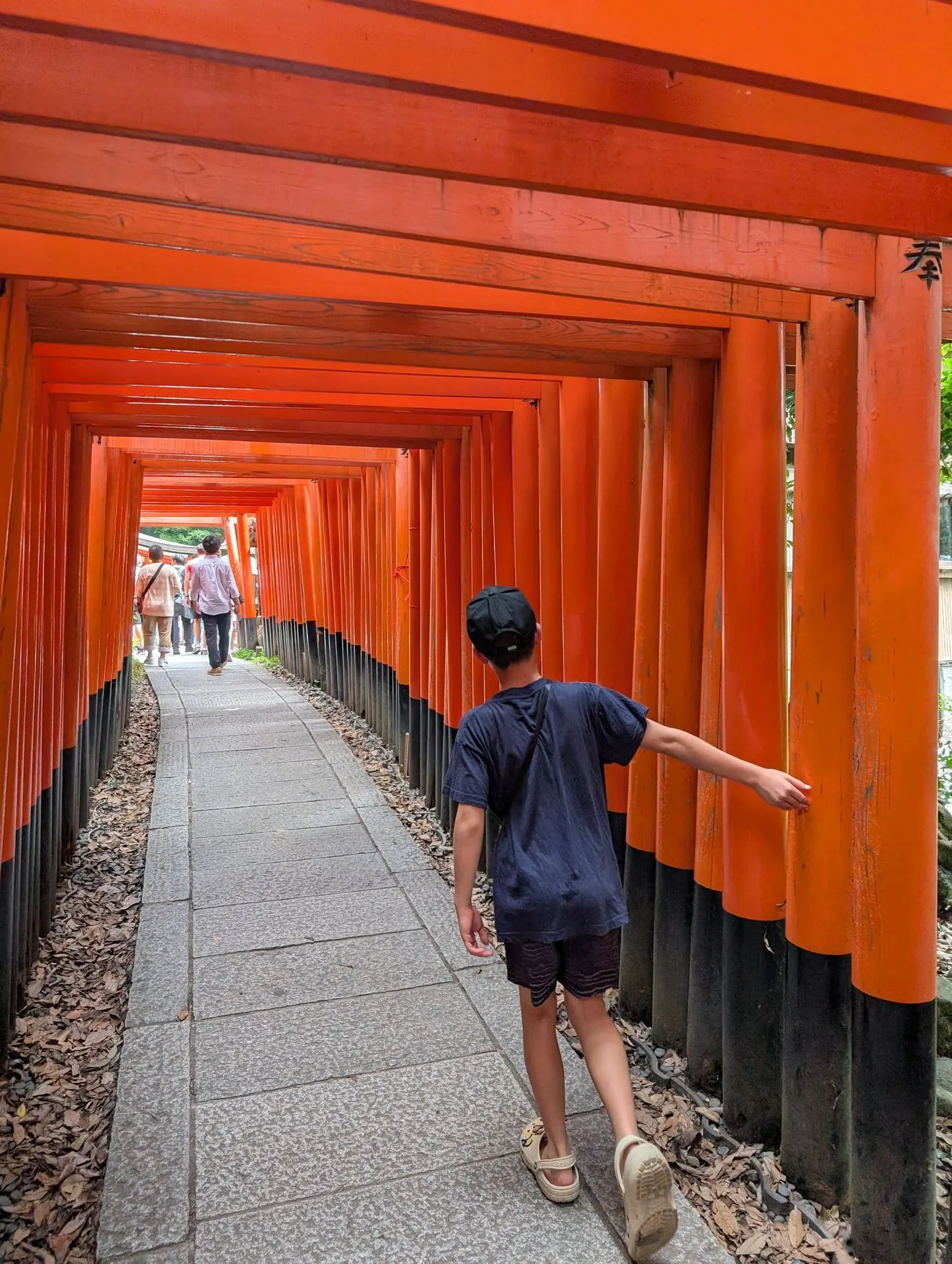
Train across, then the Golden Pavilion, the bamboo grove (lovely and crowded, so take the back streets), the monkey park across the river which closes at 4:30pm, Fushimi Inari, Nishiki Market and the samurai and ninja museum.
- Day 9 Kyoto 京都
A deliberately slow day, and one of the better decisions we made. By this point the kids were cooked. Washing, a late start, one quiet temple and a long lunch. Build one of these into any two-week trip.
- Day 10 Odawara 小田原
Shinkansen from Kyoto. We used Odawara as the base for Hakone rather than staying up the mountain: cheaper, a bit of sea breeze, and the eating streets are right by the station.
- Day 11 Hakone 箱根
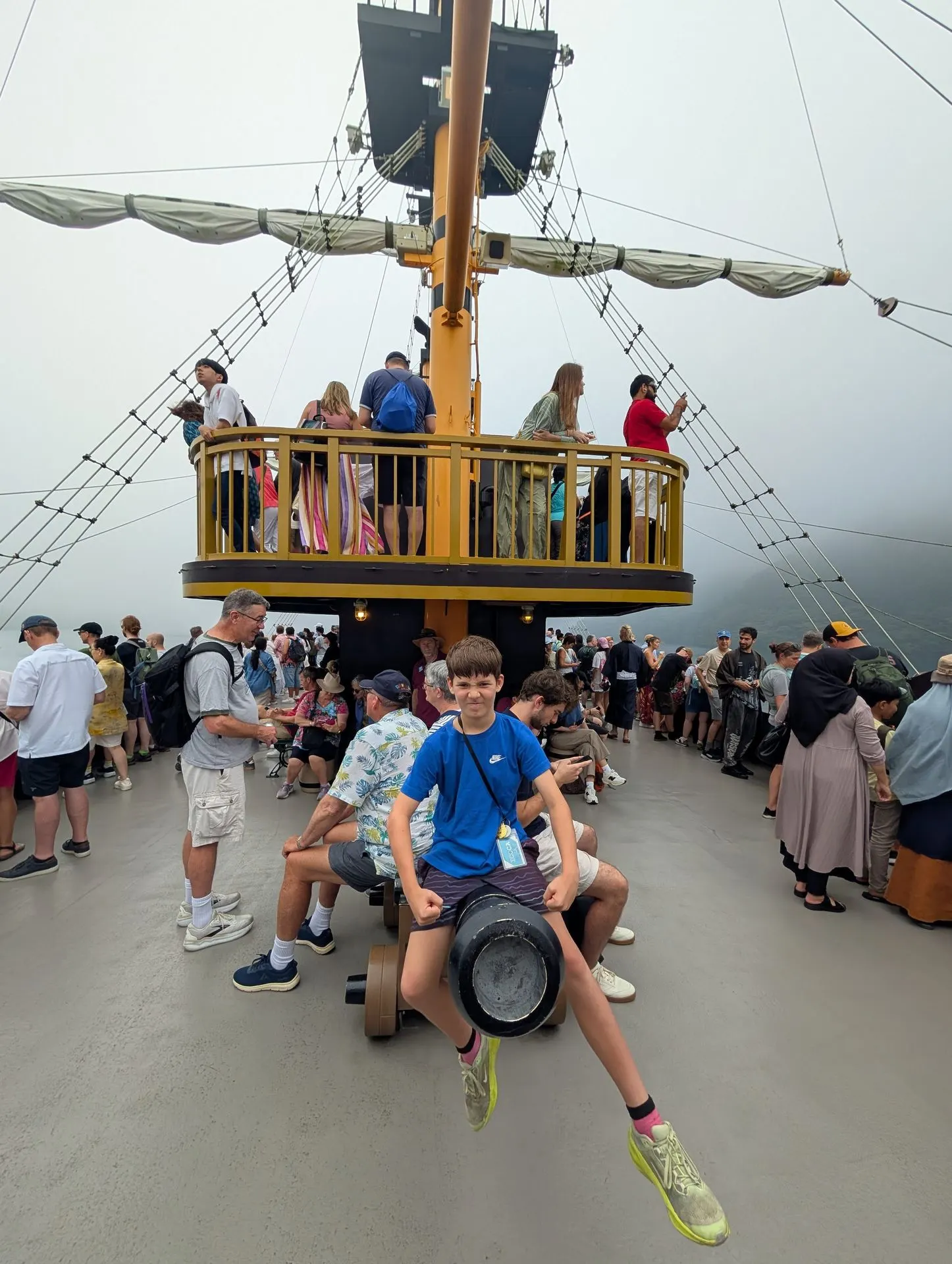
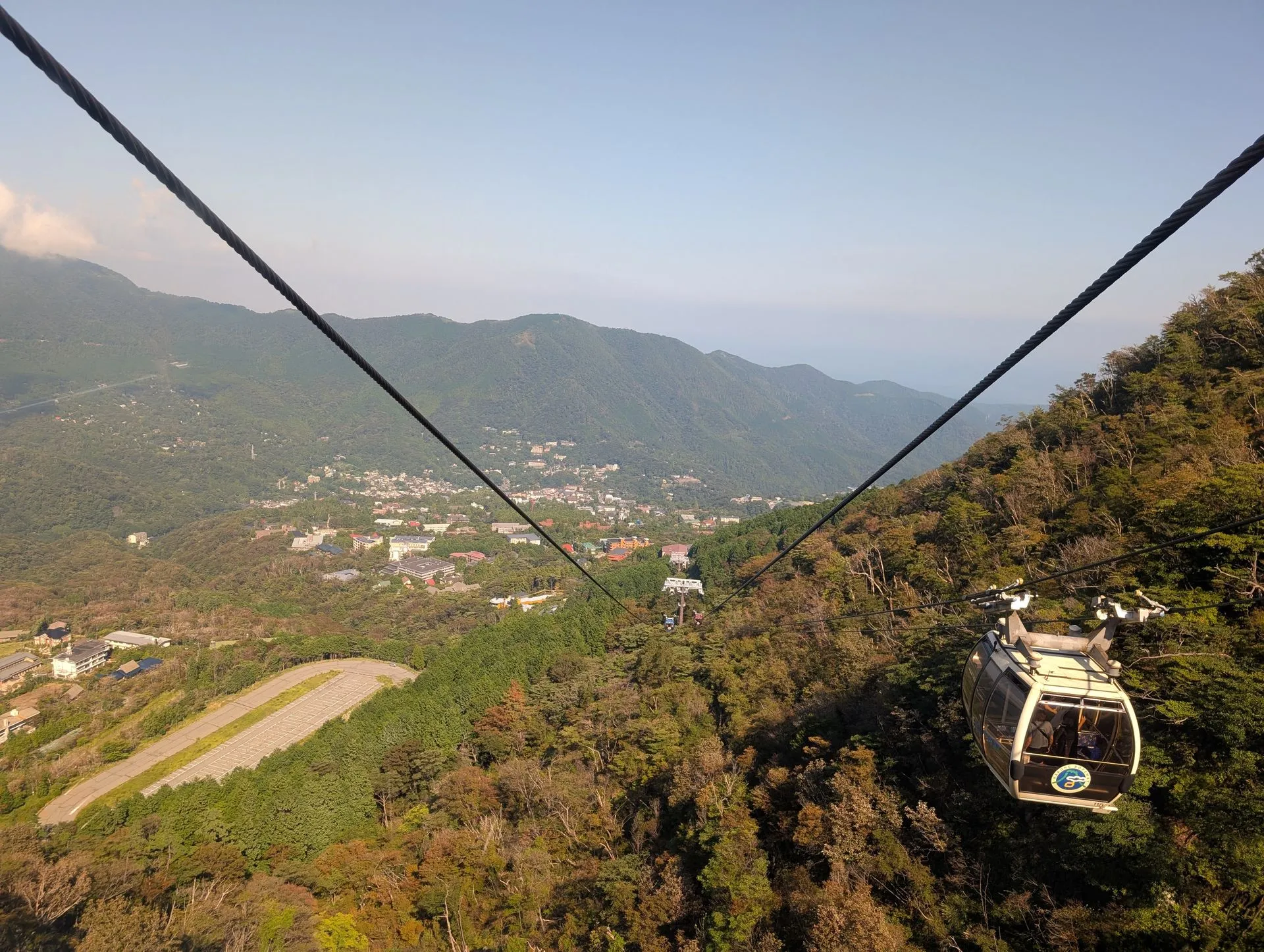
The Hakone loop in a single day. Train up to Gōra, the Open Air Museum where the kids climb on the art, the cable car, the ropeway over the volcanic peaks, the pirate ship across the lake and the bus back down. The Freepass covers the lot.
- Day 12 Tokyo 東京
Odawara Castle and its ninja history in the morning, then the train into Tokyo. Check your carriage number before you board. We got on the wrong one and nearly missed the train entirely.
- Day 13 Tokyo 東京
teamLab Planets, which you have to book ahead, then Shibuya and Harajuku, or Akihabara if you have a gamer in the family. Leave room for a playground somewhere in the middle.

- Day 14 Fly home 帰国
One last Tokyo morning, then the airport. Tired, happy, already planning the next one.
What didn’t make the fourteen days
- Tokyo Disneyland
- We did this and it was one of the best days of the trip, but on a tight fourteen days it competes directly with Universal Studios. Pick one park unless you have the days to spare.
- The Ghibli Museum
- We did not get there. Tickets go on sale on a fixed schedule and sell out fast, so it needs planning well before you fly. Recommended on reputation, not on our own visit.
- A night in a ryokan
- We stayed in apartments the whole way and would still recommend one traditional night with an onsen if the budget stretches. We have not done it as a family, so we are recommending it rather than reviewing it.
- Tokyo DisneySea
- Exists nowhere else in the world. We chose Disneyland this time because at eight and ten there is still time to come back for it, so we cannot tell you about DisneySea first-hand yet.
The order matters more than the list.
Almost every two-week itinerary covers the same five or six places. What separates a good fortnight from an exhausting one is the direction you travel in, how often you change hotels, and whether you left yourself anywhere to fall over. Four decisions did most of the work on ours.
Land in Osaka, fly home from Tokyo
Booked as an open-jaw, into one city and out of the other. It costs little or nothing extra on most fares and it saves a full day of backtracking across the country with tired children. If you fly in and out of Tokyo, build a day back in at the end and accept you will see the same stretch of the Tokaido line twice.
Put the easier city first
Osaka is smaller, cheaper and far less overwhelming than Tokyo, which makes it a much kinder place to be jet-lagged in. By the time you reach Tokyo you have already learned the trains, the konbini and the rhythm of the place, so the biggest city arrives when you are competent rather than when you are wrecked.
Move as little as possible
Five stops in fourteen days sounds like a lot and is not, because Nara and Hakone are day trips from bases you are already sleeping in. Every hotel change costs you a morning of packing and an afternoon of finding your feet. Fewer bases, more days.
Leave a day with nothing in it
Not a light day. An empty one. We put ours in the middle of Kyoto and it was one of the better decisions we made on the whole trip. More on that below, because it is the single piece of advice we would push hardest.
With kids, give one day to nothing at all.
Day nine of ours was a Kyoto morning with no plan in it. Washing, a late start, one quiet temple within walking distance, and a long lunch. On paper it is a wasted day in an expensive fortnight.
It was the best thing we did. By that point the children were genuinely cooked, and the five days that followed, Hakone, the castle, teamLab, were all better for it. If you cut anything from the route below, cut a sight. Do not cut the empty day.
The tell is not that they complain. It is that the eight year old stops looking at anything.
What we would do differently.
Five things, all of which cost us something. Two are bookings we left too late, one is a train we nearly missed, one is money we wasted, and one is not really avoidable at all.
Book the timed things before you fly
teamLab Planets has to be booked ahead and we nearly missed out. The Ghibli Museum we never got into at all, because tickets go on sale on a fixed schedule and are gone quickly. Anything with a ticket window belongs on a list you deal with at home, not something you discover from a hotel room.
Check the carriage number, not just the train
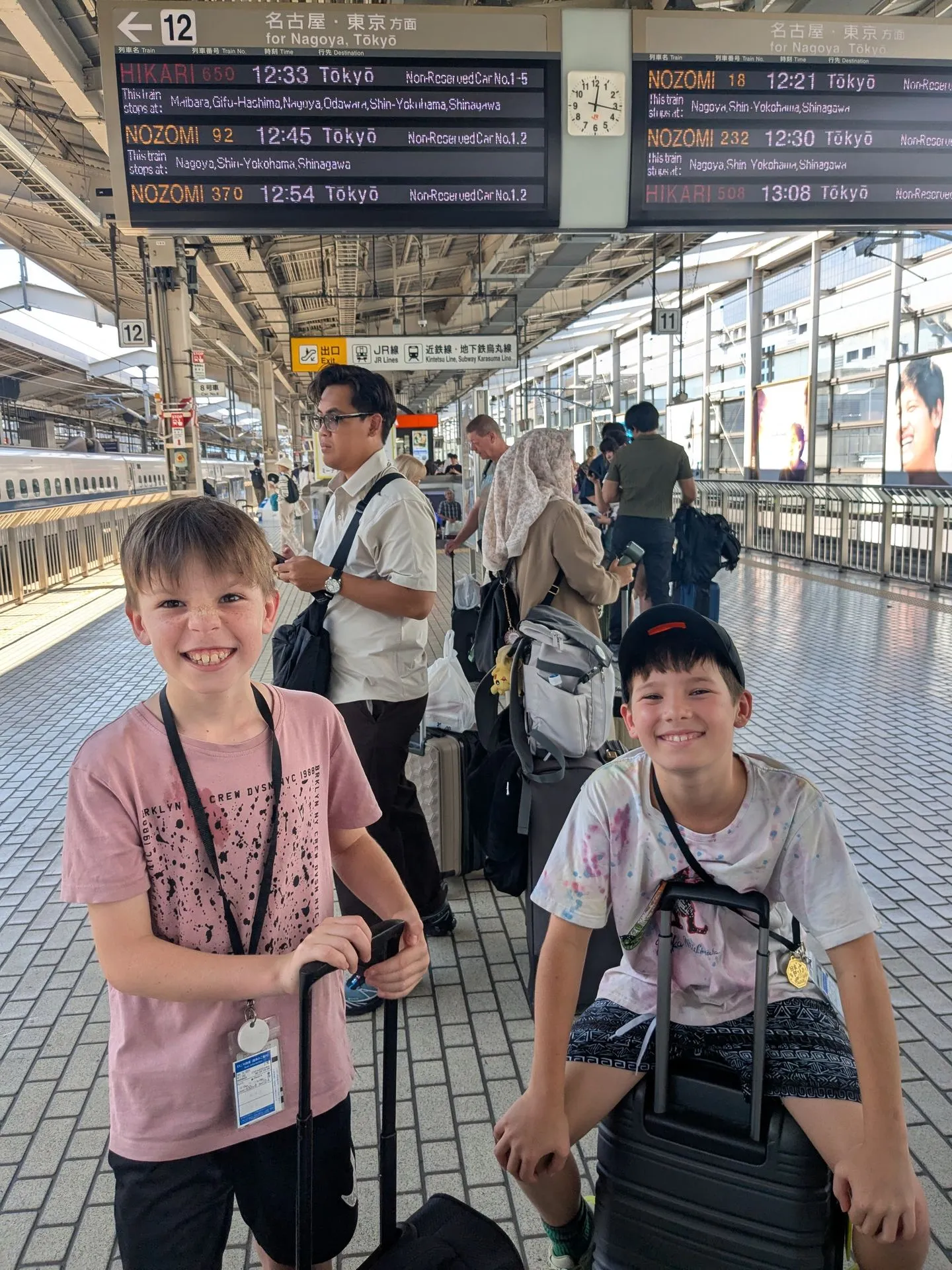
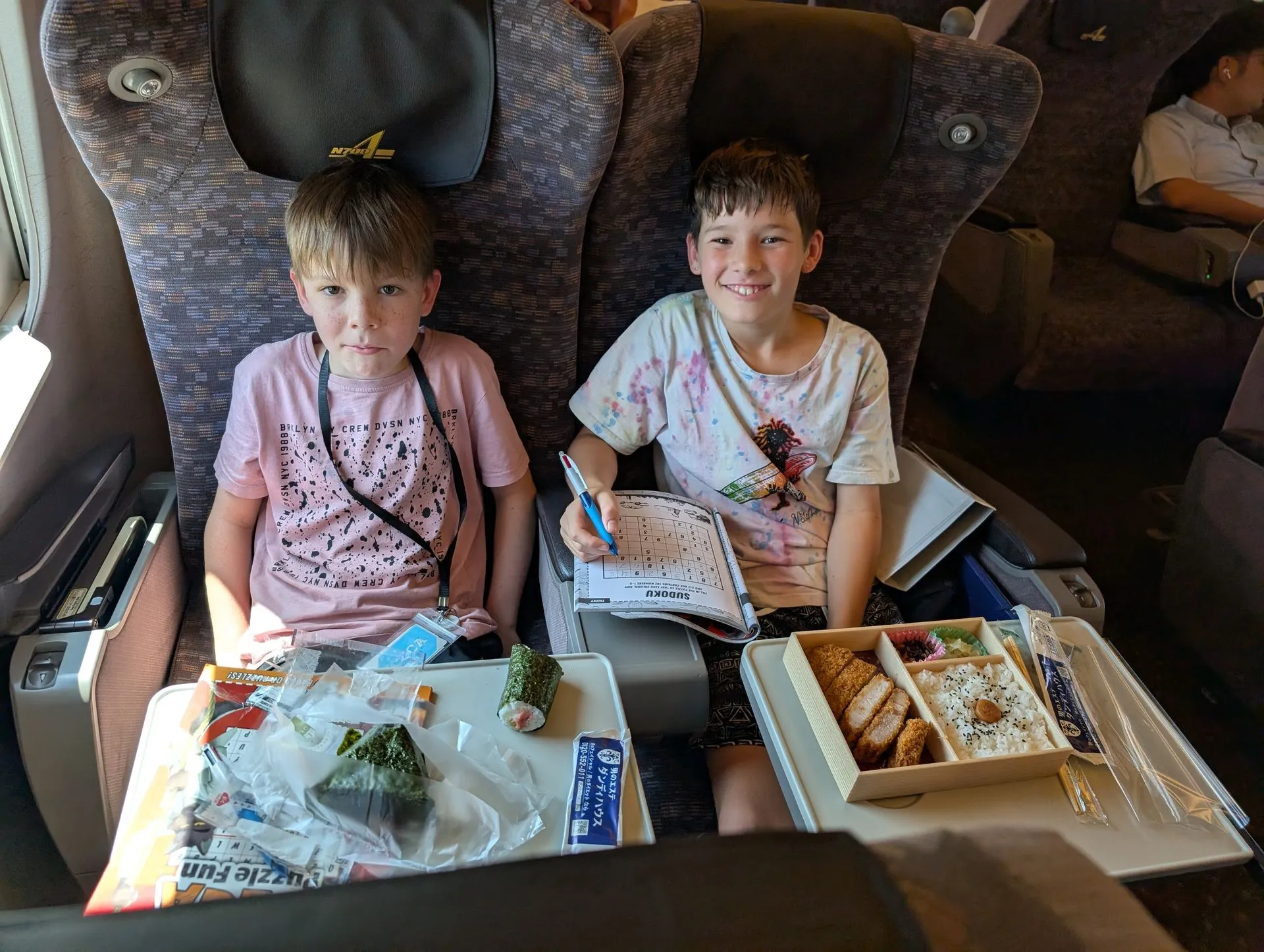
We boarded the Shinkansen at Odawara in carriage six when our seats were in carriage one, realised on the platform, and very nearly missed it entirely. Reserved seats are carriage-specific and the platform markings tell you where to stand. Look before the train arrives, not after.
Put a tracker in the kids’ IC cards
Ernie lost his ICOCA card by a creek in Kyoto. We knew it had been handed in to a police station because the boys’ cards and lanyards had trackers in them. It turned into a police report, two passports and a genuinely friendly hour we would rather not have spent. The trackers are what turned a lost card into an errand.
Skip the transport day pass unless you have done the sums
We bought one in Kyoto and did not get the value out of it. Day passes reward a specific kind of day, lots of short hops on the right network, and punish the days you end up walking or taking a taxi. Work out your actual route first.
Expect one bad day and do not fight it
Lyndsie got food poisoning near the end and lost the best part of two days. She went down as we were walking out the door to the sumo, so the three of us went without her. It is not a planning failure, it is a fortnight with four people in it. Travel insurance and a flexible last few days matter more than any packing tip.
The practical layer under all of this lives in its own guides: getting around Japan, money once you land, and where to stay with a family.
The list we did not have.
Three things on this route have a ticket window, and leaving them until you land is how you end up doing what we did. In the order the fourteen days hit them.
-
Universal Studios Japan, day five
Dated park tickets, and the Express Pass as a separate purchase if you want the queues solved. Both sell out on peak dates. Check USJ tickets.
-
The Hakone loop, day eleven
Not a timed ticket, but the Freepass covers the ropeway, the pirate ship, the mountain railway and the buses on one pass. If you are doing the loop it saves working it out at three separate counters. Check the Hakone Freepass.
-
teamLab Planets, day thirteen
Timed entry, and the good slots go. This is the one we nearly missed, and the reason this list exists. Check teamLab tickets.
-
And one we cannot help with
The Ghibli Museum, which we never got into. Tickets come from the official channel on a fixed release schedule. What you will find resold elsewhere is a guided tour at several times the price rather than the ticket itself, so we are not sending you to one. It is the only thing on our list with no shortcut.
Roughly A$17,000, for four.
That was our real total for three weeks, two adults and two children, flights from Australia included. It is the number we could not find anywhere when we were planning, because almost everything published is per person or per day.
Fourteen days rather than twenty-one does not take a third off it. Flights, insurance and the theme park days land whatever the length, so the savings come out of accommodation and food rather than the total.
The full breakdown, by category, with what we would spend differently, is on the family budget page.
Accommodation is where the fourteen-day number actually moves. Flights and the park days land whatever you do. We booked apartments with a washing machine in every city on this route and would do it again.
Is two weeks long enough for Japan with kids?
Yes, comfortably, if you keep to one region. Two weeks covers Osaka, Kyoto and Tokyo with day trips to Nara and Hakone at a pace children can actually hold. It is not long enough to add Hiroshima, Hokkaido or Okinawa without the trip turning into a series of train journeys. We travelled for nineteen days and the fourteen below is that route with the least essential days removed.
What is the best order to do Osaka, Kyoto and Tokyo?
Osaka first and Tokyo last, flying into one and out of the other. Osaka is the gentler city to be jet-lagged in and Tokyo is the one you want to arrive at once you already understand the trains. Doing it in reverse works but puts the hardest city on your worst day.
How many nights should we spend in each place?
On our fourteen days: four nights Osaka, four Kyoto, two Odawara for Hakone, and three Tokyo, with Nara and the Hakone loop done as day trips. The thing we would protect is the four in Kyoto, because one of them is a rest day.
Do you need a JR Pass for two weeks in Japan?
Not necessarily, and it is worth doing the arithmetic rather than assuming. This route has only three long-distance legs, Osaka to Kyoto, Kyoto to Odawara and Odawara to Tokyo, plus a lot of short local hops that a rail pass covers poorly. The 7-day ordinary pass also rises from 50,000 to 53,000 yen on 1 October 2026, so if you travel after that the sums change again. Price the individual tickets for your actual route before you buy a pass.
What does two weeks in Japan cost for a family of four?
Our three-week trip came to roughly seventeen thousand Australian dollars for two adults and two children, including flights from Australia. The full category breakdown is on our budget page. Two weeks rather than three does not scale the total down by a third, because flights and the fixed costs land regardless.
Is this itinerary suitable for younger children?
Ours were eight and ten, which is old enough to walk a lot and queue a little. With younger children the route still works but the days do not. The theme park day, the Hakone loop and the Fushimi Inari walk are all long, and each would need shortening or dropping.
Plan it the way we would.
We planned this trip ourselves, paid for it ourselves, and wrote down what worked and what did not. All of it is on the site, free, with nothing to sign up for.
- Where to go, and how long to give each place
- What to book ahead, and what to skip
- Getting around with kids, without the guesswork
- What it actually cost us
The planning guides
Flights, trains, money, food, insurance and where to stay. Written after the trip, not before it.
Read the guides → Browse destinations