Why Hakone works so well for families
Hakone sits in a volcanic caldera a short train ride up from Odawara, which is about 35 minutes from Tokyo by Shinkansen, and it delivers something genuinely different from the temple-and-shrine circuit of Kyoto and Nara. Here the landscape itself is the attraction, active volcanic vents, a lake formed inside a crater, gondolas floating through sulphurous clouds, and mountains that frame a view of Mt Fuji on clear days. It feels wilder and more dramatic than anywhere else on a standard Japan itinerary.
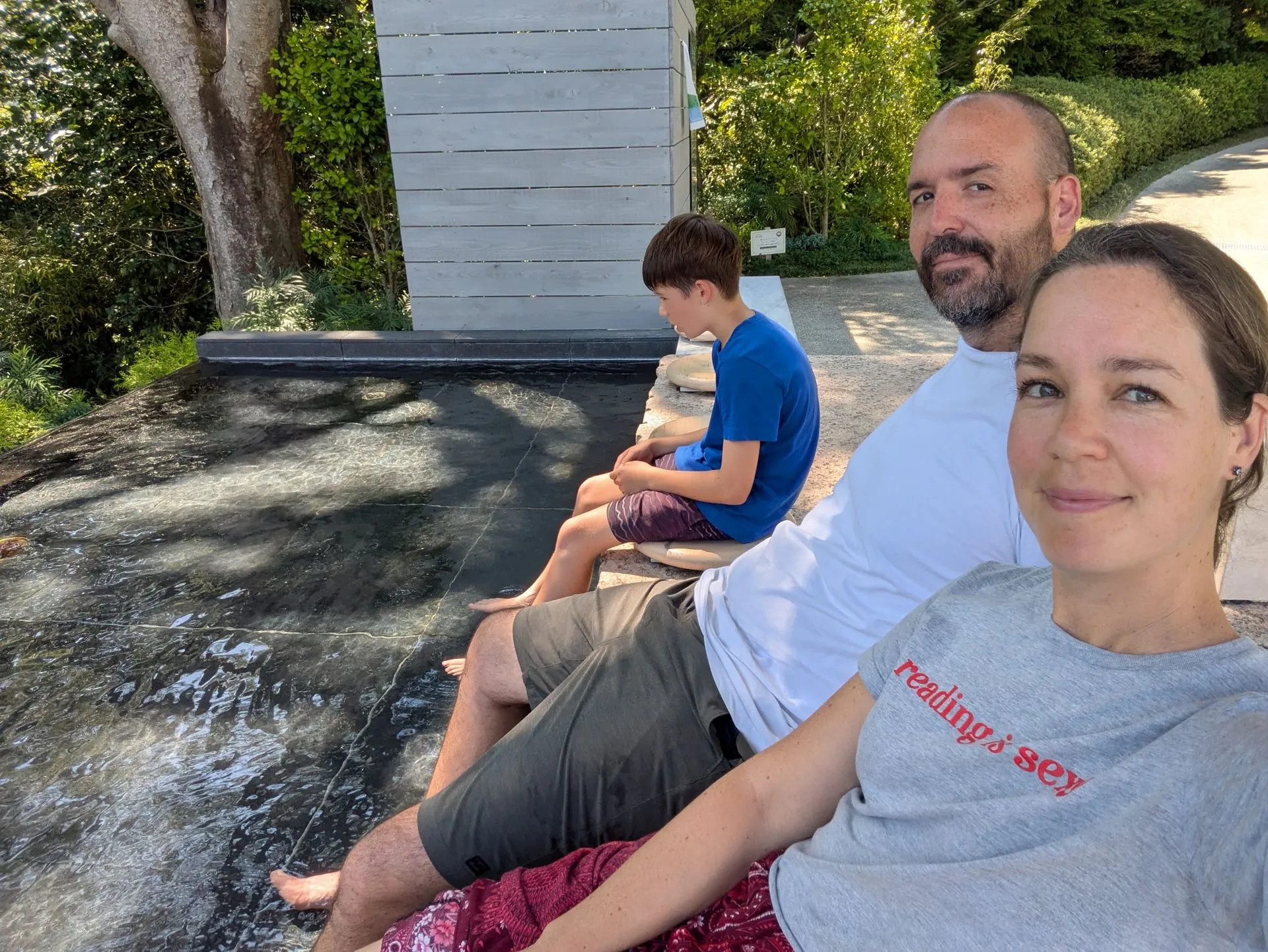
For families it’s also refreshingly hands-on. The Open Air Museum has sculpture kids can climb inside and a free natural hot spring foot bath. The pirate ship across Lake Ashi is exactly as theatrical as it sounds. Odawara Castle, just down the Shinkansen line, is a proper keep with views over the Pacific. And the Shinkansen journey itself comes with ekiben bento boxes, bought at the station before you board.
Hakone sits naturally on the Shinkansen route between Tokyo and Kyoto, making it the ideal overnight stop rather than a detour. Coming from Kyoto, the journey to Odawara takes about two hours on the Hikari Shinkansen. From Tokyo it’s about 35 minutes. Either way, two nights gives you enough time to cover the highlights without feeling rushed.
Planning your own Japan trip? Our planning guides cover flights, trains, food, where to stay and what it cost, all from one family's trip.
Getting there: the Shinkansen experience
The Shinkansen to Odawara is part of the Hakone experience, not just the means of getting there. Whether you’re coming from Kyoto or Tokyo, the bullet train reaches speeds of around 285km/h and the journey feels quick enough to be surprising. From Kyoto, take the Hikari Shinkansen, about two hours to Odawara. From Tokyo, the Hikari gets you there in around 35 minutes, and the Kodama takes a little longer. For kids on their first Shinkansen, the acceleration alone is worth the ticket. How the rest of the network fits together, seats, luggage and travelling with kids, is in getting around Japan.
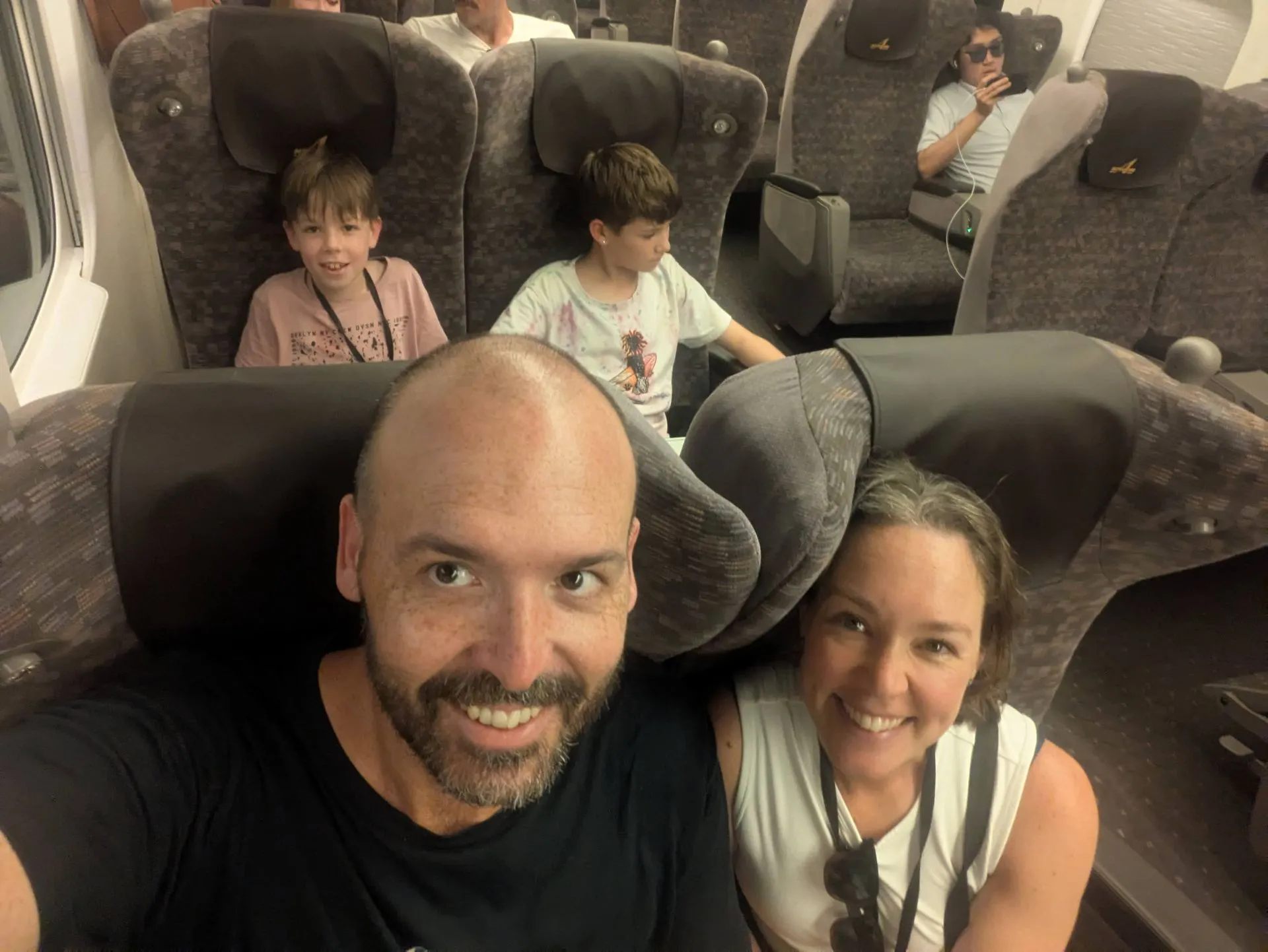
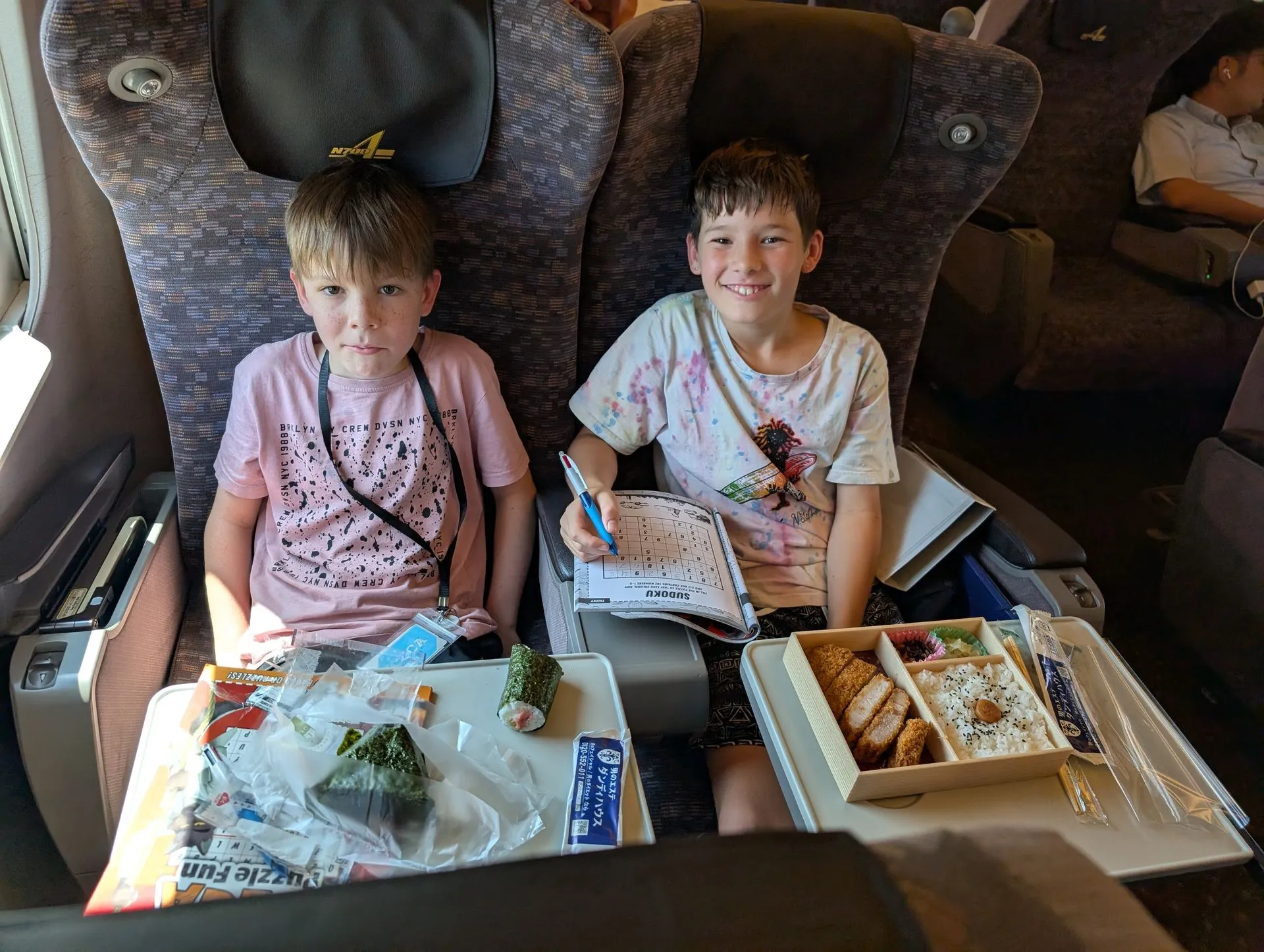
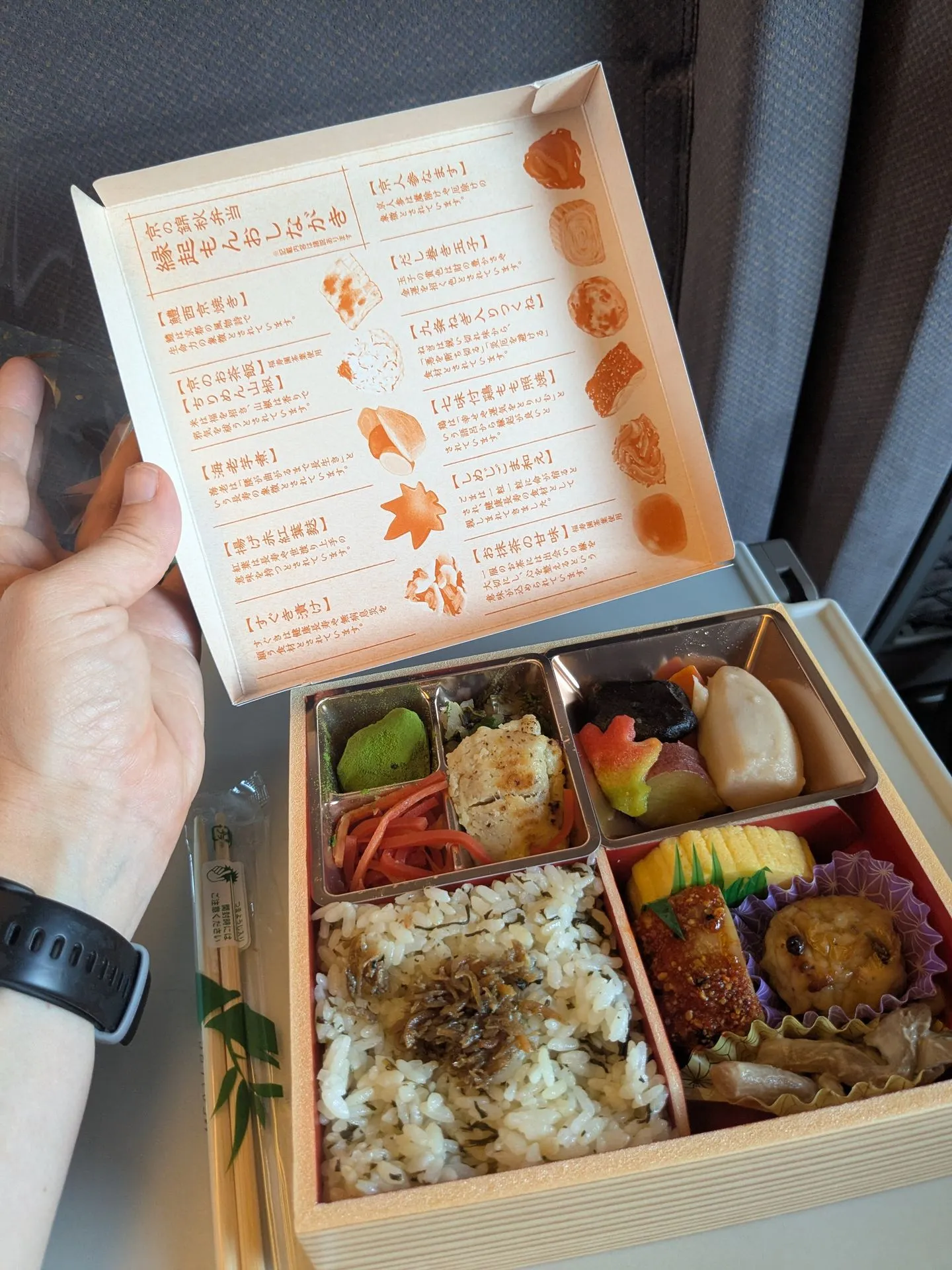
The ritual we’d recommend is buying ekiben (station bento boxes) before boarding. Kyoto Station and Tokyo Station both have excellent selections, beautifully packaged regional bento ranging from pressed sushi to wagyu beef sets. Eating them as the city blurs past the window is one of those small travel moments that sticks. Ours ate theirs on the way to Odawara.
From Kyoto
Kyoto Station → Odawara on the Hikari Shinkansen. About two hours. Nozomi trains do not stop at Odawara and only some Hikari do, so check the timetable. The Hikari and Kodama are both covered by the JR Pass if you have one.
From Tokyo
Tokyo Station → Odawara on the Hikari or Kodama Shinkansen. About 35 minutes on the Hikari, a little longer on the Kodama. Direct with no changes. Easy to combine with a Tokyo hotel base at the start or end of your trip.
Odawara: more than a transit stop
Most visitors treat Odawara as pure transit, the Shinkansen stop you pass through on the way to Hakone’s mountains. We based ourselves here for our whole stay and found it genuinely worked well as a family. It’s a real town with a coastal feel, far more affordable than the mountain resorts, and better connected than people expect. The Hakone Tozan railway runs from Odawara Station directly into the mountains, so every attraction is still easily reachable.
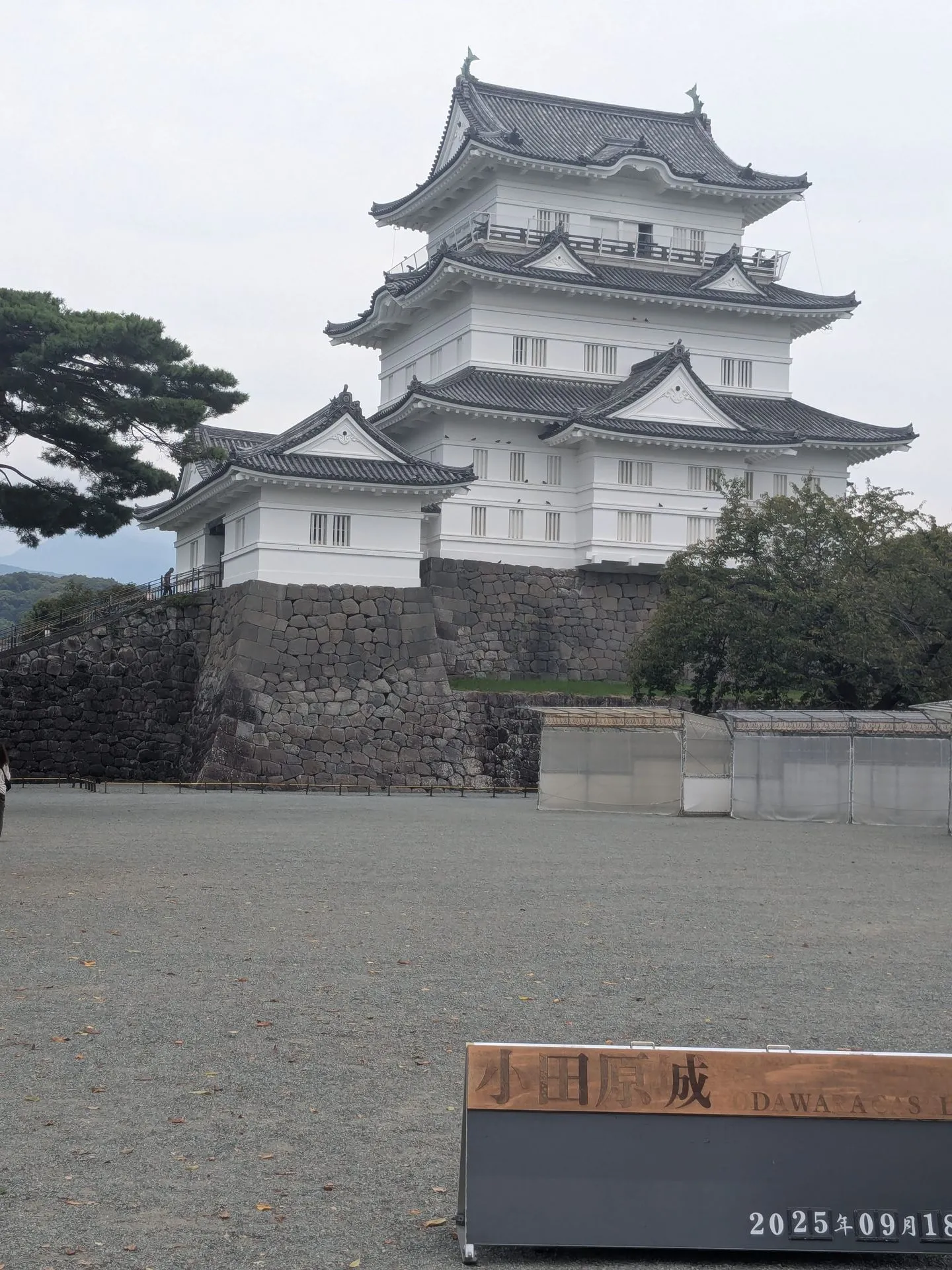
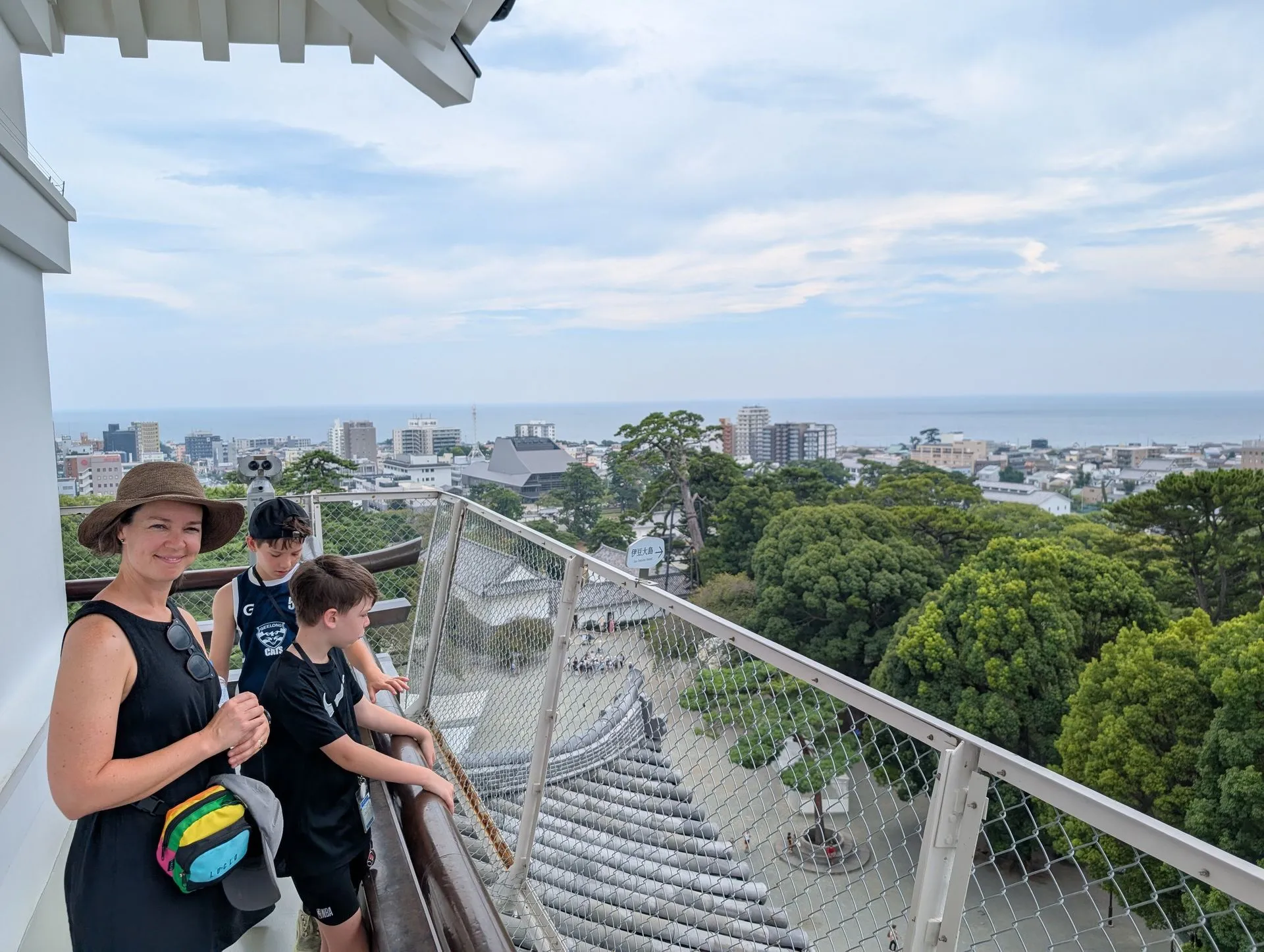
Odawara Castle is the centrepiece, a proper feudal keep reconstructed to its original design, with views from the top floor over Sagami Bay and the mountains behind. The grounds are free to wander, the castle itself costs a few hundred yen, and kids find it exciting in a way that many temples don’t quite manage.
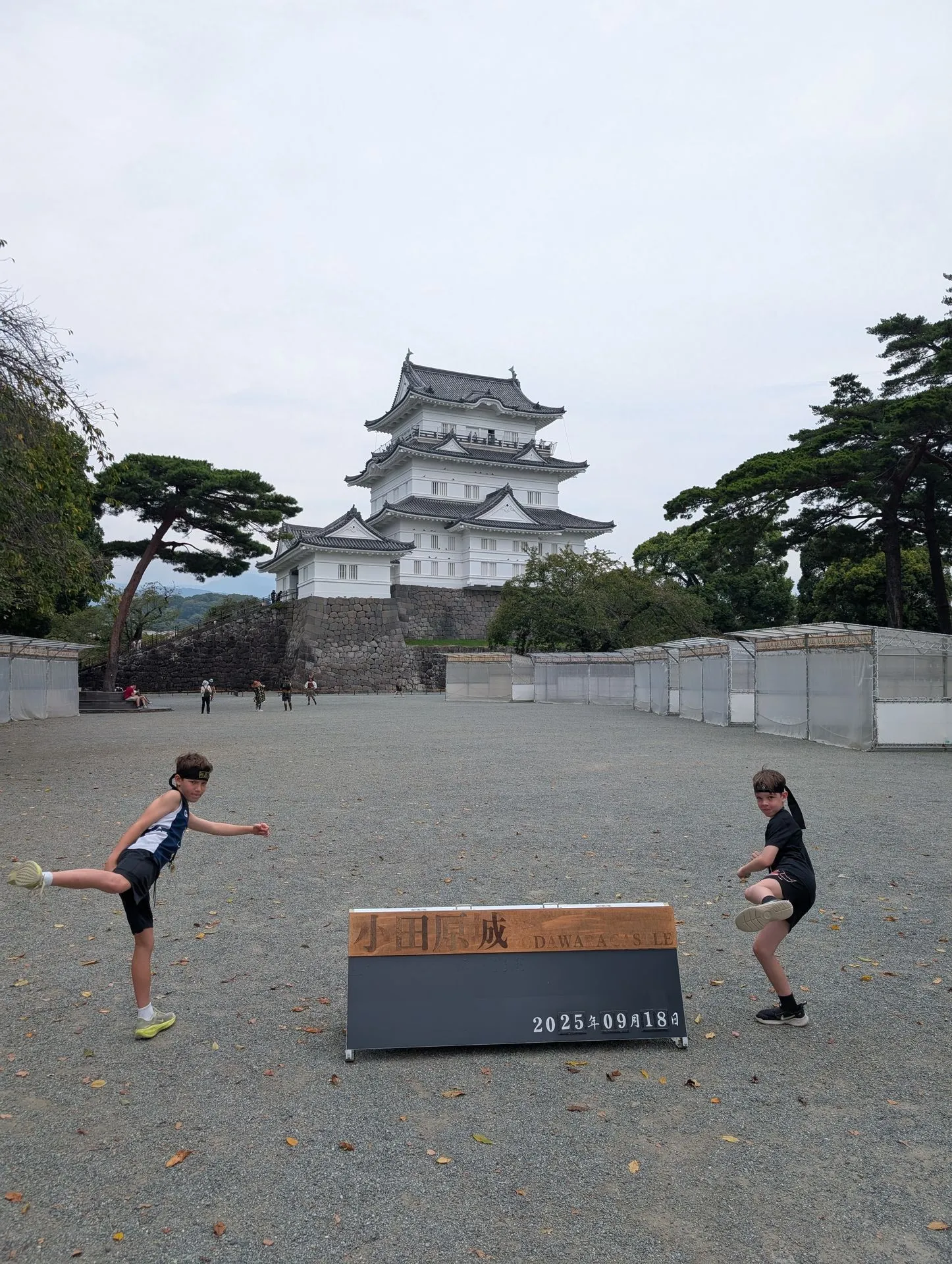
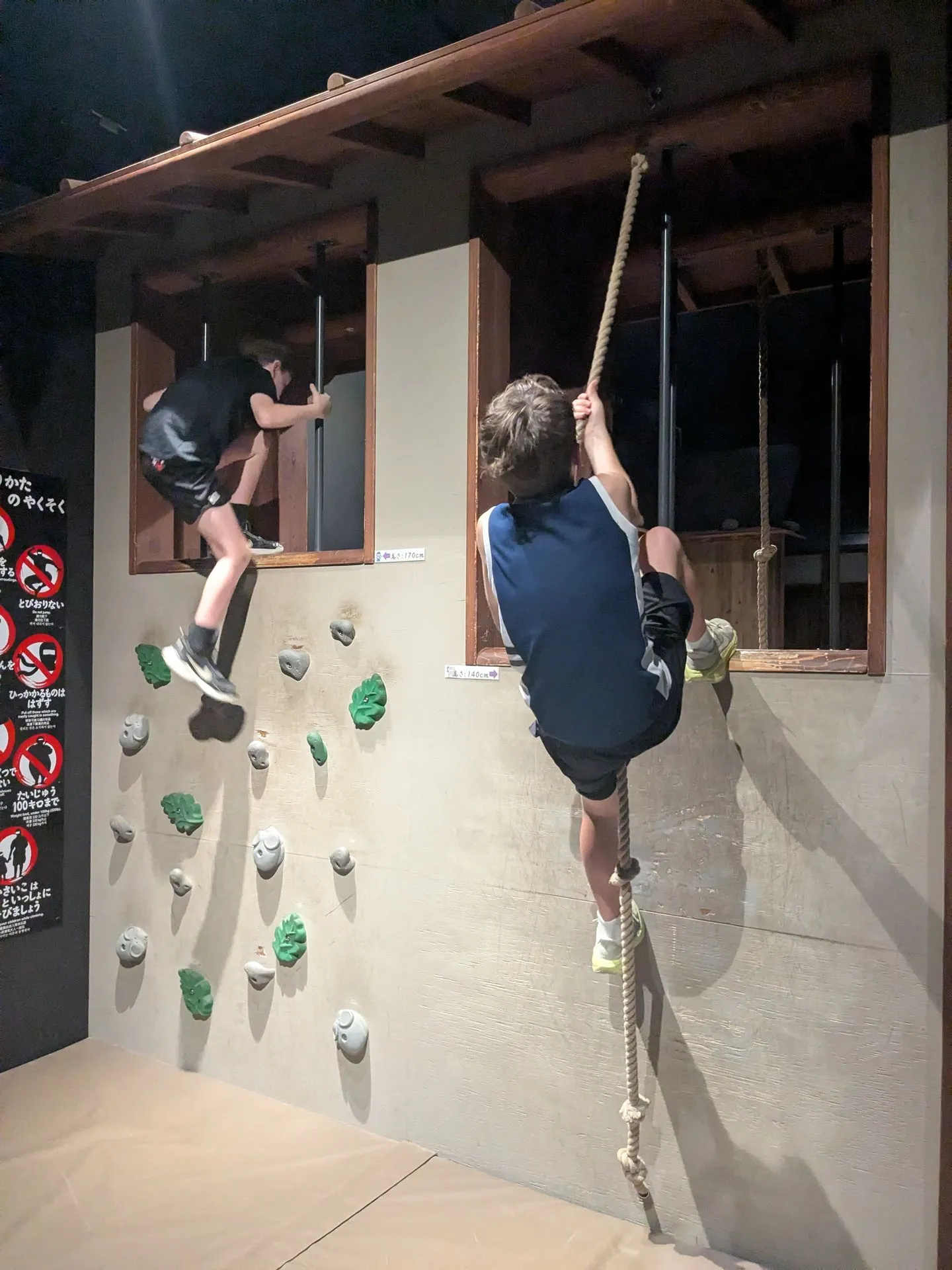
The Ninja Museum nearby is worth knowing about if you have kids who are into that world. It’s interactive rather than exhibit-based, climbing walls, balance challenges and hands-on activities. Ours had to work through the skills and find a code, and they loved it. It doesn’t take itself too seriously, which is exactly right.
Odawara also has a genuinely good food scene that most visitors miss entirely by rushing through. The town centre around the castle has a wide range of restaurants, casual eateries, ramen shops and cafes, far more variety than you’d find in the mountain resort areas. We had Indian one night, with the biggest naan ever, and dinner from the Lusca supermarket stalls at the station the next.
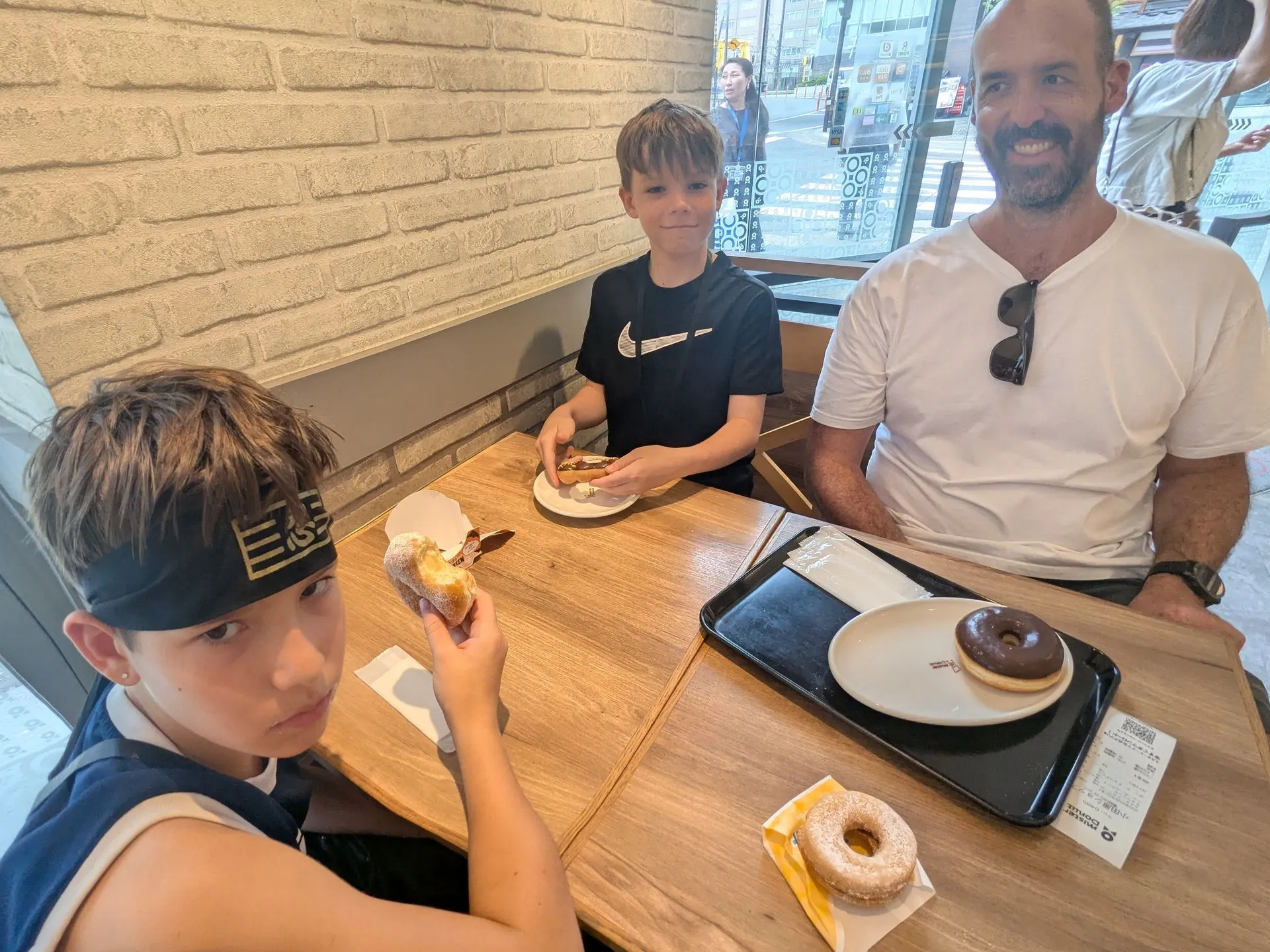
Odawara Castle admission. The castle and the ninja museum beside it filled our last day in Odawara before the Romancecar to Shinjuku.
The Hakone Ropeway and Owakudani
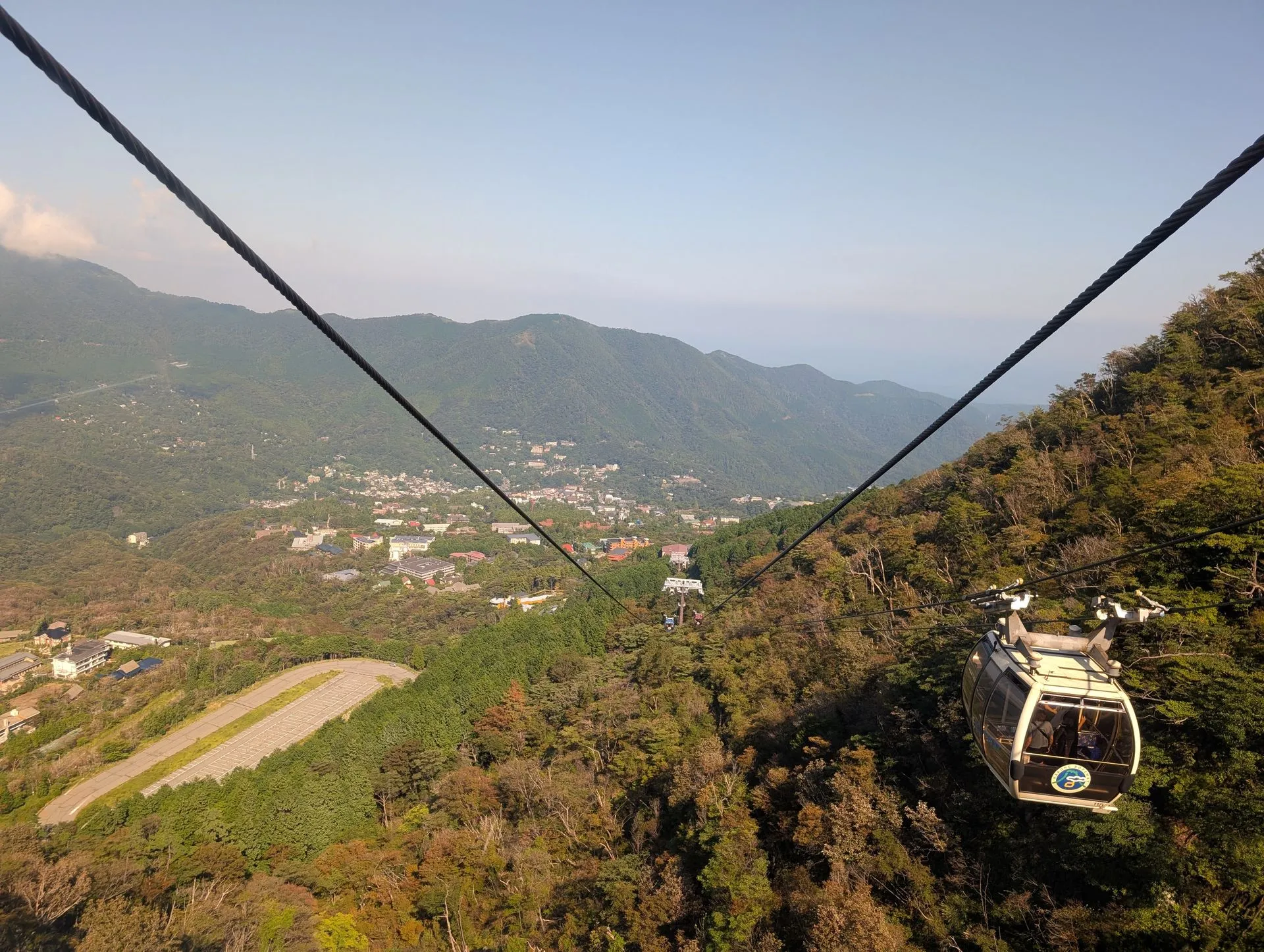
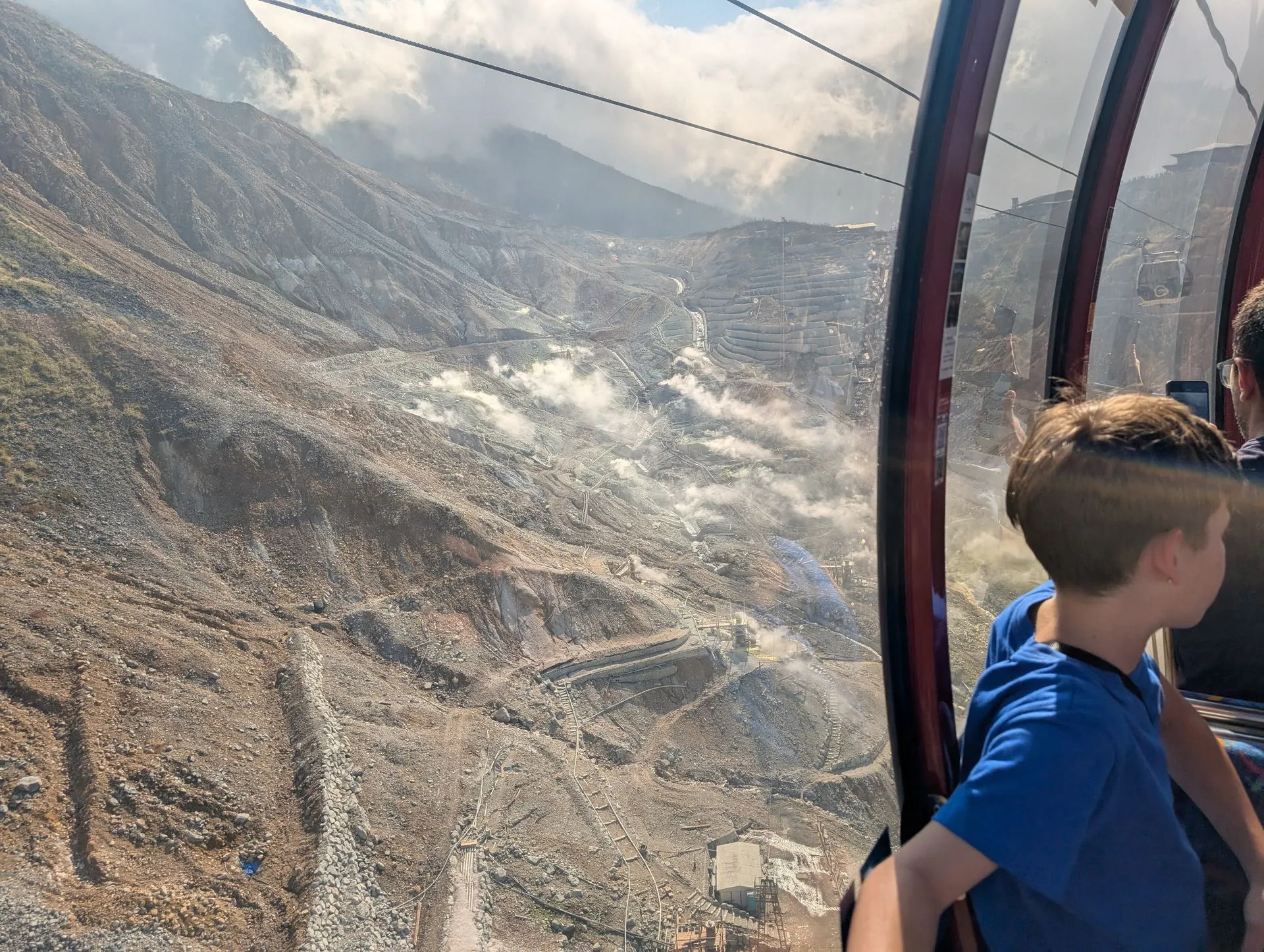
The ropeway is the centrepiece of the Hakone experience and it delivers, even on a cloudy day. The gondolas rise from Sounzan Station and climb over the ridge into the Owakudani volcanic zone, where sulphurous steam vents from the earth and the landscape looks genuinely other-worldly. You smell it before you see it, a sharp sulphur note that arrives as the gondola crests the ridge and the valley opens below you.
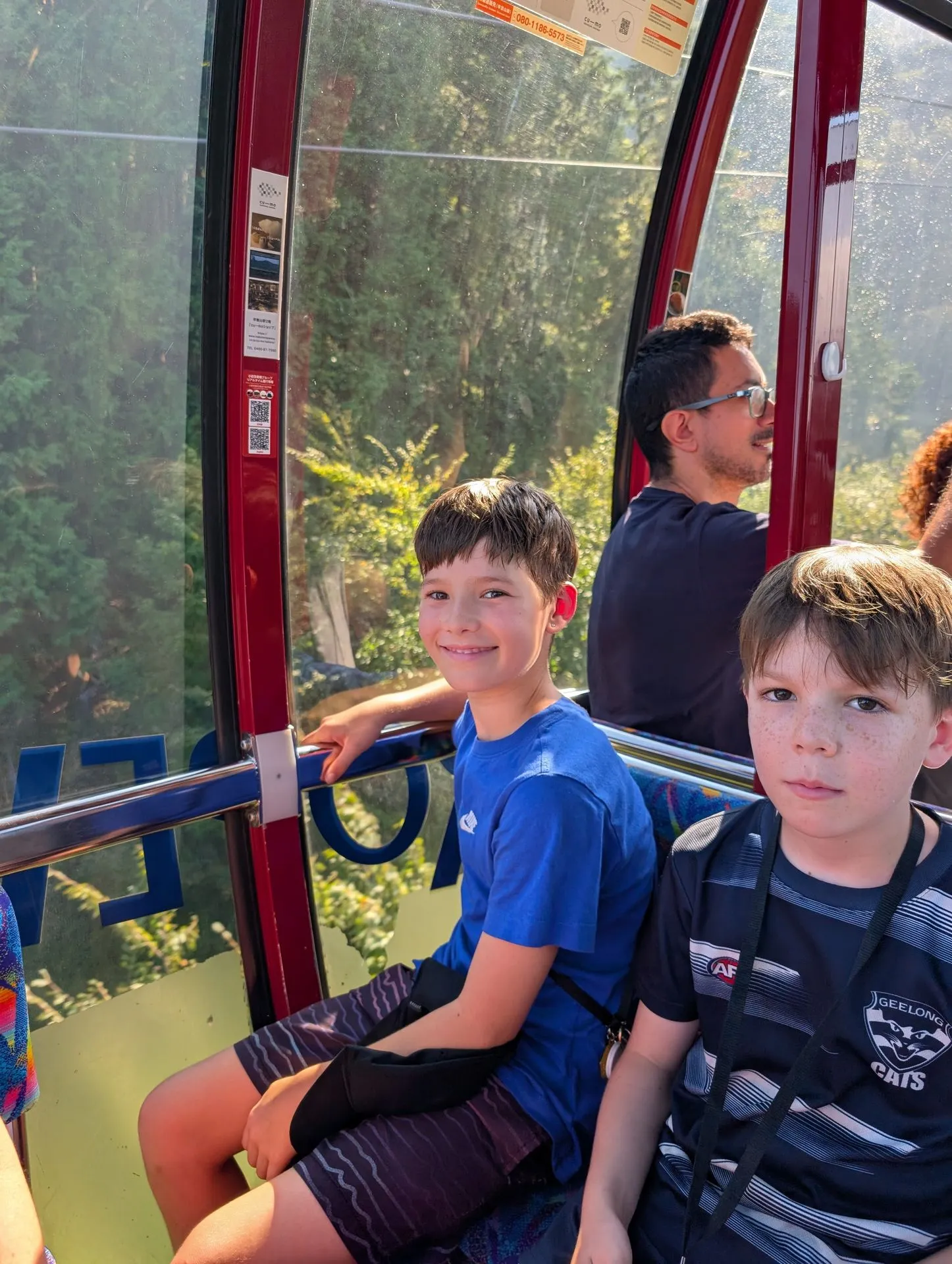
Owakudani station sits in the middle of the volcanic zone and you can walk the paths between the active vents. The famous black eggs (kuro-tamago) are hard-boiled in the natural hot spring pools and sold in packs of five, legend says each one adds seven years to your life. We decided against them ourselves.
On a clear day, Mt Fuji appears above the ridge line from the ropeway, one of the most iconic views in Japan, the perfectly symmetrical cone floating above the cloud. Visibility is genuinely weather-dependent and many visits don’t get a clear Fuji view. Don’t plan your trip around it, but if the weather cooperates, it’s extraordinary.
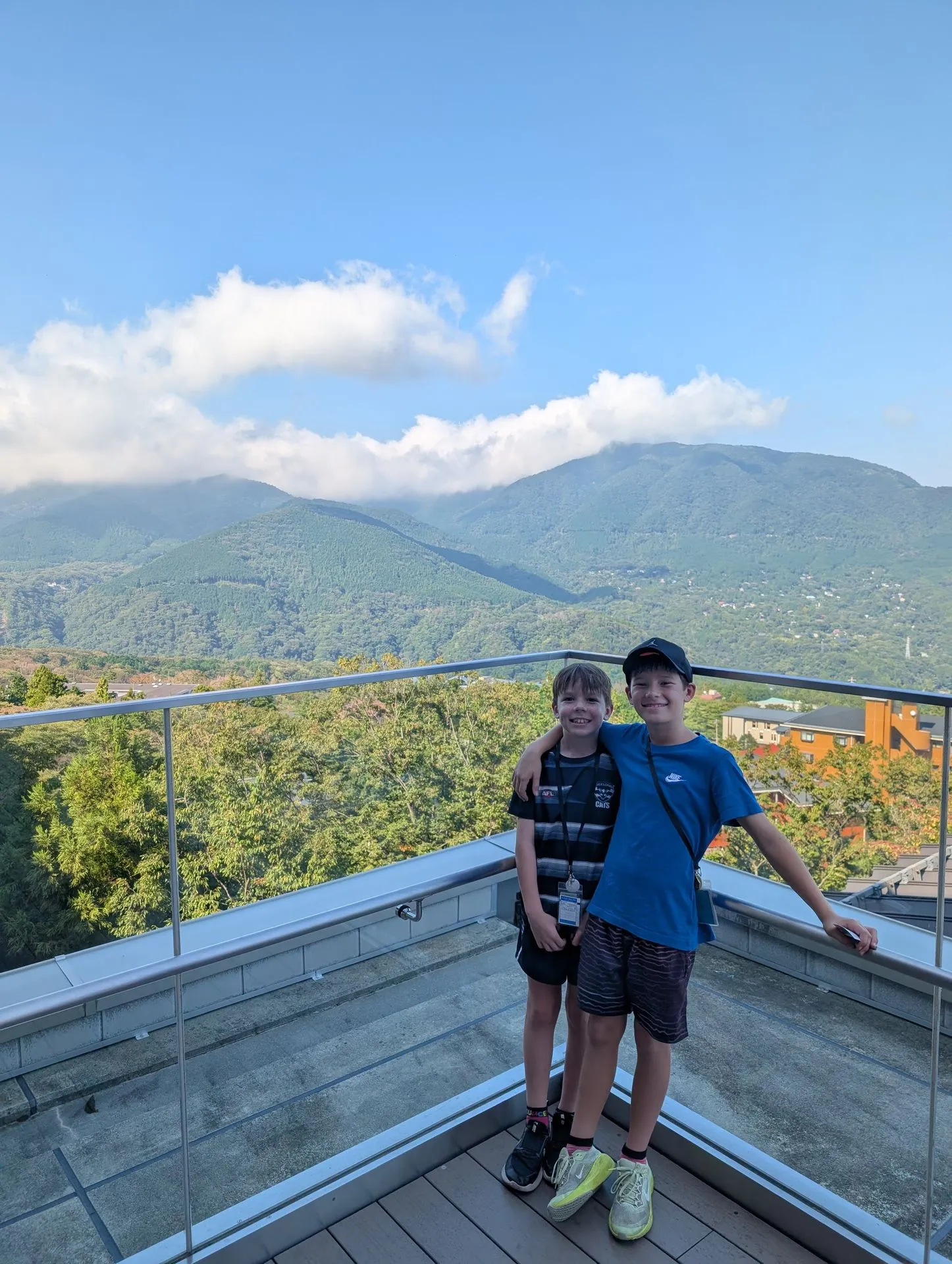
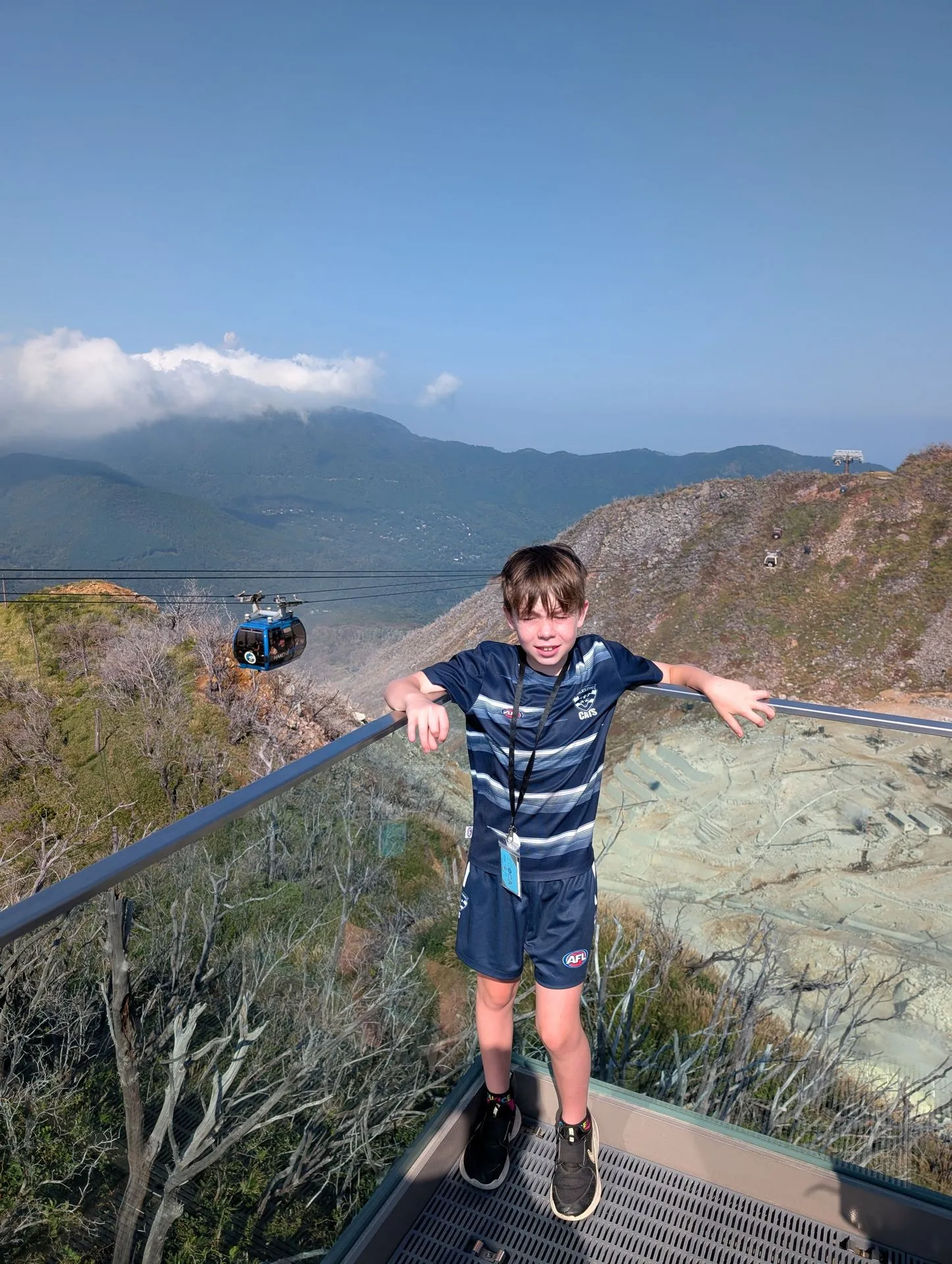
The Hakone Freepass covers all of it. Ropeway, pirate ship, the mountain railway and the buses, on one pass. We bought tickets as we went, but if you are doing the loop, the pass is the simplest way to pay for it.
Lake Ashi and the pirate ships
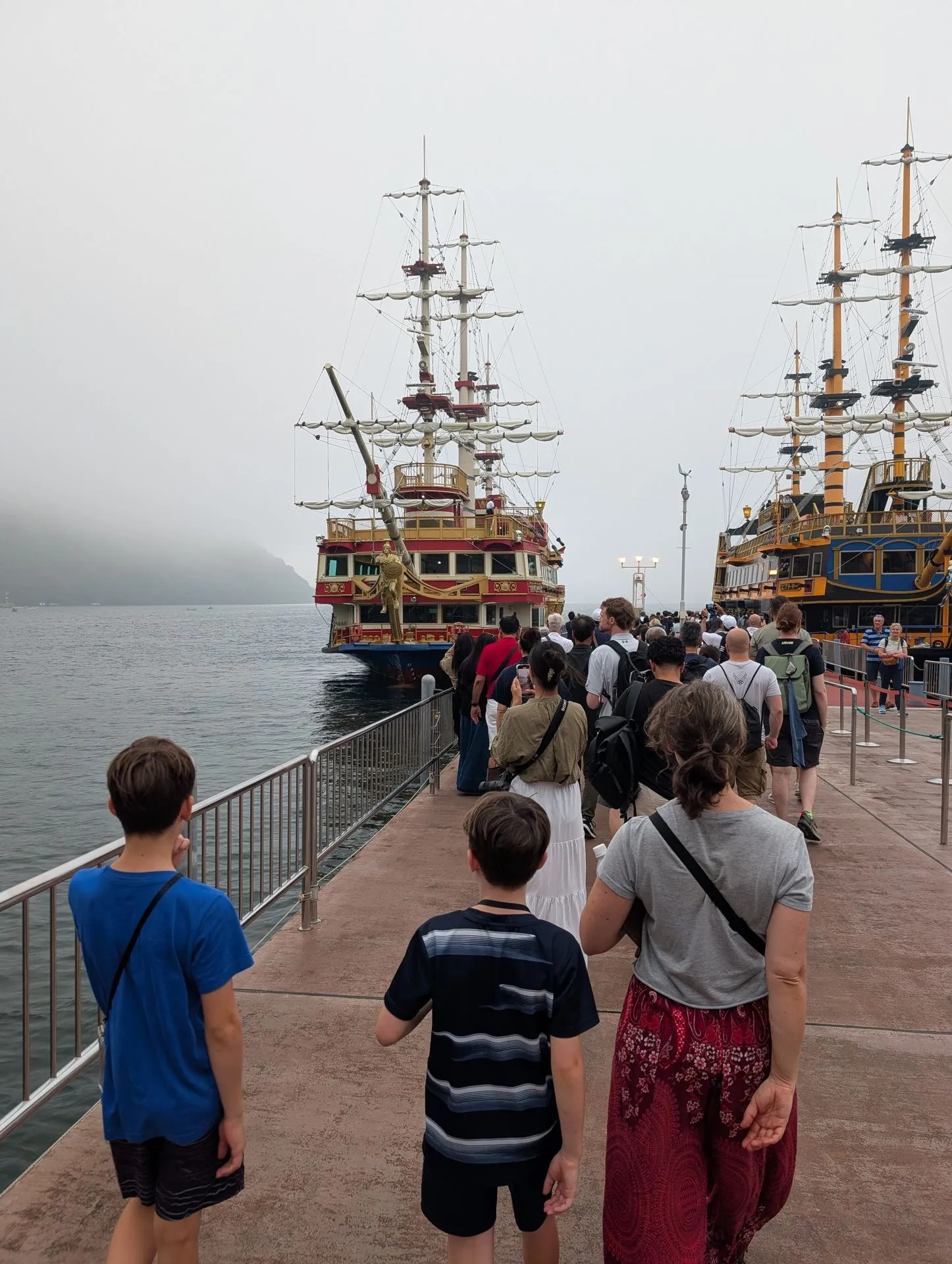
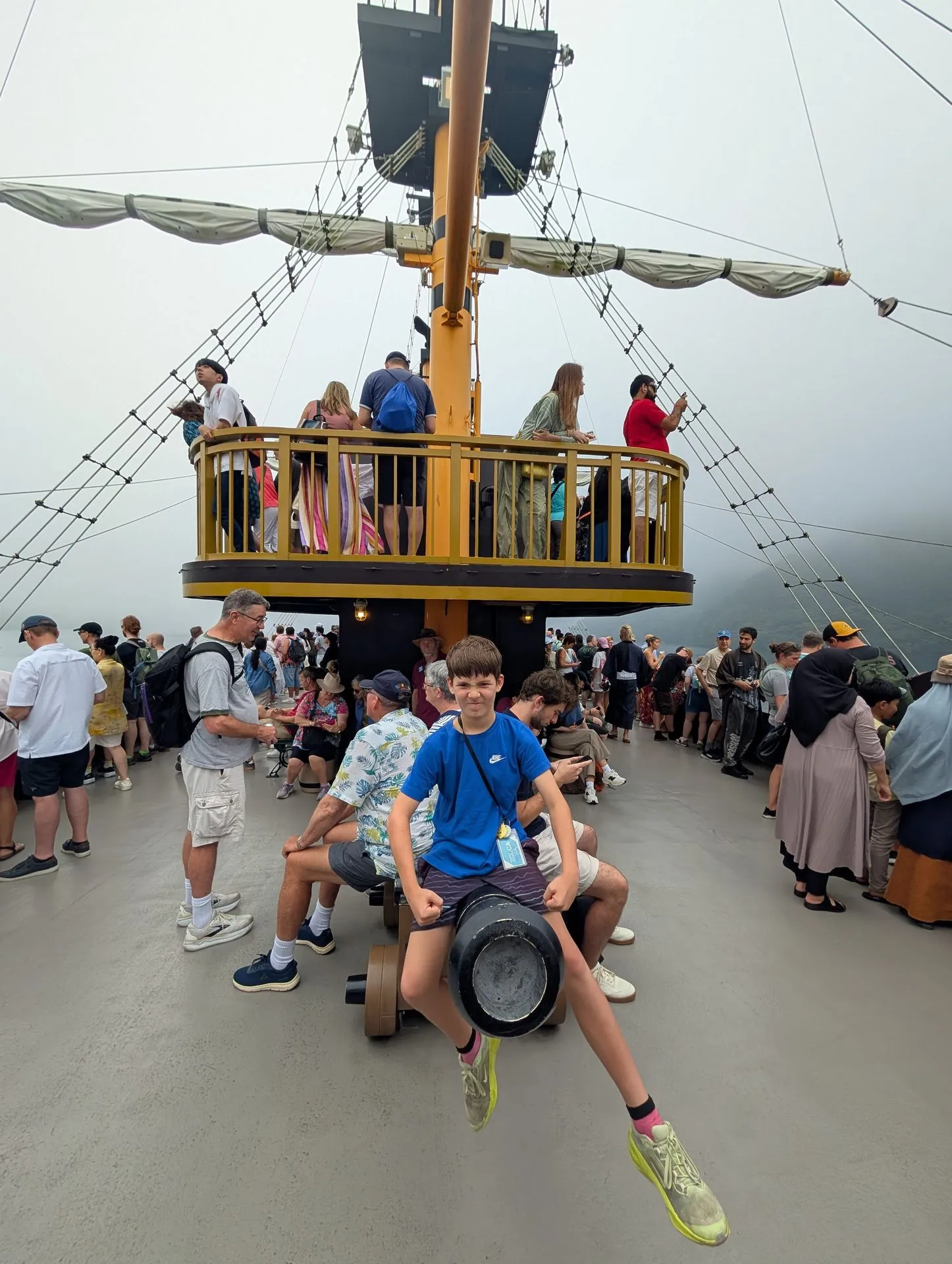
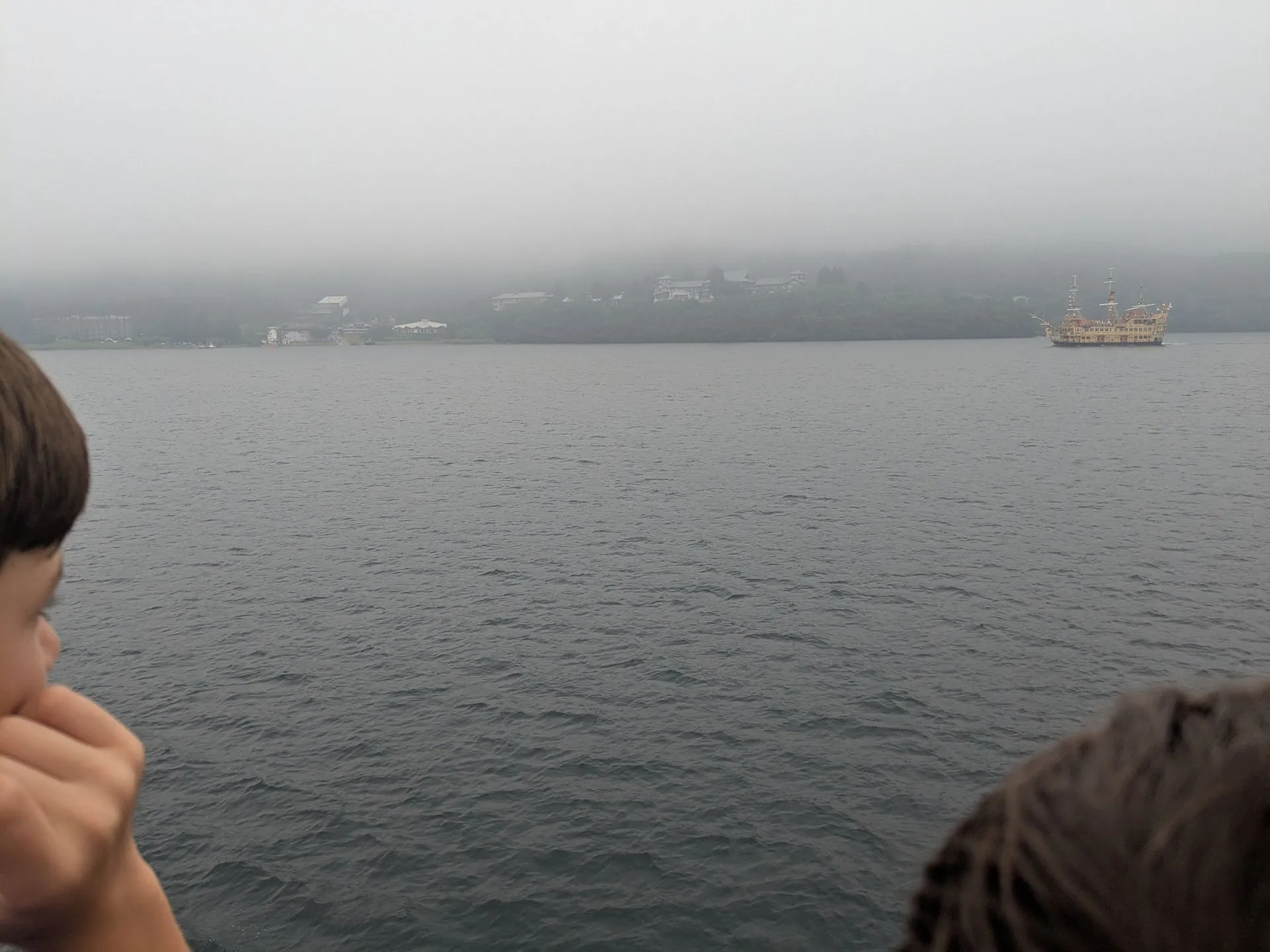
Lake Ashi is a caldera lake formed by a volcanic eruption around 3,000 years ago. It’s large, usually misty, and studded with torii gates visible from the shore. The pirate ships that cross it are exactly what they sound like, full-scale replica galleons with painted cannons, figurehead dragons and an actual on-board shop. They’re completely over the top and absolutely brilliant for children.
Want the full onsen experience? Mountain ryokan in Gora and Hakone-Yumoto, with private family baths and meals included, are the classic Hakone stay and the first to sell out.
Hakone Open Air Museum
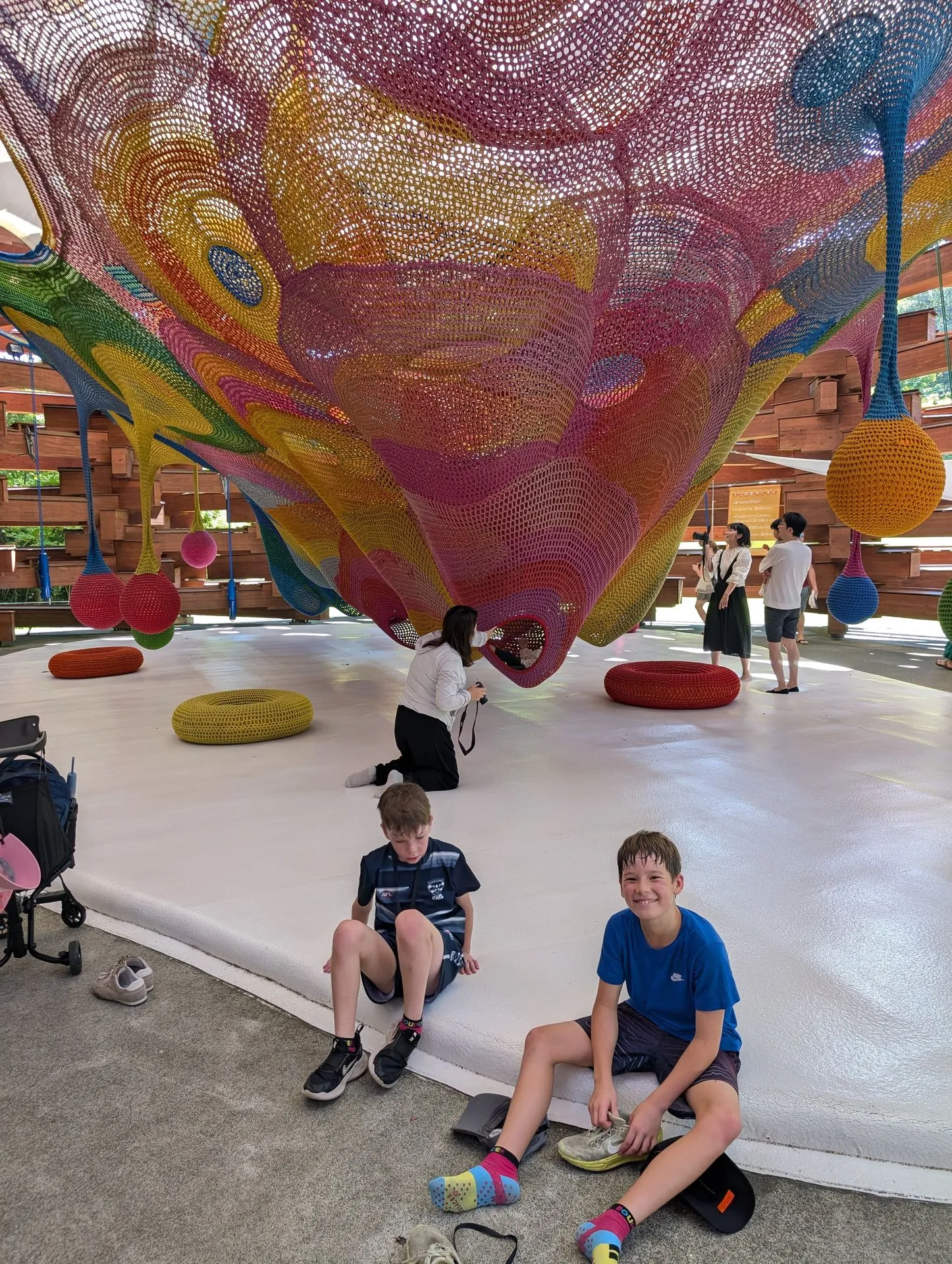
The Open Air Museum is one of the best family attractions in Japan, and that’s not a claim we’d make lightly. It houses a permanent collection of major 20th-century sculpture spread across hillside gardens, including a dedicated Picasso pavilion and several large-scale pieces by Henry Moore, Miro and others. But it’s the interactive installations that make it outstanding for families.
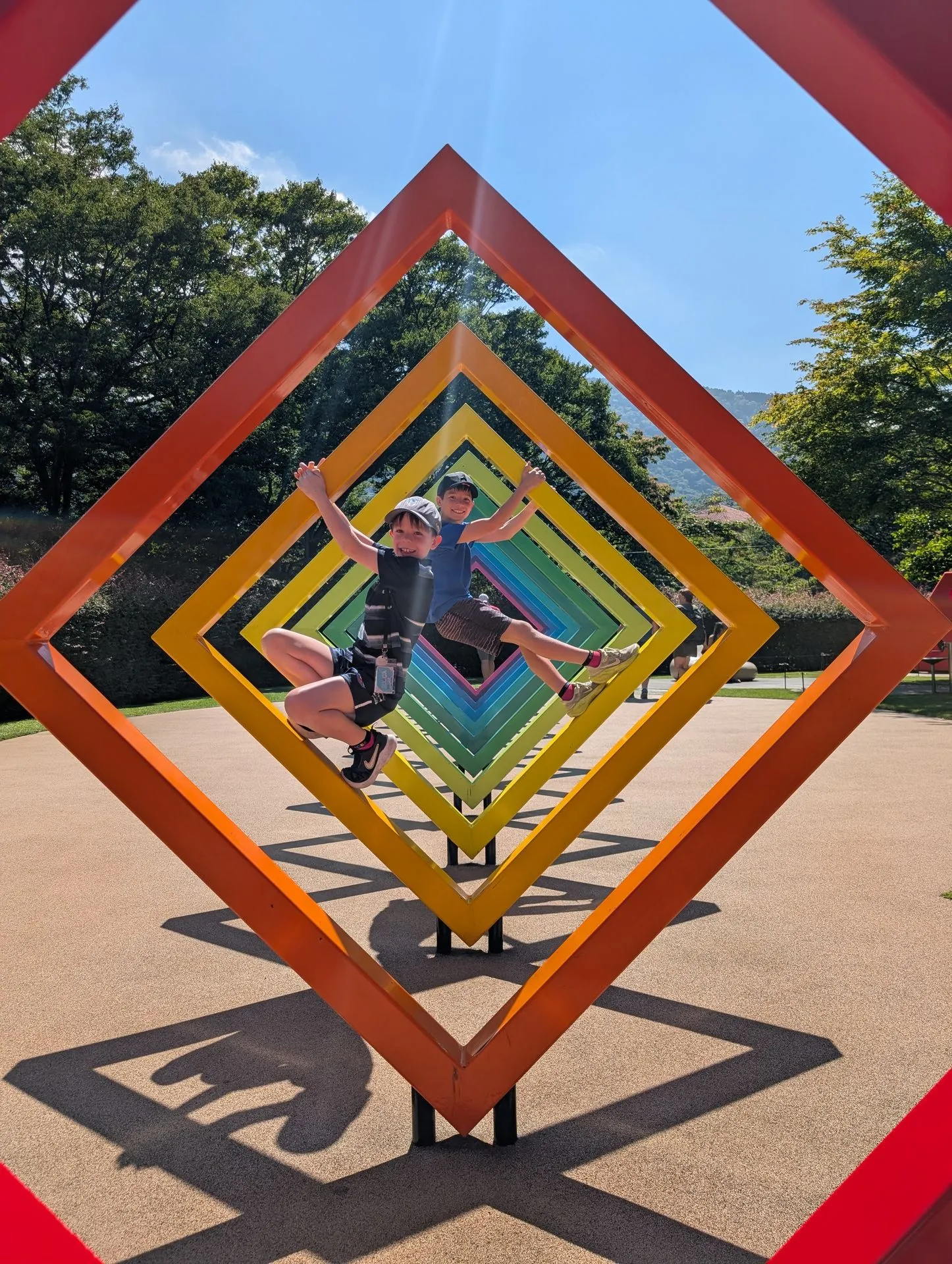
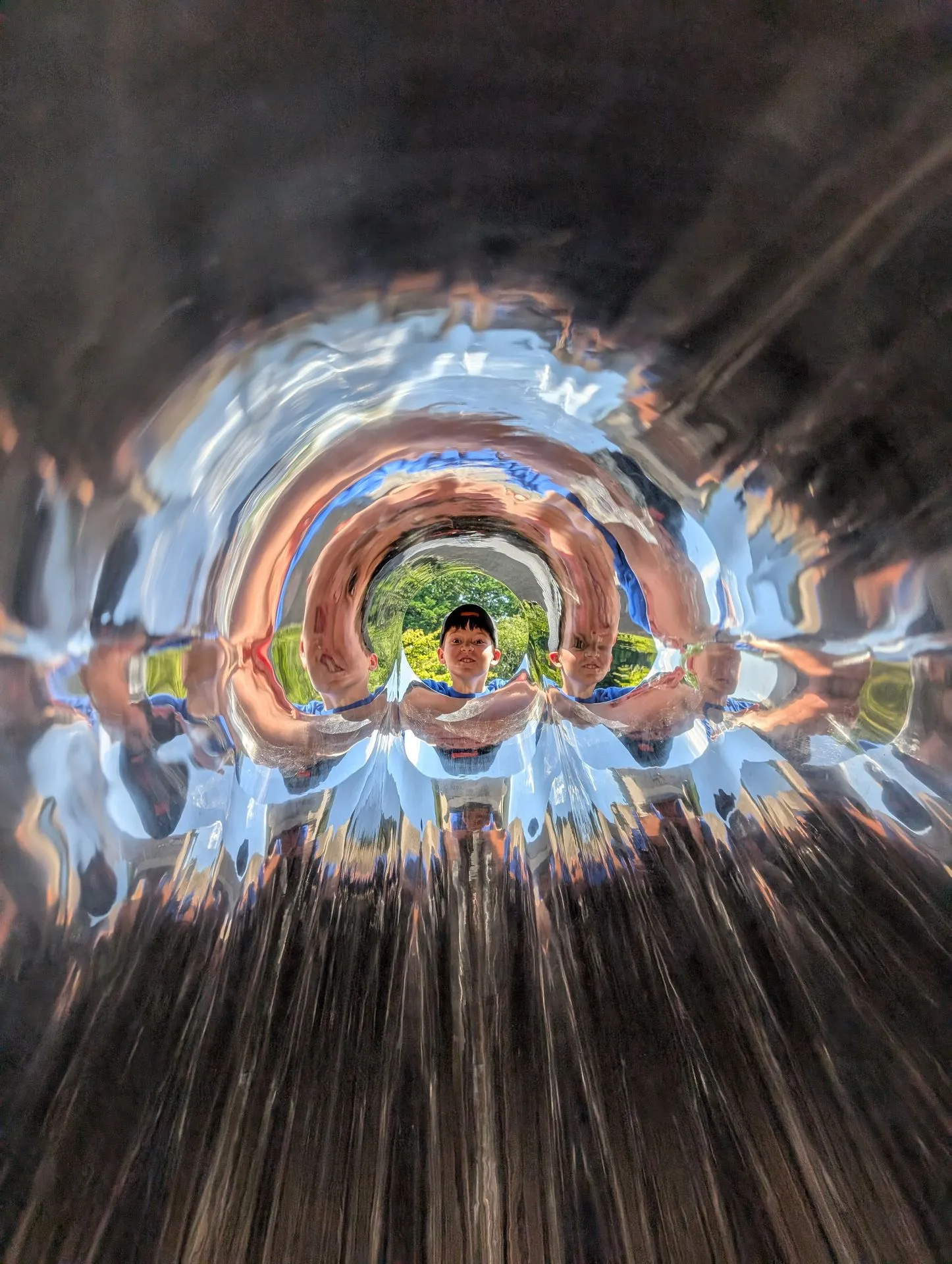
Several of the sculptures are designed to be entered, climbed or experienced from the inside. The mirror tunnel, the stained glass tower, the giant net structure kids can crawl through, none of this feels like a typical art museum visit. Our kids loved climbing on all of it.
Lunch is easy here, and worth planning for rather than rushing. There is a ninja-themed cafe near Gora station, staff in costume and all, where we had lunch on our loop day. It is not fine dining and it does not need to be; it is a warm sit-down in the middle of a long loop day.
Is the Hakone Free Pass worth it?
For a family doing the loop in a day from Odawara, yes. We did the loop without one, buying each leg as we went, and it was a super fun day. But run the same day through today’s fares and the pass comes out ahead, so that’s what we’d suggest.
Here’s our route, leg by leg, at the fares Hakone Navi and Odakyu list as at 16 October 2026. Child fares are for ages 6 to 11, so both our boys counted as children, and under-6s ride free.
| Leg | Adult | Child |
|---|---|---|
| Odawara to Gora, Hakone Tozan train | ¥770 | ¥390 |
| Gora to Sounzan, cable car | ¥430 | ¥220 |
| Sounzan to Togendai, ropeway via Owakudani | ¥2,000 | ¥700 |
| Togendai to Hakone-machi, pirate ship | ¥1,700 | ¥850 |
| Hakone-machi to Odawara Station, bus | about ¥1,510 | about ¥760 |
| Per person | ¥6,410 | ¥2,920 |
For two adults and two kids, that’s ¥18,660 in fares paying as you go. The two-day Free Pass bought at Odawara is ¥6,000 per adult and ¥1,500 per child, so ¥15,000 for the four of us, a saving of ¥3,660 on one day. It also covers a second day of the same transport, which we didn’t need, and you don’t have to buy a ticket at every leg with tired kids in tow.
A few things change the sums:
- The bus fare is the one we couldn’t confirm on an official page. Hakone Tozan Bus only publishes it through a fare search, so the figure above comes from Japanese fare engines. It fits the bus company’s own published fares, which put Hakone-Yumoto to Moto-Hakone at ¥1,210. Check it on Hakone Navi before you rely on it.
- Only going up to the Open Air Museum? Then skip the Free Pass. The return train from Odawara is ¥1,540 per adult and ¥780 per child, and a Hakone Tozan Train 1-Day Pass is ¥1,580 and ¥500 if you want to hop on and off.
- Coming from Tokyo? The Free Pass from Shinjuku is ¥7,100 per adult and ¥1,600 per child for two days, and adds a return trip on the Odakyu line. It doesn’t cover the Romancecar’s limited express fee, which is ¥1,200 per adult each way to Hakone-Yumoto.
- Fares went up on 1 October 2025. The ropeway, the pirate ship, the buses and the Free Pass all rose, so older guides quoting a ¥5,000 Free Pass are out of date.
Doing the full loop? On today's fares the two-day Free Pass beats paying as you go for a family of four, even if you only use it for one day.
Where to stay: Odawara vs the mountains
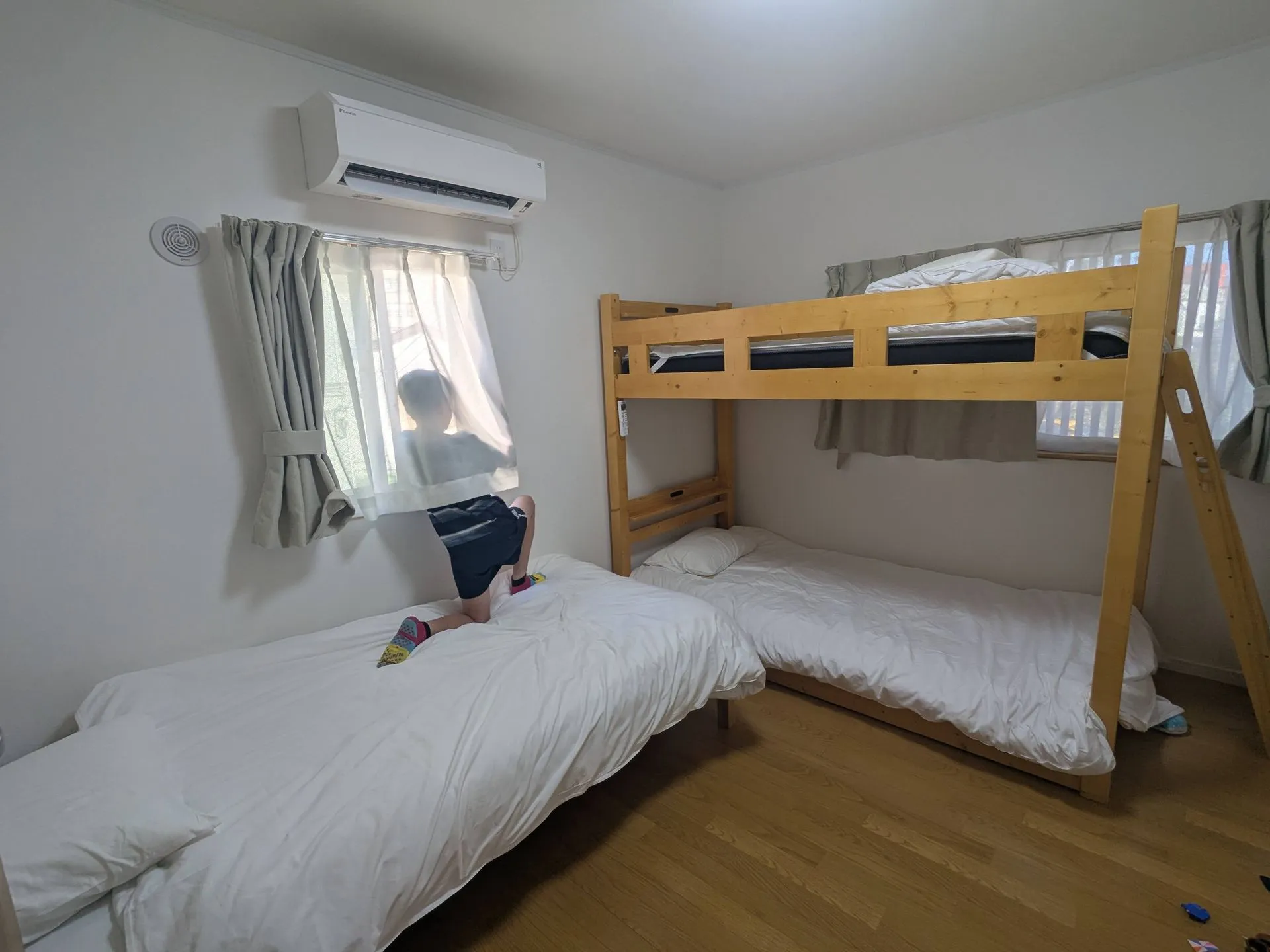
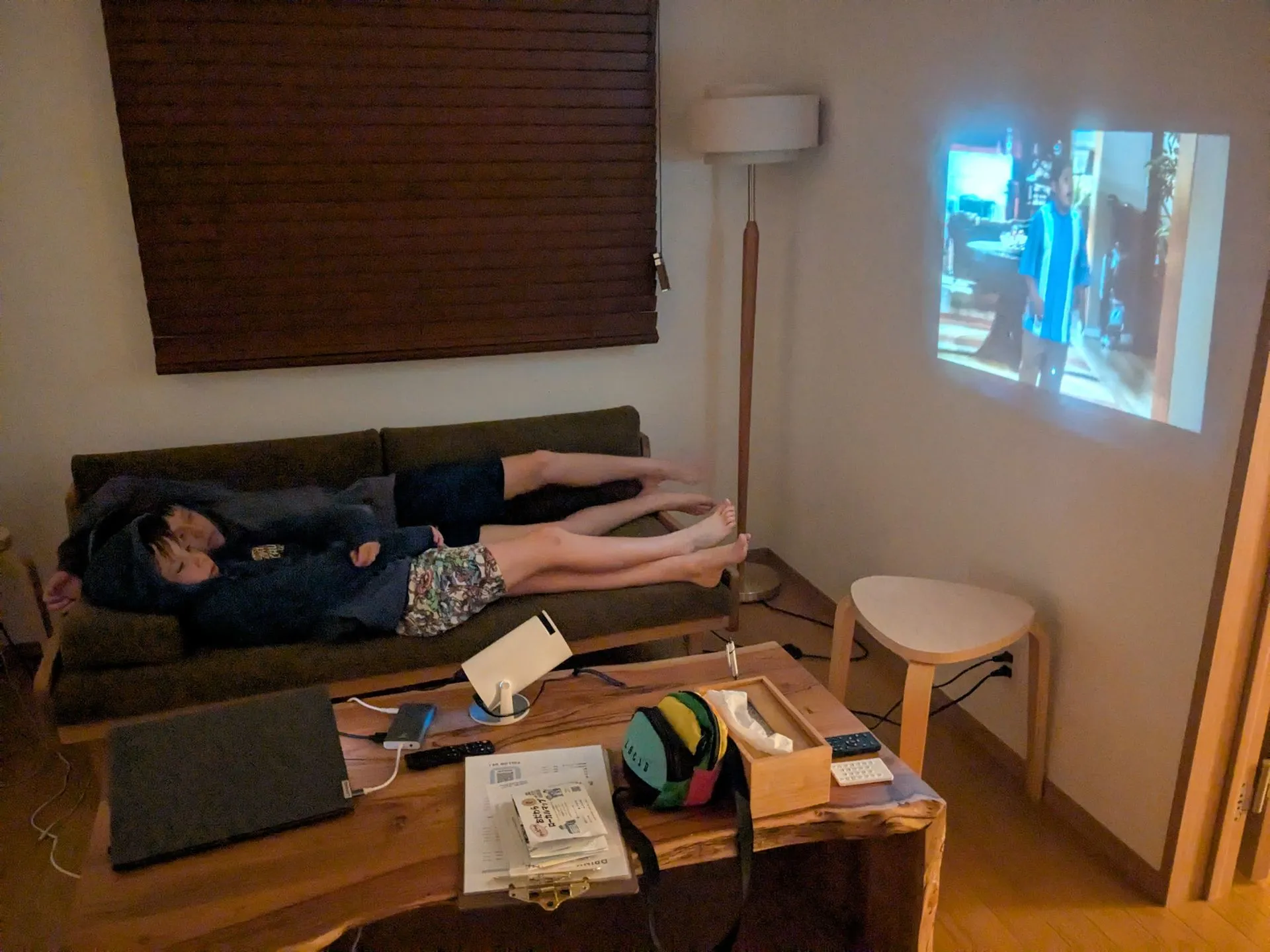
The conventional Hakone stay is up in the mountains, Gora or Hakone-Yumoto, ryokan with onsen, the whole experience. That’s genuinely wonderful if your budget allows. But we based ourselves in an apartment in Odawara town, near the station, and it worked for a family, with living space and room for the kids to spread out. The Hakone Tozan railway runs from Odawara Station directly up to all the main attractions, so nothing felt hard to reach. Our full thinking on family accommodation is in where to stay with a family.
A traditional ryokan with an onsen is the ideal Hakone experience if you can stretch to it, expect ¥20k to ¥30k or more per person per night for a proper ryokan with meals included. But for families travelling with kids, a self-contained apartment or guesthouse in Odawara is a practical and genuinely enjoyable alternative. We had bunk beds for the boys and a projector for evening movies.
Odawara (our base)
Affordable town accommodation with good transport links. Apartments and guesthouses give families proper space. Hakone Tozan railway from Odawara Station connects everything. Good food scene at your doorstep.
Gora / Hakone-Yumoto
The mountain resort villages. Ryokan with onsen, atmospheric evenings, the full Hakone experience. More expensive, especially for families needing multiple rooms. Worth it if budget allows, book months ahead.
Travelling as a family? Self-contained apartments and guesthouses in Odawara give you space and a kitchen at a fraction of the mountain ryokan price, with the Tozan line to every sight.
What to eat: Odawara and beyond
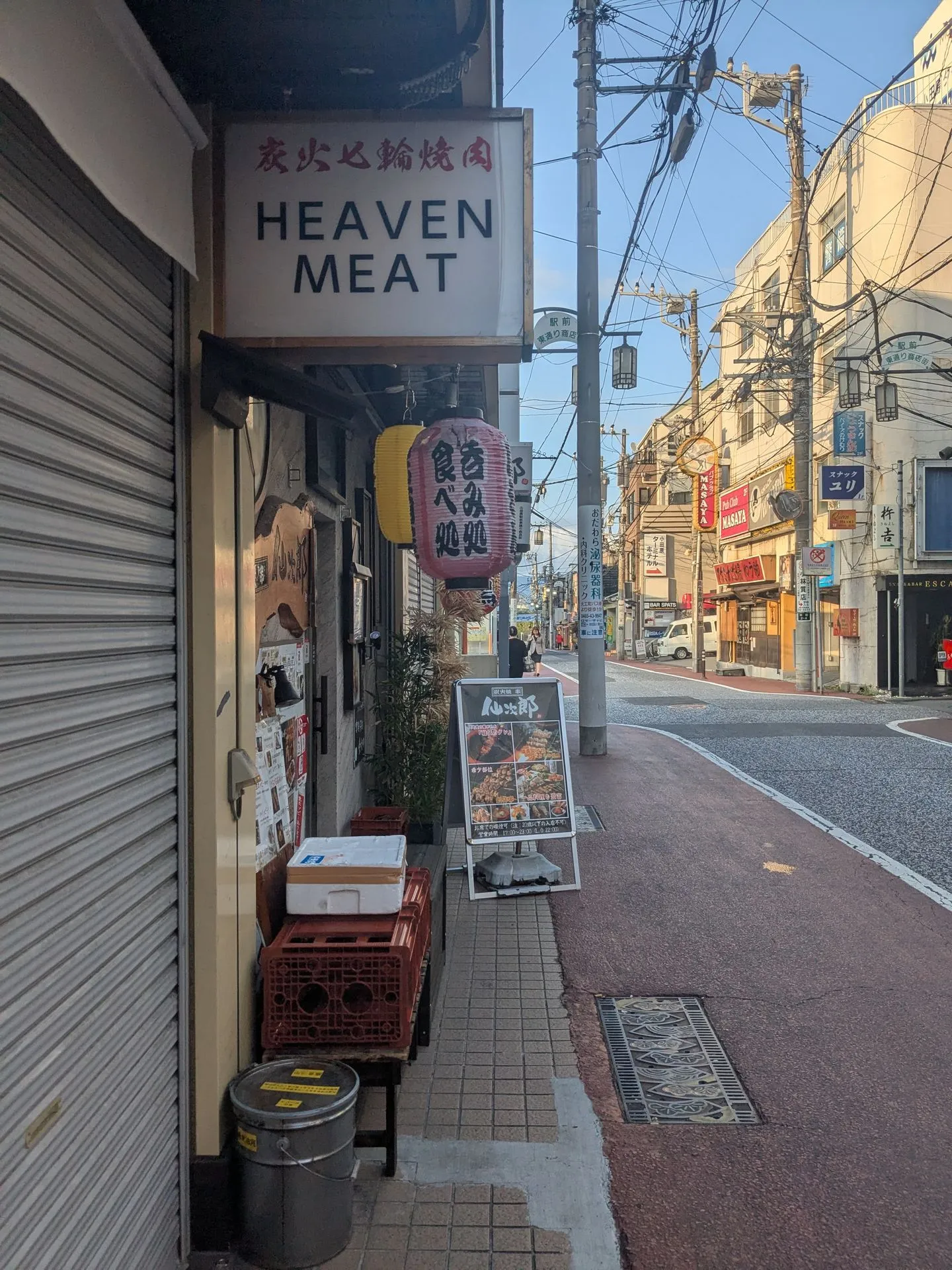
Odawara is a proper coastal town rather than a purpose-built tourist resort, so it has a wide range of restaurants, izakayas, sushi spots, ramen, cafes and casual family restaurants, at normal local prices. If you’re based in Odawara, you’ll eat well without any planning. Heaven Meat Street is a good evening option for yakitori and grilled skewers. For the wider picture, including the convenience store food that saved us more than once, see our food guide.
🥚 Black eggs at Owakudani
Hard-boiled in volcanic hot spring water, which turns the shells black. Sold in packs of five. Legend says each one adds 7 years to your life, a claim your kids will take entirely seriously.
🍱 Ekiben on the Shinkansen
Buy at Tokyo Station before boarding. The selection is vast, sashimi sets, wagyu beef, regional specialties. Opening a beautifully packaged bento at 285km/h is one of the great small pleasures of Japanese travel.
🍜 Hakone-Yumoto ramen
The main street near Hakone-Yumoto station has several solid ramen shops. A good, filling and low-fuss dinner option after a long day on the ropeway and lake.
Practical tips for visiting Hakone with kids
The details that make this leg easier. Worth reading alongside what the trip cost, since Hakone is where a family budget tends to stretch.
🎫 Buy the Hakone Free Pass
Available at Shinjuku Station (2-day or 3-day) or Odawara Station. Covers almost all transport in the Hakone area plus discounts at major attractions.
🌧️ Plan for cloud and rain
Hakone is in a mountain valley and generates its own weather. Check the ropeway webcam before heading up. Have a backup plan (the Open Air Museum works perfectly in light rain).
📅 Book accommodation early
Hakone is one of the most popular weekend escapes from Tokyo. Autumn (mid-October to late November) and cherry blossom season book out months in advance. Weekday stays are easier to get and cheaper.
🚌 Don't underestimate the buses
The Hakone Tozan Bus network fills the gaps between the railway and ropeway. The Free Pass covers most routes. Have the destination name in Japanese on your phone, bus drivers appreciate it.
👟 Wear proper shoes
The Owakudani walking paths are uneven volcanic rock. The Open Air Museum is all outdoor paths and hills. Flip-flops are a bad idea; trainers or light hiking shoes are right for Hakone.
🛁 Onsen etiquette
If your accommodation has an onsen, tattoos are typically not permitted (though this is changing slowly). No swimwear, you enter the bath unclothed. Kids are fine. Most ryokan have a family bath option you can book privately.
Want Hakone handled for you? Day trips and multi-day tours from Tokyo cover the ropeway, Lake Ashi and Open Air Museum with English-speaking guides.