Why Nara works so well for families
Nara’s pull for kids is not its size or the number of things to do, Nara is compact and unhurried compared to Tokyo or Kyoto, but what greets you from the moment you step off the train, which is deer. Hundreds of them, wandering freely through streets, parklands and temple grounds as if they own the place. Because technically, they do.
These sika deer have been considered sacred messengers of the gods since the founding of Kasuga Taisha shrine in 768 AD. Today more than 1,200 of them roam through Nara Park, completely unbothered by the tourists surrounding them. For kids, the experience of a wild deer walking directly up and nudging their hand is nothing short of magical.
Beyond the deer, Nara holds one of Japan’s most genuinely awe-inspiring sights, the Daibutsu, a 15-metre bronze Buddha seated inside Todai-ji, the largest wooden building in the world. The combination of extraordinary wildlife encounter and breathtaking ancient architecture makes Nara one of the best family day trips in the whole country.
Planning your own Japan trip? Our planning guides cover flights, trains, food, where to stay and what it cost, all from one family's trip.
Day trip or overnight stay?
Nara works beautifully as a full-day trip from either Osaka or Kyoto. It’s only 35 minutes from Osaka Namba on the Kintetsu line, making it one of the easiest excursions you can plan. Most families visiting the Kansai region include it as a single long day, which is plenty of time to cover the main sights comfortably. If you are weighing up where to base yourselves across the whole trip, where to stay with a family has how we decided.
An overnight stay does have real appeal though. After the day-trippers leave, usually by late afternoon, Nara transforms. The deer still wander, the lanterns at Kasuga Taisha glow at dusk, and the temple complex feels genuinely peaceful. If your itinerary allows it, one night near the park is worth considering.
✈ Day trip from Osaka
35 minutes on the Kintetsu Osaka Line from Namba. Arrive by 9am to beat the crowds at Todai-ji. Very easy to combine with an Osaka hotel base.
🚄 Day trip from Kyoto
45 minutes on the Kintetsu Kyoto Line from Kintetsu-Kyoto Station, or 45 minutes on the JR Nara Line from Kyoto Station. A natural add-on to a Kyoto itinerary.
🏨 Overnight stay
Explore the park in early morning or evening when deer are most active and crowds are thinnest. Gives you a much fuller experience including Kasuga Taisha and Naramachi.
Staying overnight in Nara? Traditional ryokan and hotels near the park book out weeks ahead, especially in cherry blossom and autumn seasons.
The deer of Nara Park
Nothing quite prepares you for the deer encounter. You expect them, you’ve seen the photos, but the reality of a spotted sika deer walking directly up to your child and nudging their hand is something else entirely. These animals have been interacting with visitors for centuries and they know exactly what they want. That’s shika senbei, the deer crackers sold by vendors throughout the park for ¥200 a bundle.
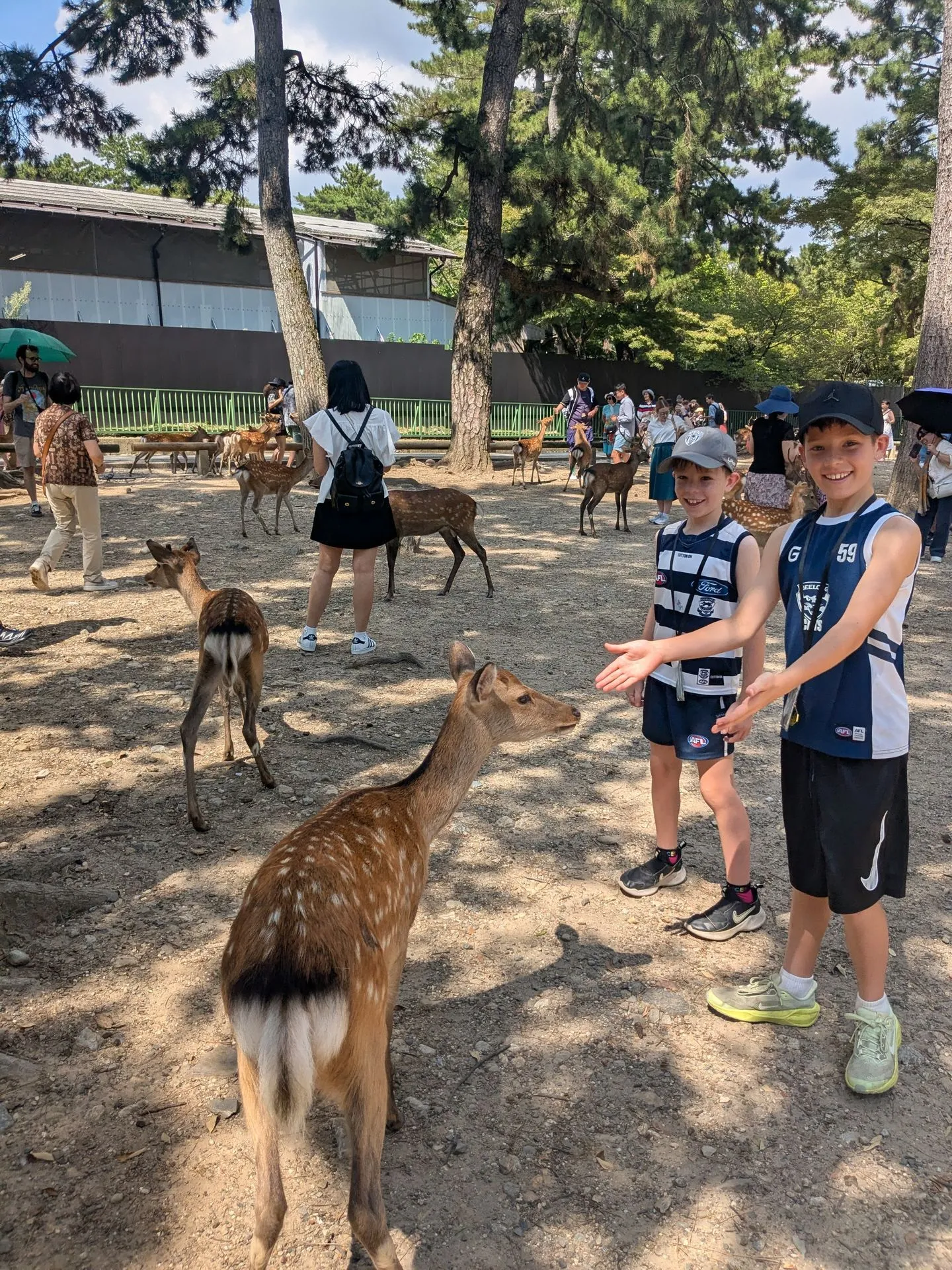
The crackers themselves are plain wheat biscuits, unsalted and made specifically for the deer. Once you have a bundle in hand, prepare to be surrounded. The deer have learned to associate the rustle of cracker packaging with food, and they’ll follow you relentlessly once they’ve clocked you. Our boys fed them too, and one of the deer bit Matt on the bum.
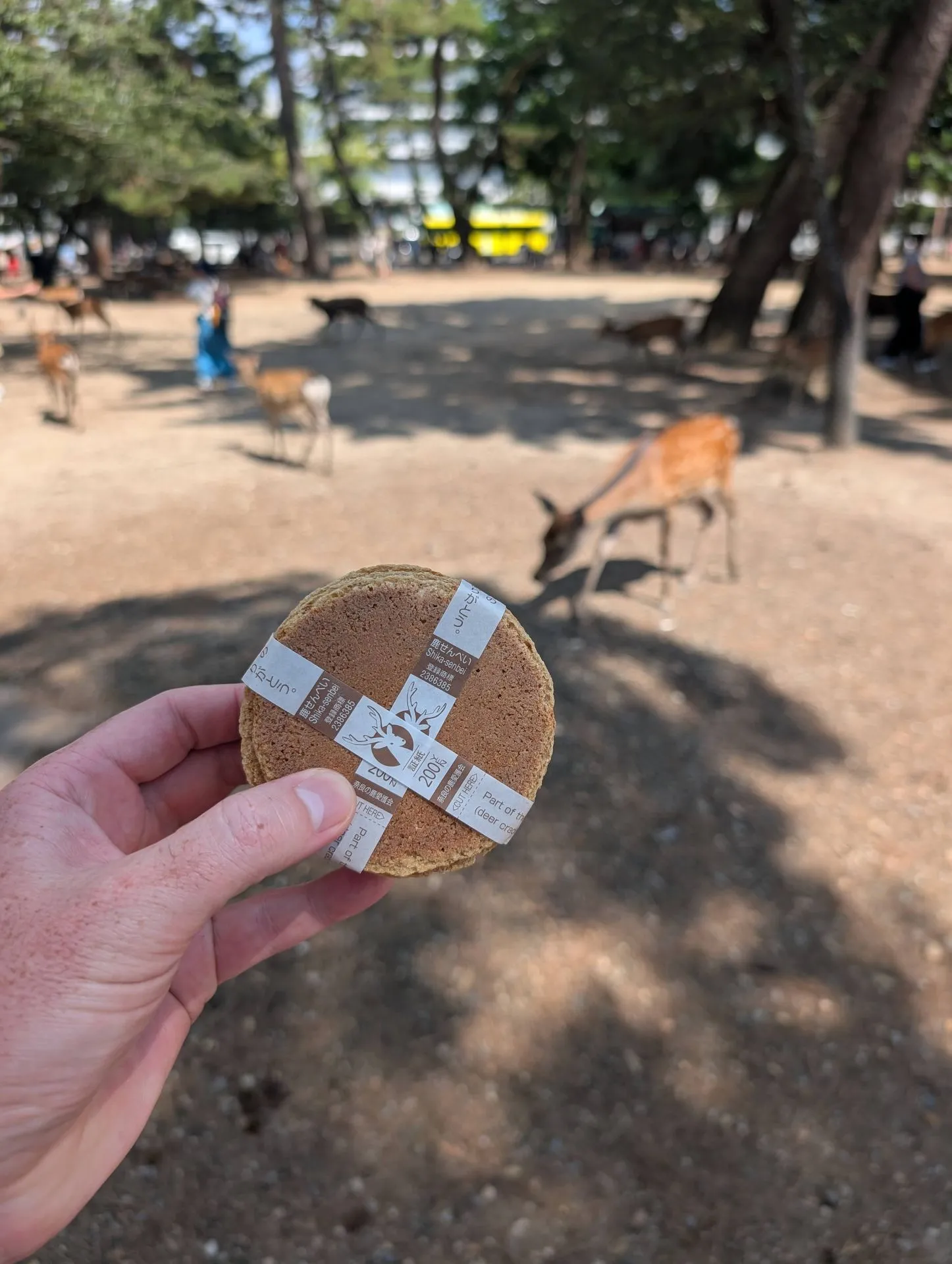
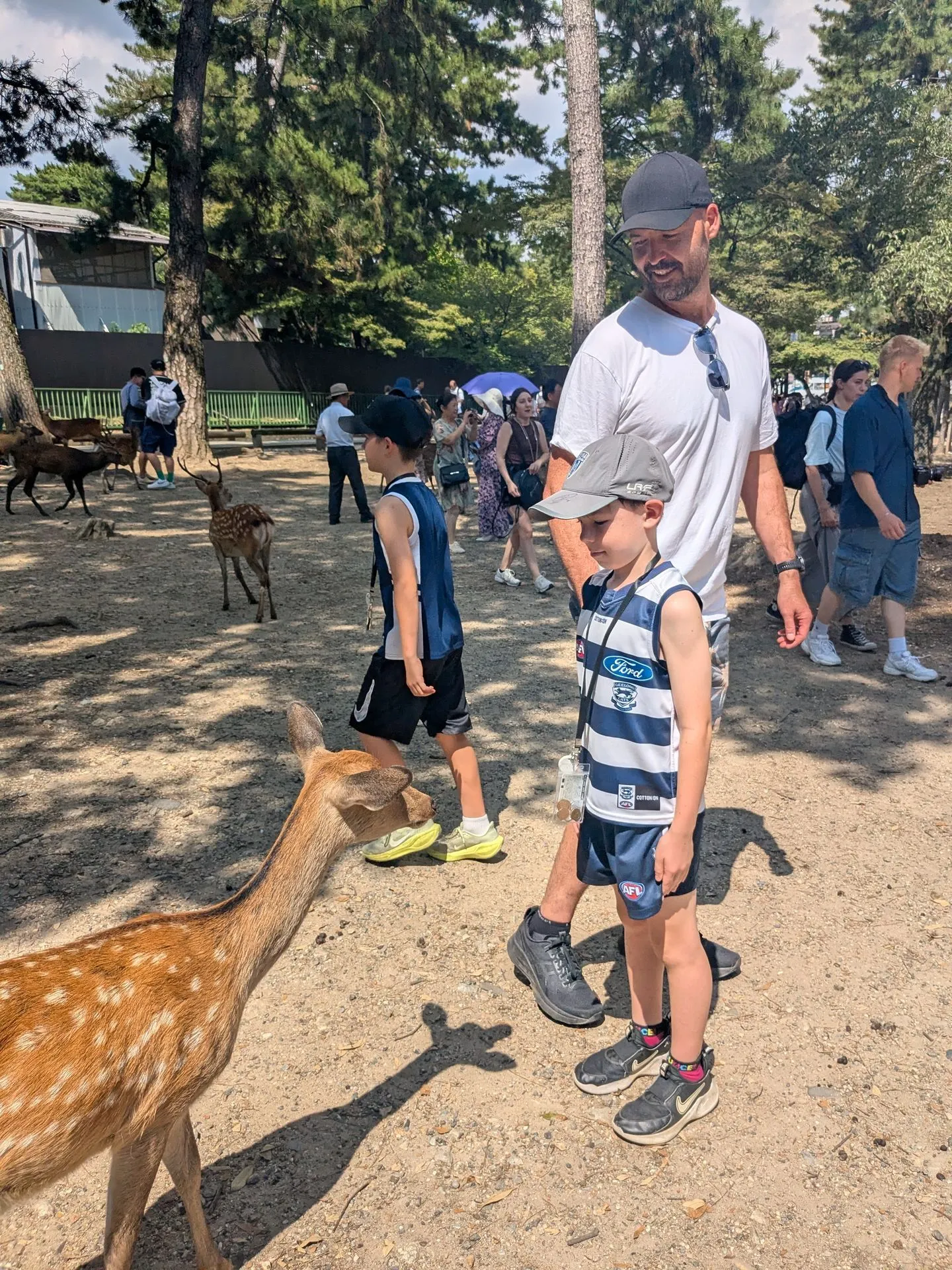
We did Nara self-guided and the deer need no introduction. Guided day trips run from both Osaka and Kyoto if you would rather not work out the trains.
Todai-ji Temple
Even if you’ve visited a hundred Japanese temples, Todai-ji is different. Walking through Nandaimon, the Great South Gate, with its pair of 8-metre guardian statues staring down from either side is a genuine jaw-drop moment. What hits you most is the sheer scale. This gate was built in 1203 and the temple it guards is centuries older still.
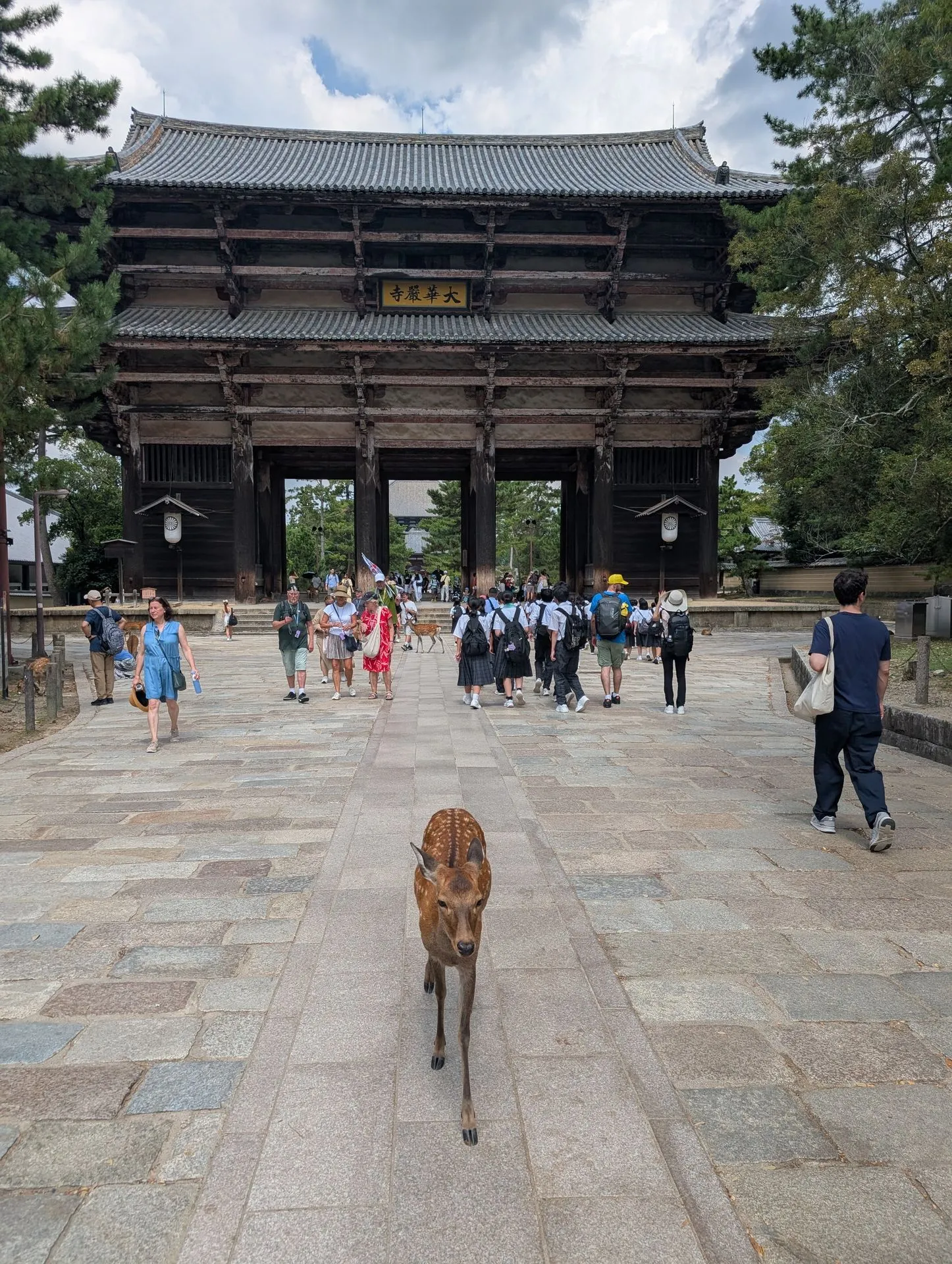
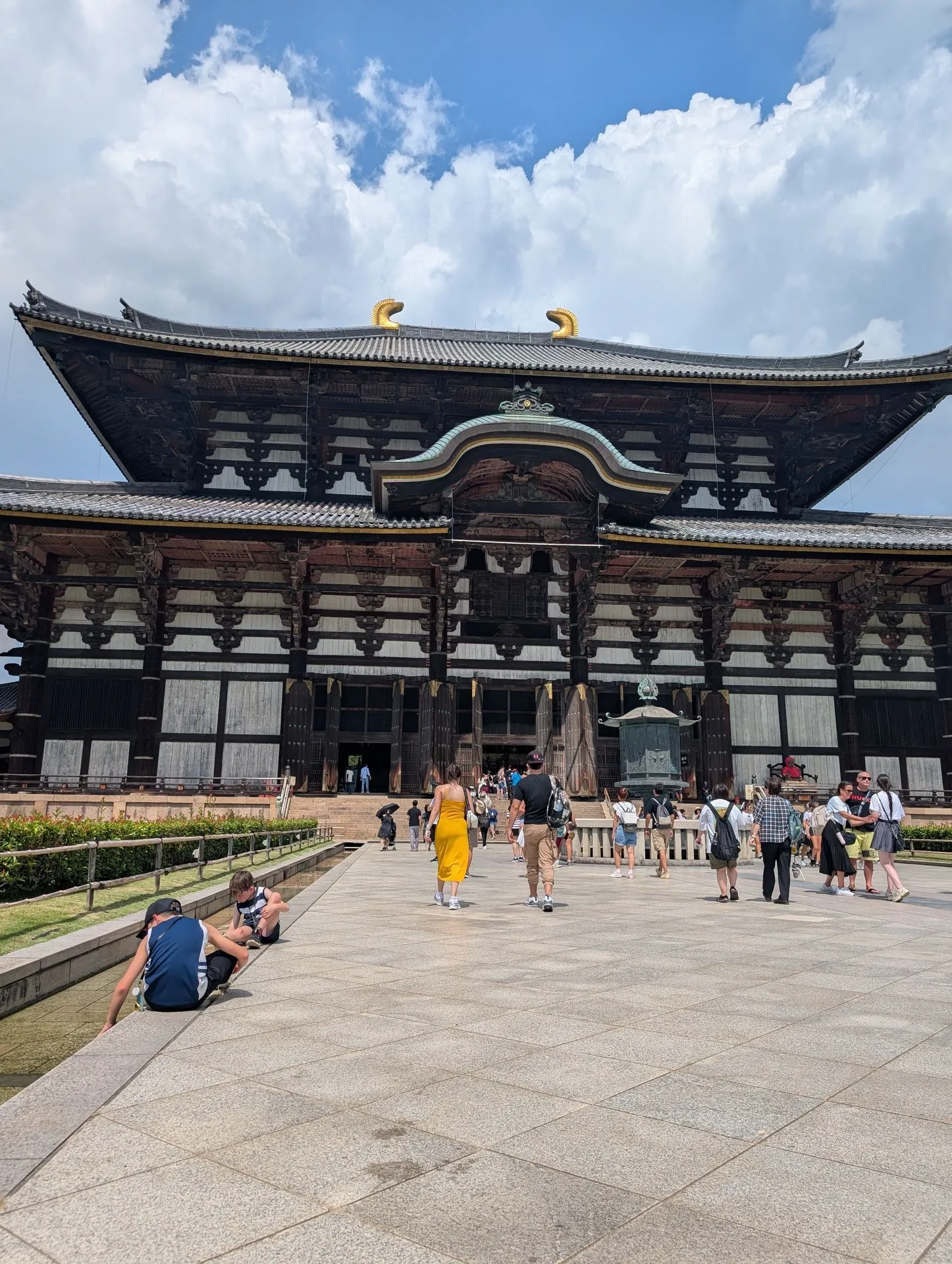
The Daibutsuden (Great Buddha Hall) is even more overwhelming from outside. At 57 metres wide and 48 metres tall, it’s the largest wooden building in the world, and remarkably, it’s only two-thirds of its original size after fires and rebuilds over the centuries. Photos genuinely do not prepare you for standing in front of it.
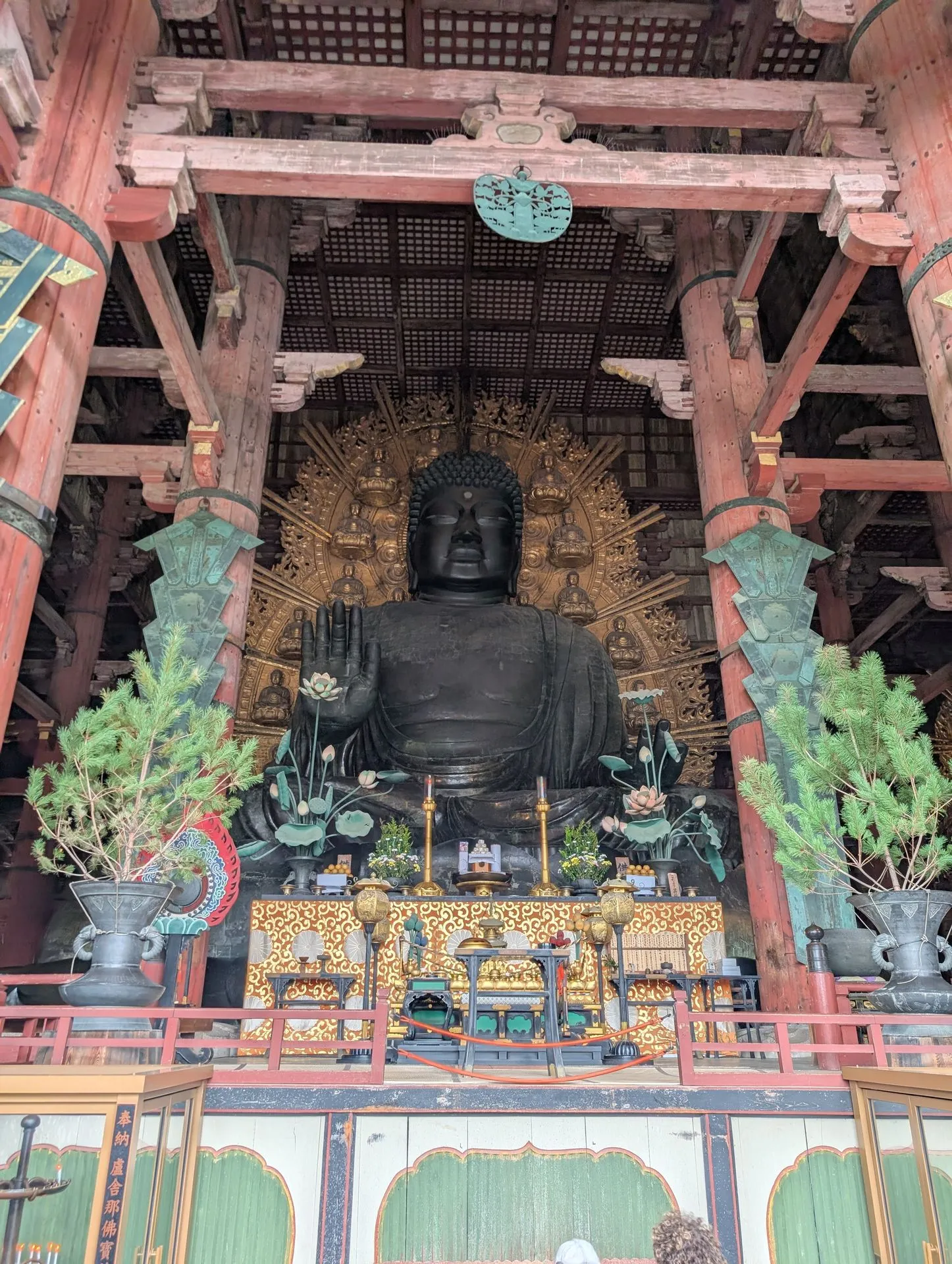
Inside, the Daibutsu himself is staggering. The 15-metre bronze Buddha, Vairocana, the cosmic Buddha, was cast in 752 AD and took the combined resources of much of Japan’s then-population to build. He sits surrounded by lotus flowers and golden attendants, raising one hand in the “have no fear” mudra. Kids stand and stare. Adults stand and stare. It’s one of those places.
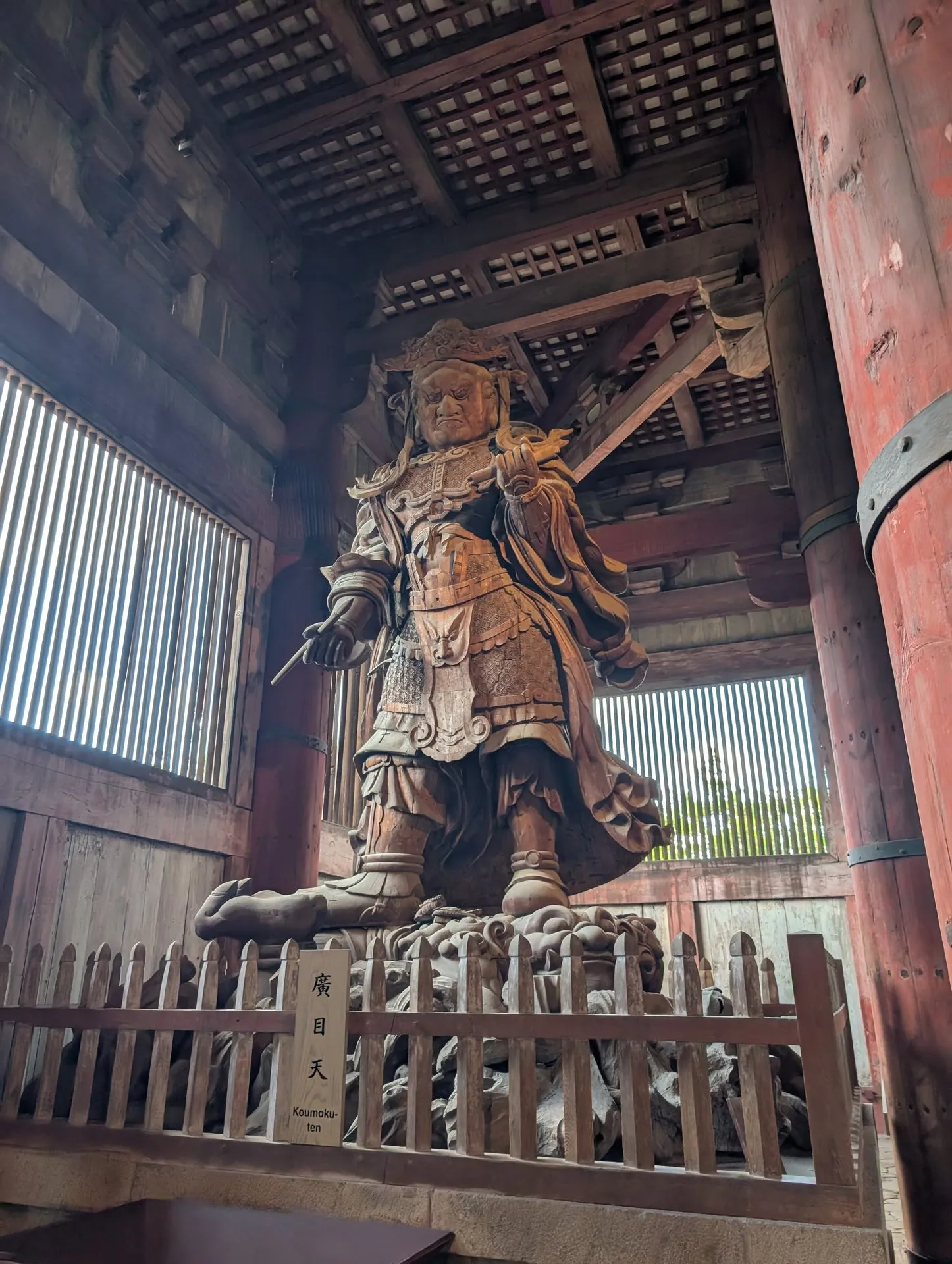
Flanking the Buddha on each side are enormous guardian deity statues. On the right stands Koumoku-ten, the “Widely Seeing” deity, holding a brush and scroll to record the deeds of humanity. These figures are over 7 metres tall and were carved from timber in the 13th century. They’re the kind of thing that genuinely impresses older kids and teenagers who might otherwise rush through a temple.
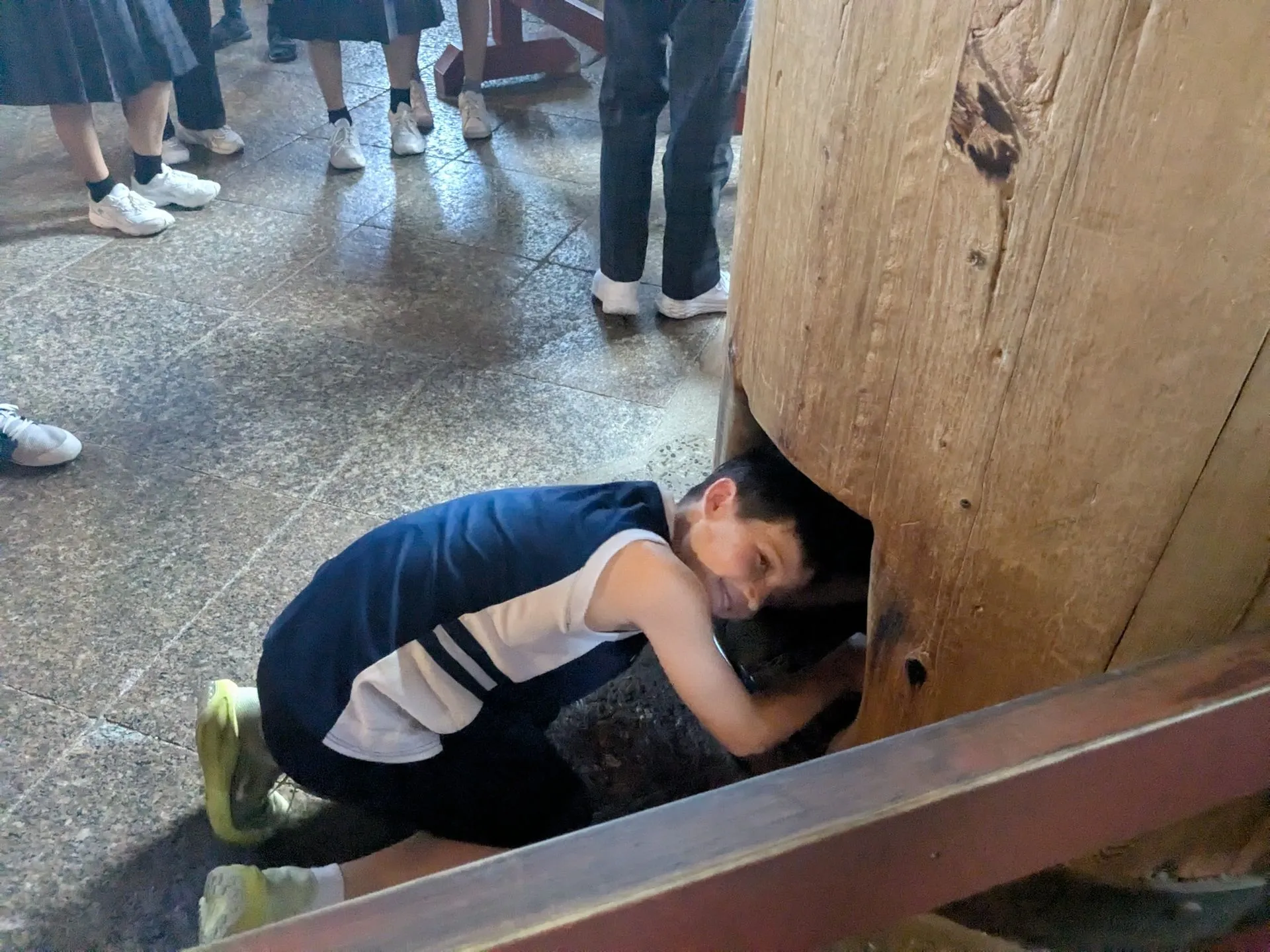
The lucky pillar hole
One of the most-loved traditions inside Todai-ji is the wooden pillar with a small hole cut through its base. The hole is exactly the size of the Great Buddha’s nostril, about 37 centimetres wide, and legend says that anyone who crawls through it will receive enlightenment and good luck in the year ahead.
Queues form throughout the day and the kids love it. The hole is tight enough to make it a genuine challenge for adults, which provides excellent entertainment for the rest of the family watching on. It’s one of those rare temple experiences that is truly interactive for children.
The Todai-ji Museum
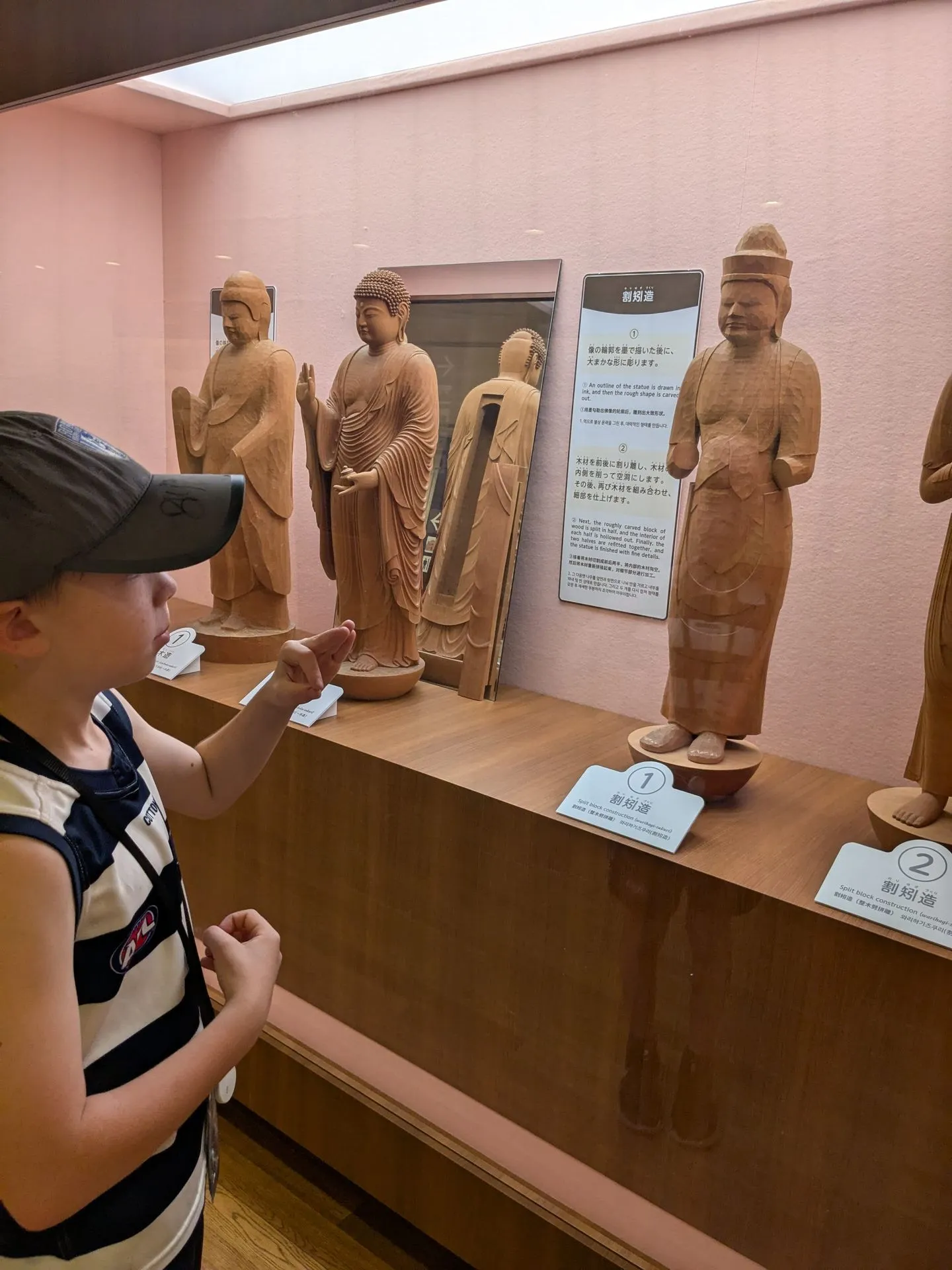
Just beside the main temple, the Todai-ji Museum is worth building into your visit, especially if you have kids who are at least moderately curious. The museum holds rotating exhibitions of the temple’s treasure collection, but the most engaging section for children is the display explaining how Buddhist wooden statues are actually constructed.
The exhibit shows the process from raw timber block to finished statue in numbered stages, with real examples at each step. For children who have just stood next to a 7-metre guardian deity inside the hall, seeing a carved figure at eye level and understanding how it was made adds a layer that genuinely connects. Ours stopped to study it.
Tempted to stay over? Nara after the day-trippers leave, lantern-lit temples, quiet paths and deer at dusk, is a different place. The handful of hotels near the park book out early.
Kofukuji and Naramachi
On your way between Kintetsu Nara Station and Nara Park, you’ll pass Kofukuji Temple, and it’s worth pausing here rather than walking straight through. The recently completed Chukondo (Central Golden Hall) is a striking building. With its deep red pillars and traditional roof with golden ornaments against a clear sky, it is one of the most photogenic buildings in Nara.
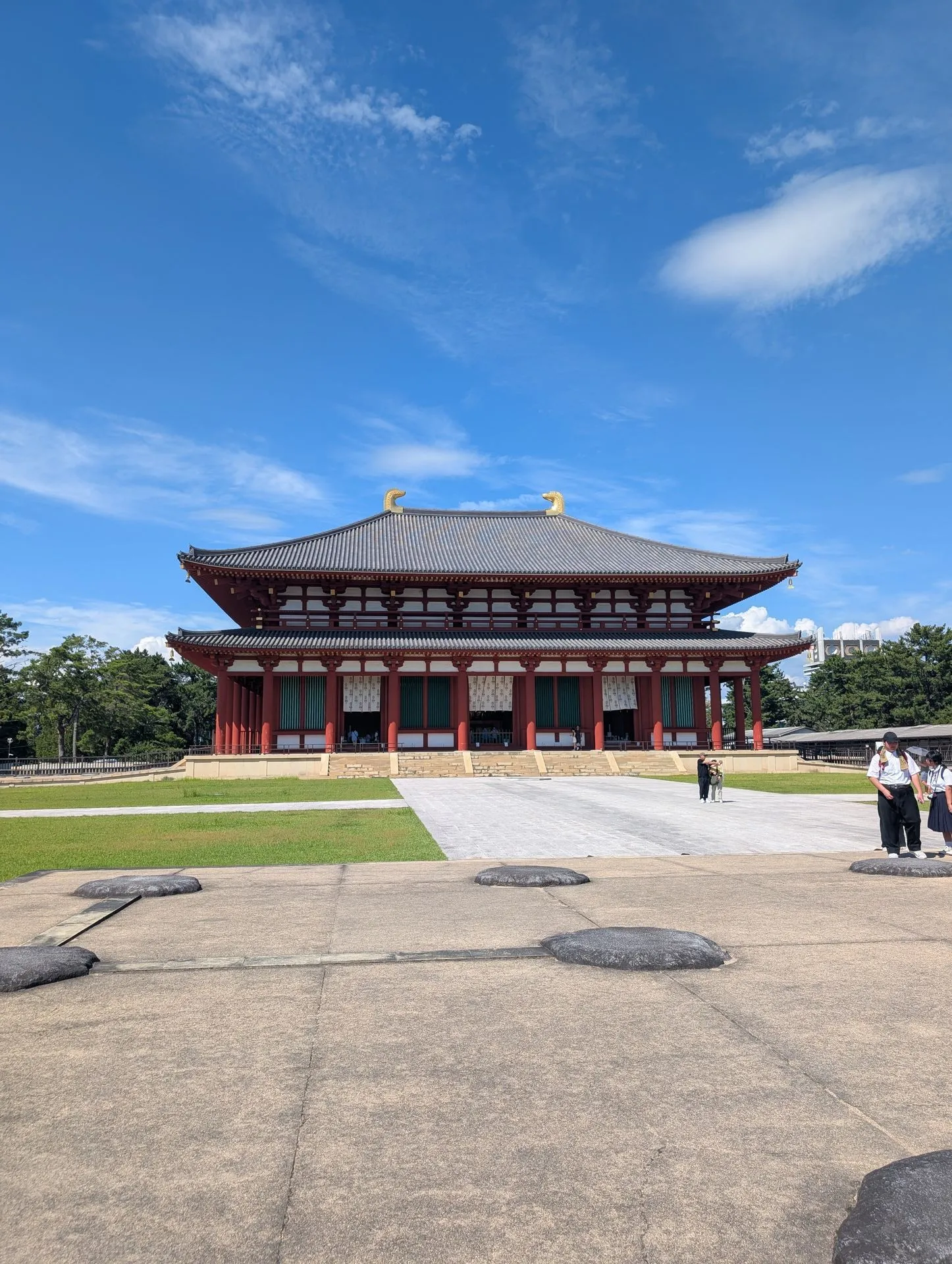
Kofukuji also holds a famous five-storey pagoda and a museum housing some extraordinary Buddhist sculptures, including the eight-armed Ashura figure, one of the most important Buddhist statues in Japan. After Kofukuji, the Naramachi neighbourhood to the south is worth a wander. This preserved merchant district has craft shops, small galleries and traditional machiya townhouses. It’s quiet and uncommercial compared to the busier tourist strips closer to the park.
What to eat in Nara
Nara’s most famous food is kakinoha-zushi, sushi wrapped in persimmon leaves. The leaf isn’t eaten, but its tannins preserve the fish and add a subtle woody fragrance to the rice. The result is delicate and completely unlike anything you’ll find elsewhere in Japan. Made with mackerel or salmon over pressed rice, the portions are small enough that kids can try a piece without committing to a full plate. There is much more on eating in Japan as a family, fussy ones included, in our food guide.
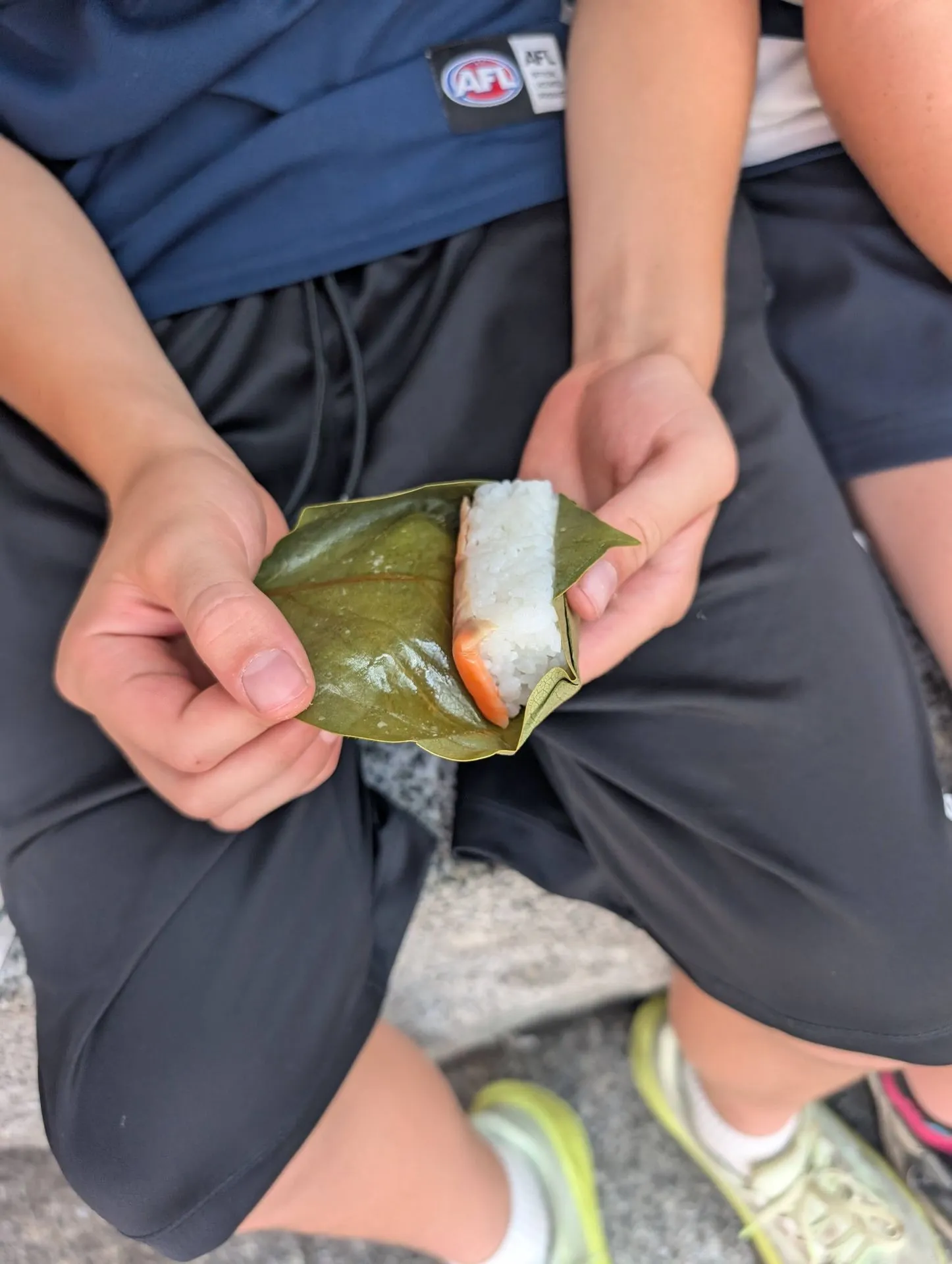
You’ll find kakinoha-zushi at specialist shops near Kintetsu Nara Station and throughout the tourist areas. Expect to pay around ¥200 to ¥300 per piece, or buy a set box to share. Look for Hiraso or Kakinoha-zushi Tanaka, both are long-established producers worth seeking out.
🍱 Kakinoha-zushi
Nara’s signature dish, fish pressed over rice and wrapped in persimmon leaves. Sold at specialist shops near the station. ¥200 to ¥300 per piece. Try both mackerel and salmon varieties.
🍜 Miwa somen
Thin, delicate wheat noodles from the Miwa district of Nara Prefecture. Usually served cold with a light dipping sauce. One of Japan’s oldest noodle traditions, dating back over 1,300 years.
🍡 Yomogi mochi
Green mugwort rice cakes, earthy, chewy and slightly sweet. Common at stalls throughout the park area. Younger children tend to love the mild flavour and sticky texture.
Getting to Nara
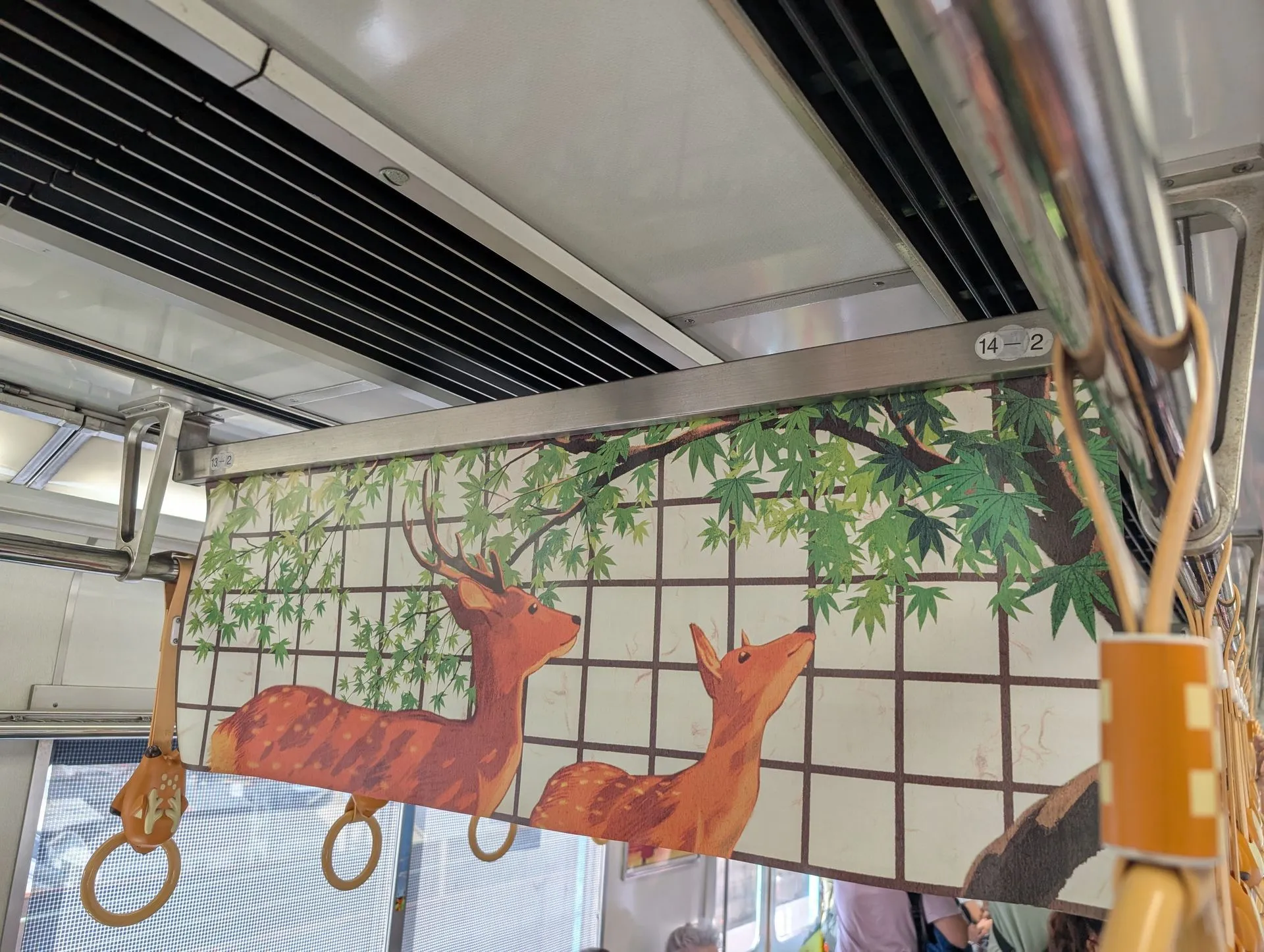
One of the small pleasures of the journey to Nara is the train itself. The Kintetsu line serving Nara is decorated throughout with deer motifs, the overhead advertisement panels, the hanging strap holders, even the seat fabric all carry the deer theme. It’s a small thing, but kids notice it immediately and it does a good job of building anticipation before you arrive.
From Osaka (Namba)
Kintetsu Osaka-Namba Station to Kintetsu Nara Station. Approx. 35 minutes, ¥720 per adult. Direct or one change at Yamato-Saidaiji. The fastest and most convenient option from Osaka.
From Kyoto
Kintetsu-Kyoto Station to Kintetsu Nara Station. Approx. 45 minutes, ¥800 per adult. Or JR Kyoto Station to JR Nara Station on the Yamatoji Line, similar in time. Both are easy options.
IC card tip
Kintetsu trains are not covered by the JR Pass, use your IC card (Suica or ICOCA) to pay as you go. Nara Park is a 15-minute walk from Kintetsu Nara Station. No further transport needed.
Practical tips for visiting Nara with kids
A short list, because Nara is one of the easier days you will have. The trains are covered properly in getting around Japan.
⏰ Go early
Todai-ji opens at 7:30am. Arriving before 9am means far quieter paths and deer who haven’t been overstimulated by crowds yet. This is especially important in summer and October to November peak season.
🌡️ Summer heat
Nara in July and August is genuinely hot and humid. Bring water, hats and sunscreen. The Todai-ji Museum and Nara National Museum are both air-conditioned, use them as planned rest stops.
👟 Comfortable shoes
The walk from the station to Todai-ji is about 20 minutes, and a full circuit of the park adds more. You’ll easily cover 6 to 8km. Skip sandals for younger kids, paths around the temple are uneven gravel.
🦌 Cracker strategy
Buy crackers as you enter the park, not at the station. Carrying visible crackers on the approach means deer will follow you the entire way. Save them for when you’re ready for the full experience.
📸 Best photo spots
The Nandaimon approach with deer in the foreground, inside the Daibutsuden looking up at the Buddha, and the lantern-lined path to Kasuga Taisha are all outstanding. Late afternoon light on the red temple pillars is exceptional.
💴 Cash and luggage
Bring cash, some smaller stalls and restaurants around the park are cash only. If you’re day-tripping, coin lockers at Kintetsu Nara Station (¥500) let you store luggage while you walk.
Want it taken care of? Guided Nara day trips from Osaka and Kyoto include transport, an English-speaking guide and skip some of the planning, useful if Nara is your first stop in Japan.