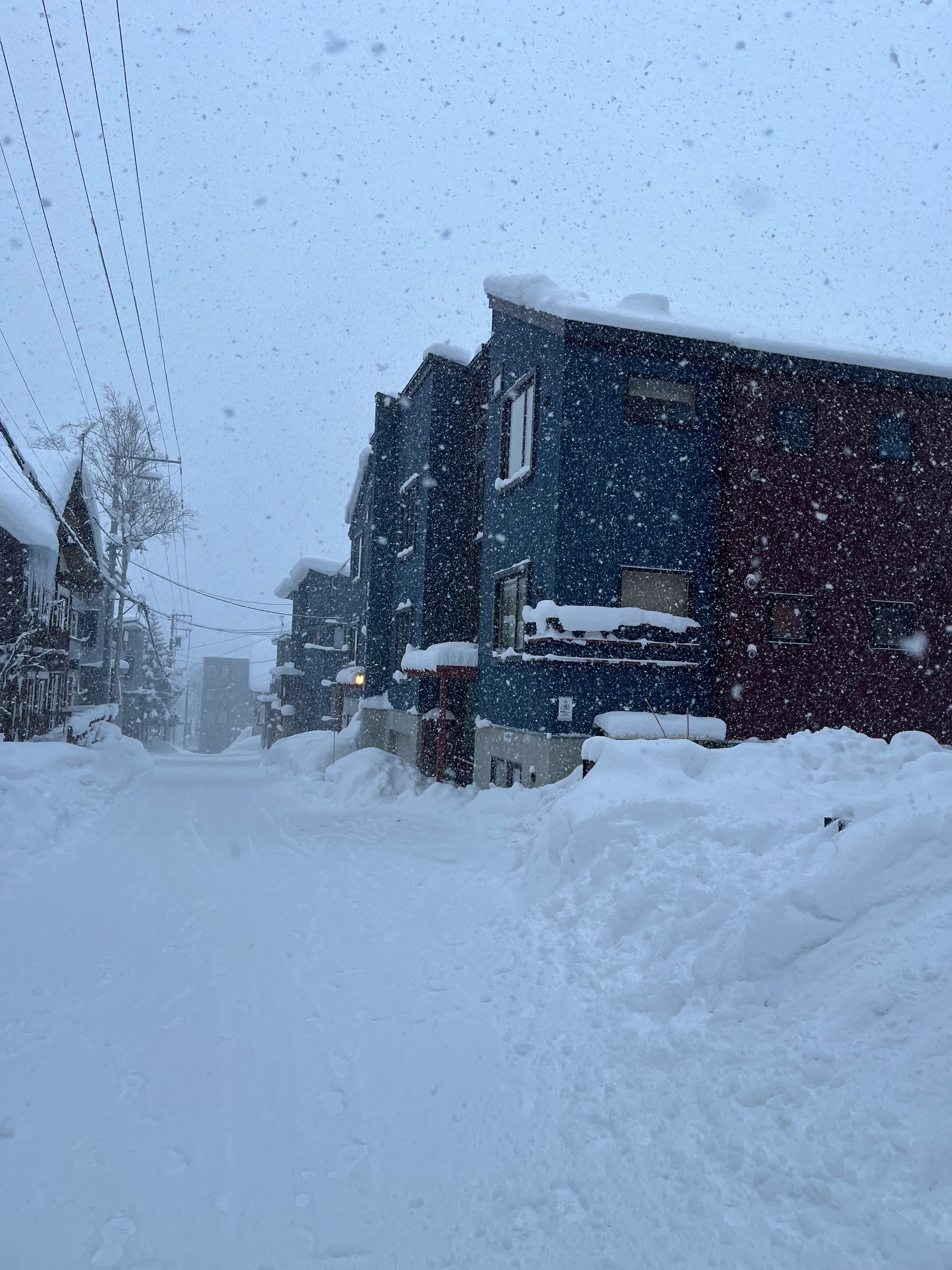
Why Hokkaido is worth a winter trip of its own
Most of this site follows our big family trip through Japan’s cities, temples and trains. Hokkaido was a separate journey altogether, a winter trip north made for one reason, the snow. Japan’s northern island sits far enough up that it catches storm after storm off the Sea of Japan all winter, and what falls is famously light, dry powder. People fly across the world for it. We came up to put the boys on skis.
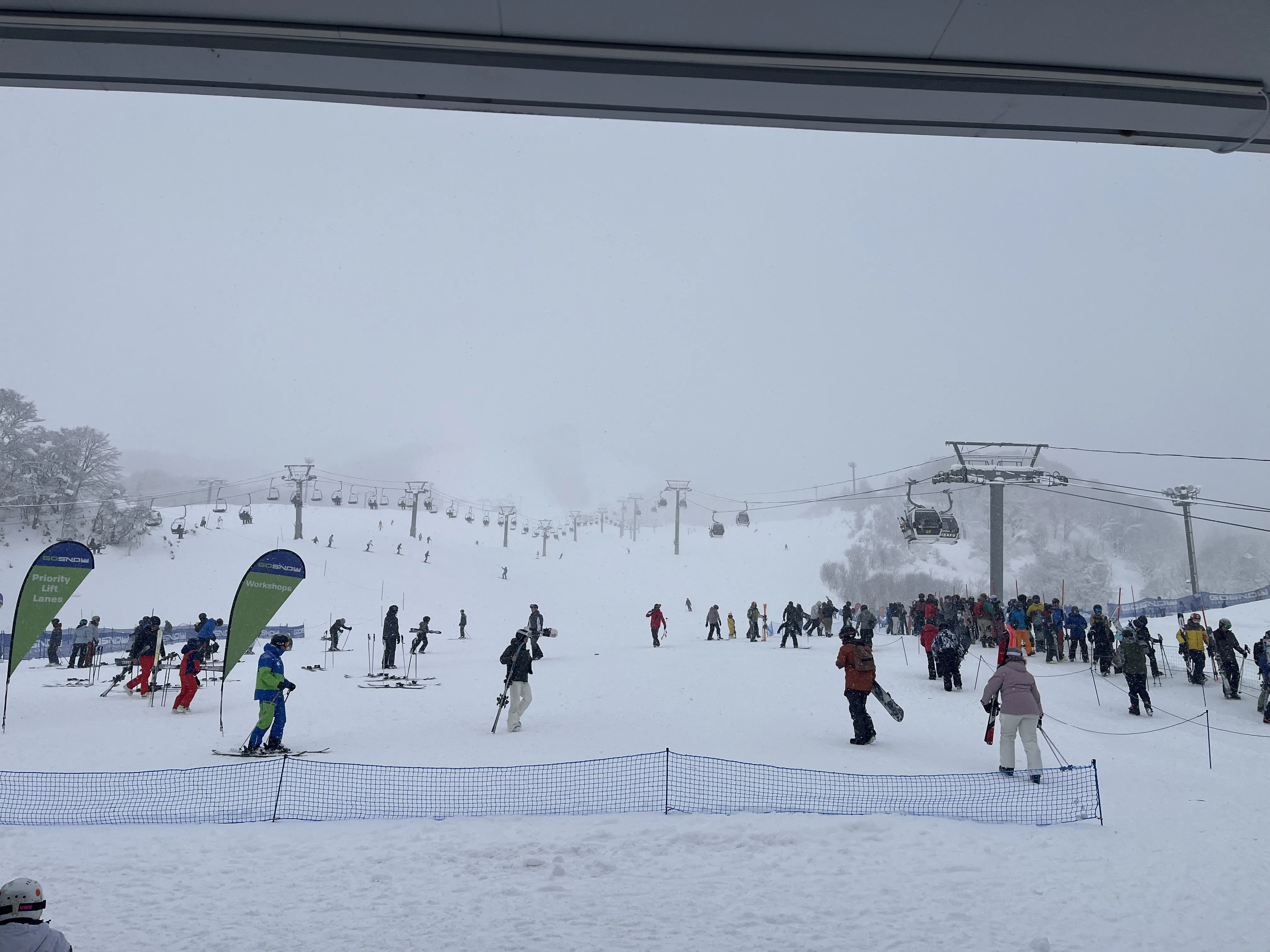
Niseko is the resort most families end up at, and for good reason. The ski schools run lessons in English, the runs are wide and forgiving, the trees are spaced for gentle gliding rather than white-knuckle steeps, and the whole place is compact enough that nobody is ever far from a hot lunch and a warm room. You do not need to be a skiing family to come here.
Planning your own Japan trip? Our planning guides cover flights, trains, food, where to stay and what it cost, all from one family's trip.
Getting there: fly, then drive
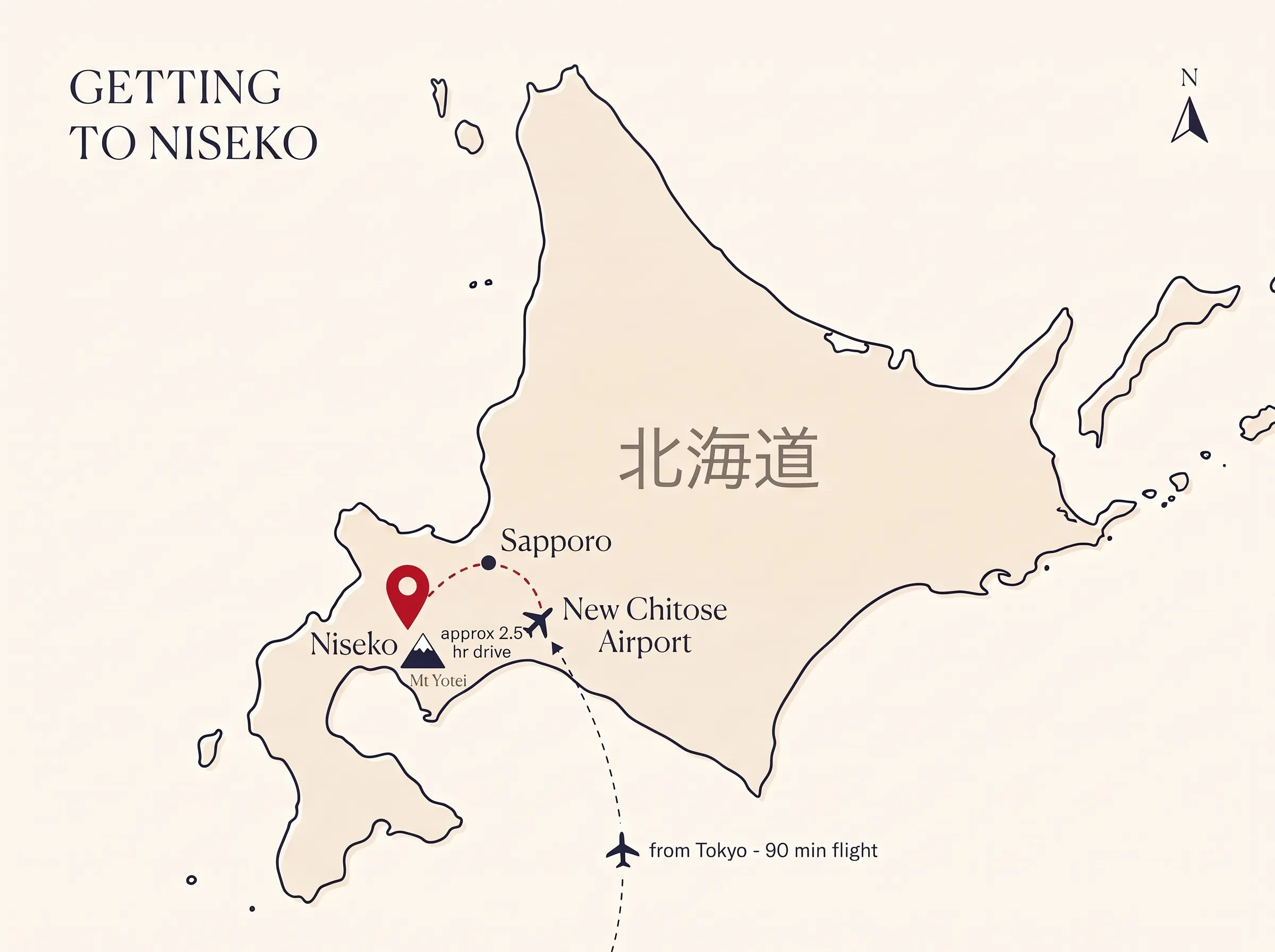
Hokkaido is a long way north, so you fly. Domestic flights from Tokyo (Haneda) into New Chitose Airport take around 90 minutes and run constantly through the day, so it is an easy add-on to a wider Japan trip rather than a separate expedition. New Chitose itself is worth the early arrival. It has an entire floor of food, a Royce’ chocolate factory and even a small Doraemon park. Getting to Japan in the first place, and surviving the long-haul with kids, is its own guide, getting to Japan.
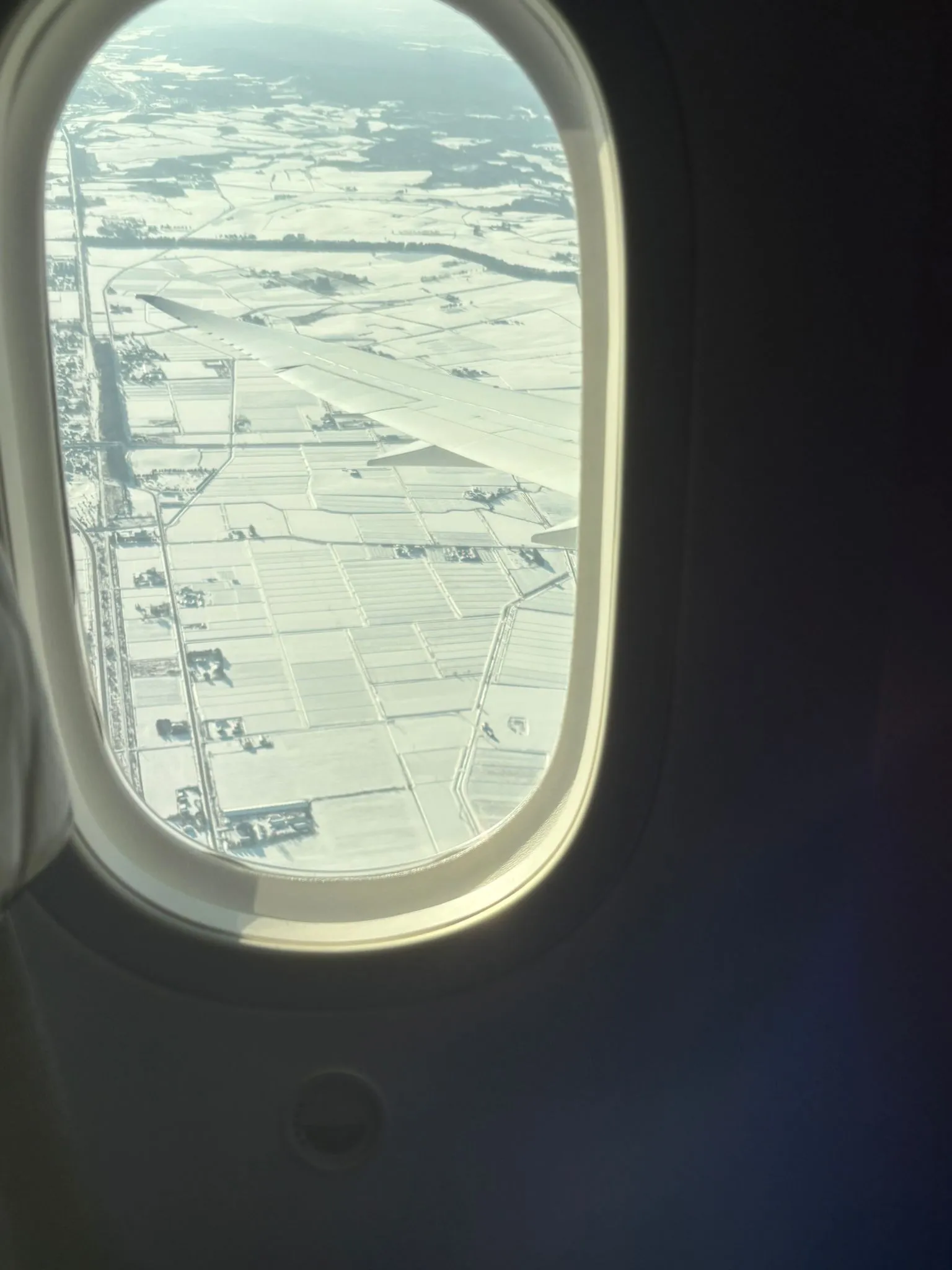
From the airport it is a road transfer of roughly two and a half hours out to Niseko. You watch the towns thin out and the snowbanks climb higher and higher until the road is a single ploughed channel between walls of white. By the time you reach the village the snow is part of the scenery in a way that feels almost unreal.
Getting fitted for gear
The first proper job in Niseko is gear, and it is worth doing well. We went and got everyone fitted for skis, boards and boots before our first day on the mountain rather than scrambling on the morning of the lesson. The rental shops here are set up for exactly this, they do it all day every day, and they are good with kids, with boots checked for fit, skis and boards sized to height and ability, and helmets sorted. A little patience in the shop saves days of cold, miserable feet.
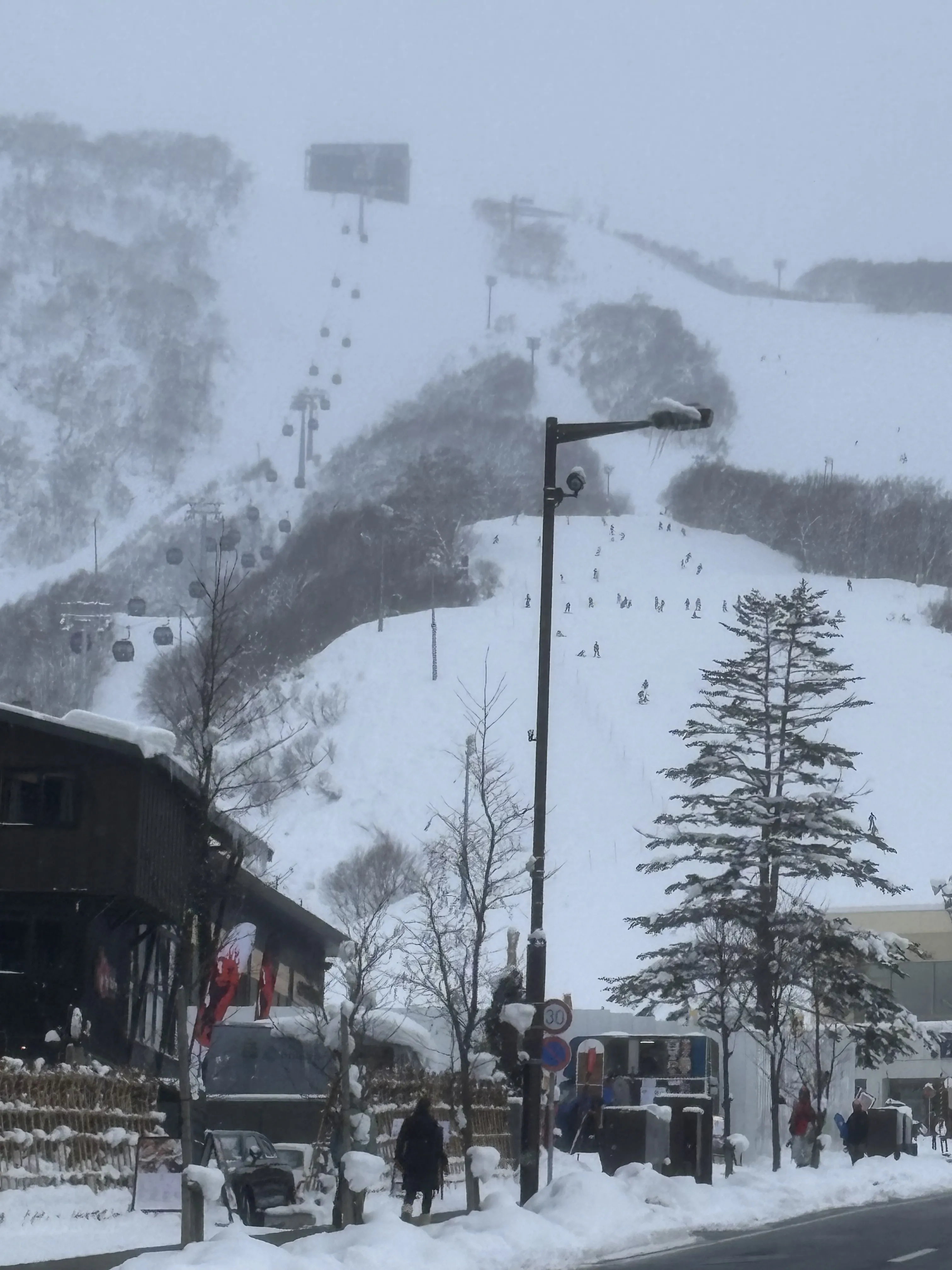
Our strong advice is to rent it all here rather than fly with it. We hired all our gear and flew without skis. Dragging ski gear across the world for a few days on snow is a false economy, and the equipment in Niseko is newer and better suited to the conditions than anything you would haul from home. Hire jackets, pants and goggles too if you do not already own good ones. The kids grow out of last year’s anyway.
Learning to ski and snowboard at Grand Hirafu
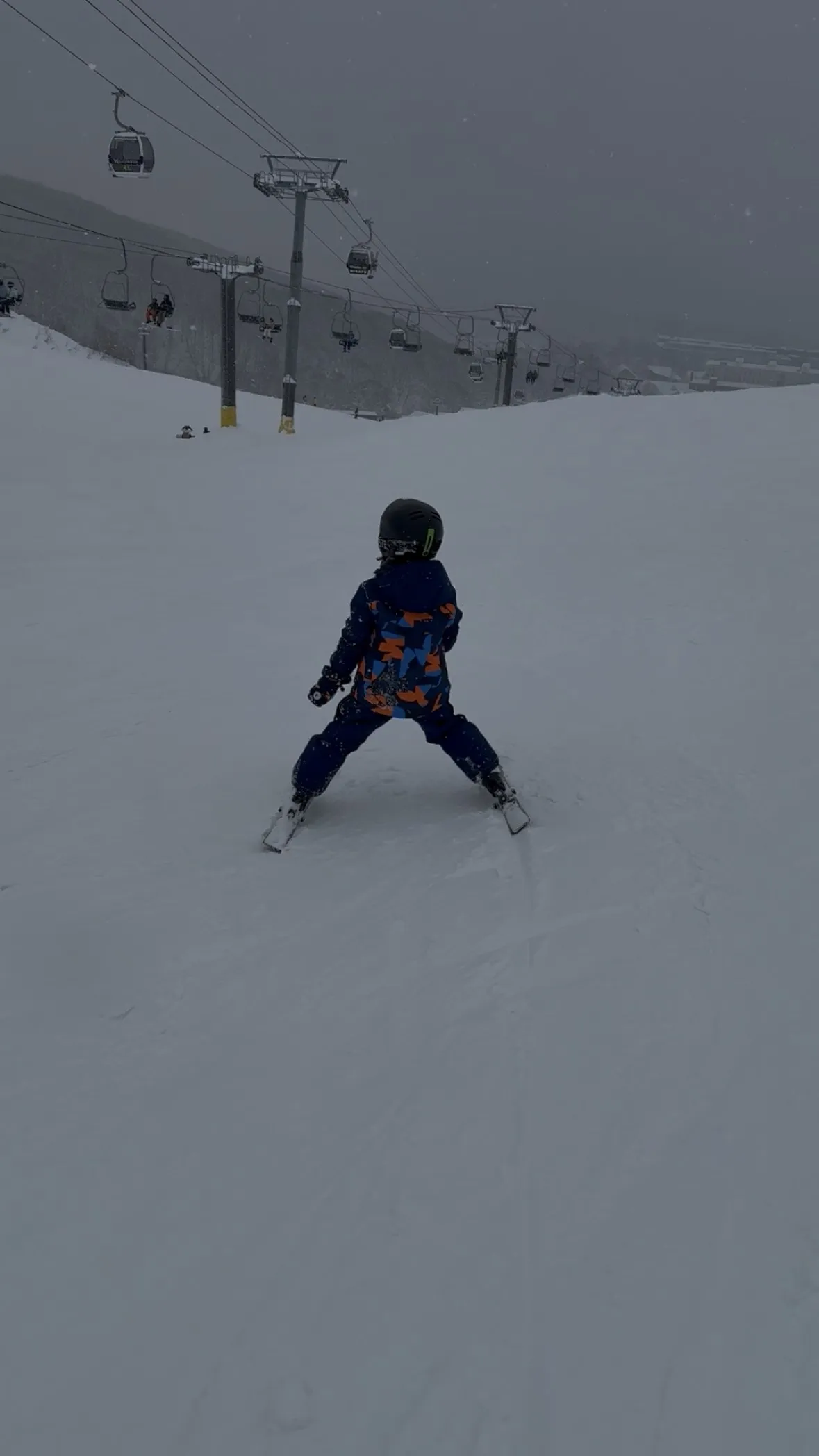
Grand Hirafu is the largest of Niseko’s linked resorts and where we spent most of our time. We booked the boys into a four-hour ski and snowboard lesson. The instructors teach in English, and four hours is long enough to take a child from wobbling on the flat to linking turns on a gentle run.
Then we spent the rest of the day on the mountain together. There is a particular magic to a first real run, snow falling, trees on both sides, a small person in front of you finding their balance and grinning the whole way down. Niseko makes that easy to give them, because the beginner terrain is genuinely beginner terrain, wide and slow, not a steep run with a friendly name.
Niseko United: Grand Hirafu and Niseko Village
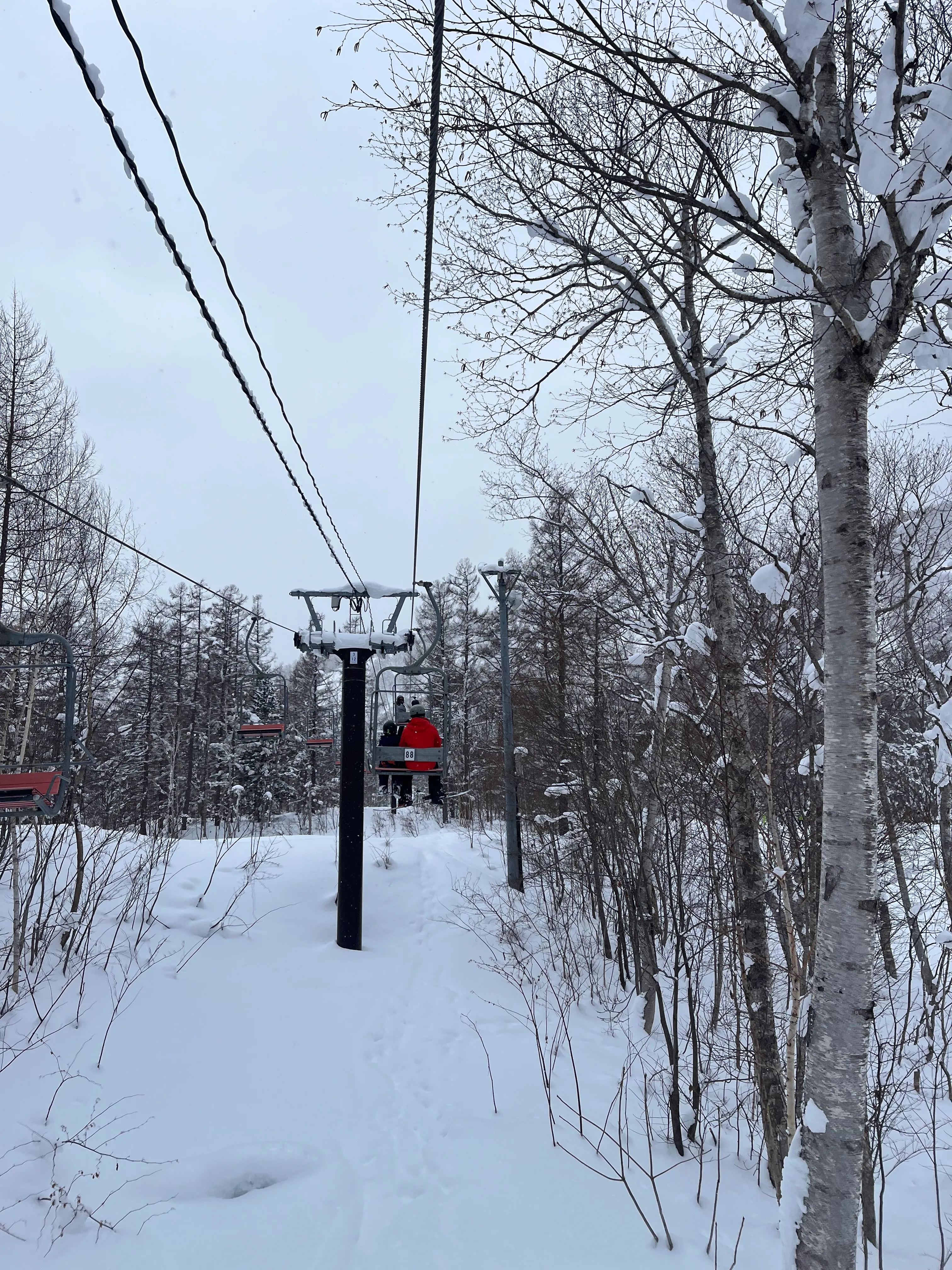
Niseko is really four connected resorts on one mountain, Grand Hirafu, Niseko Village, Annupuri and Hanazono, joined under a single all-mountain lift pass. You do not have to pick just one. We based ourselves at Grand Hirafu and spent a day over at Niseko Village.
After the lesson we came back to Grand Hirafu for the rest of our days, skiing and snowboarding as a family on terrain that we now knew. That rhythm, lessons first to build the skills, then days of just doing it together, is the one we would recommend to any family coming here cold.
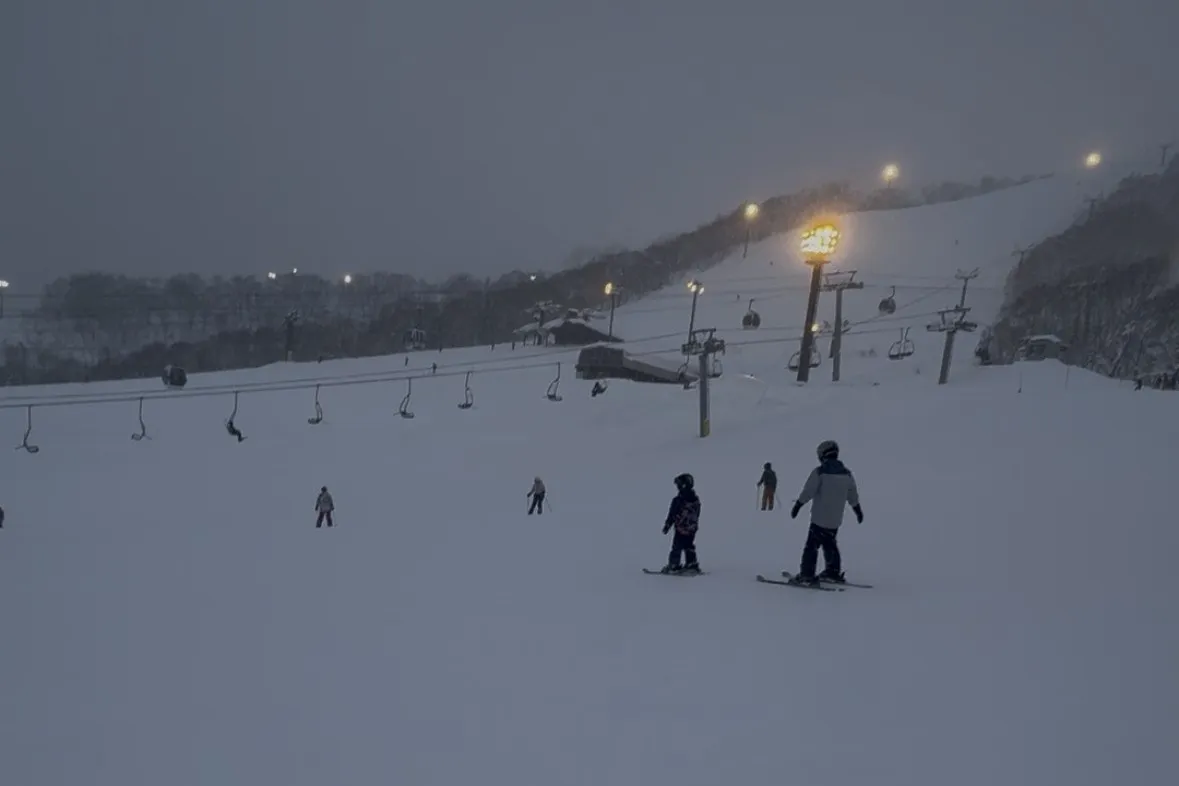
Worth knowing, Grand Hirafu keeps a run lit after dark for night skiing, and it is far calmer than the daytime crowds if you have nervous beginners.
Lift passes and lessons for Niseko United can be sorted before you land, which is worth doing in January and February.
Off the slopes: snow play and the village
Not every moment has to be on a lift. Some of the best of it happened in the snow right outside our apartment, where there was more than enough for the boys to dig, build, throw and disappear into between sessions. When the powder is this deep, the accommodation doorstep is its own playground, and it costs nothing.
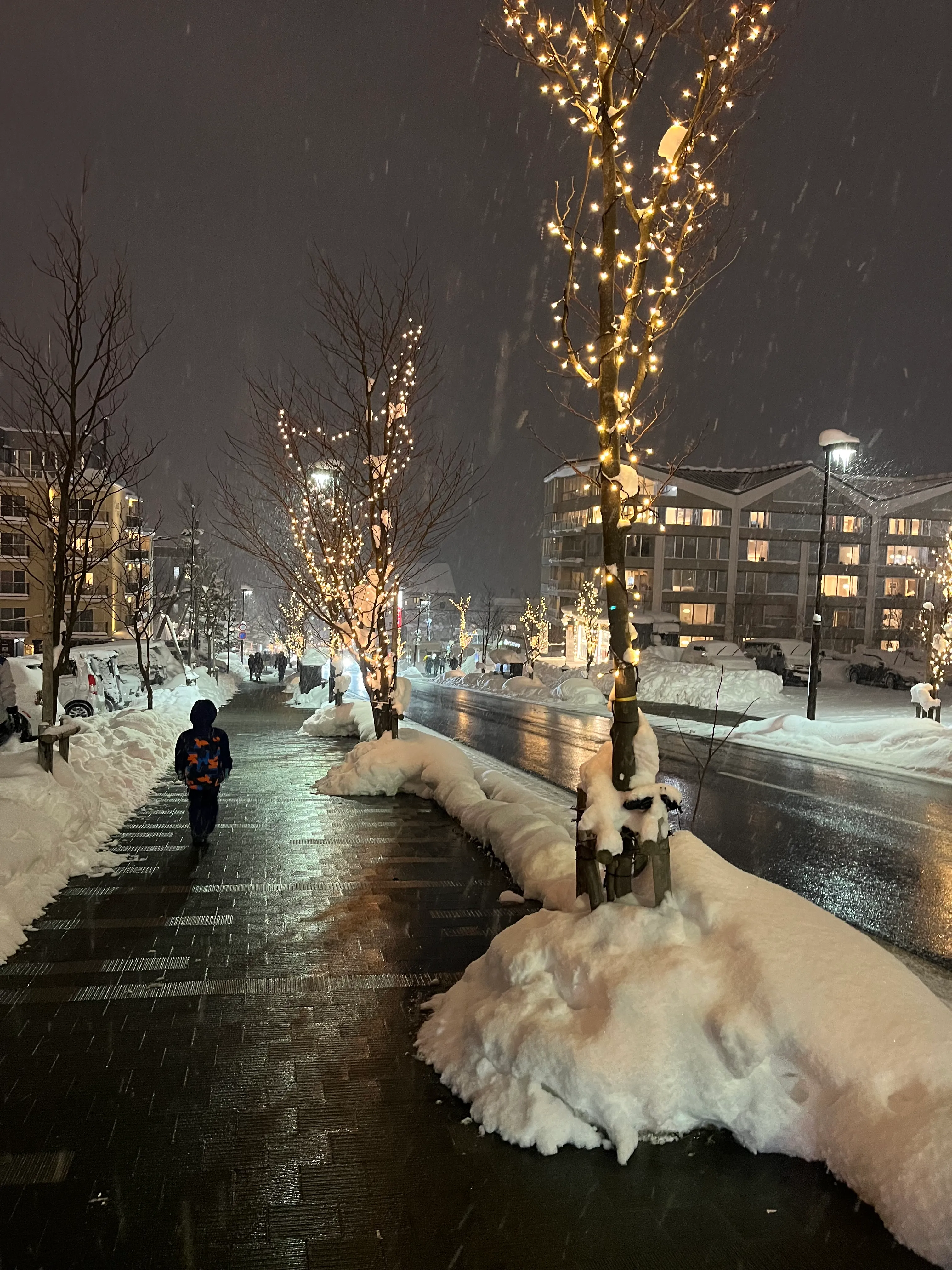
The village comes into its own in the evening. Hirafu’s main street fills with snow, the bare trees are strung with lights, and the whole place glows in a way that feels straight out of a snow globe once the day’s skiing is done. It is small and walkable, with restaurants and ramen spots a short trudge from most accommodation.
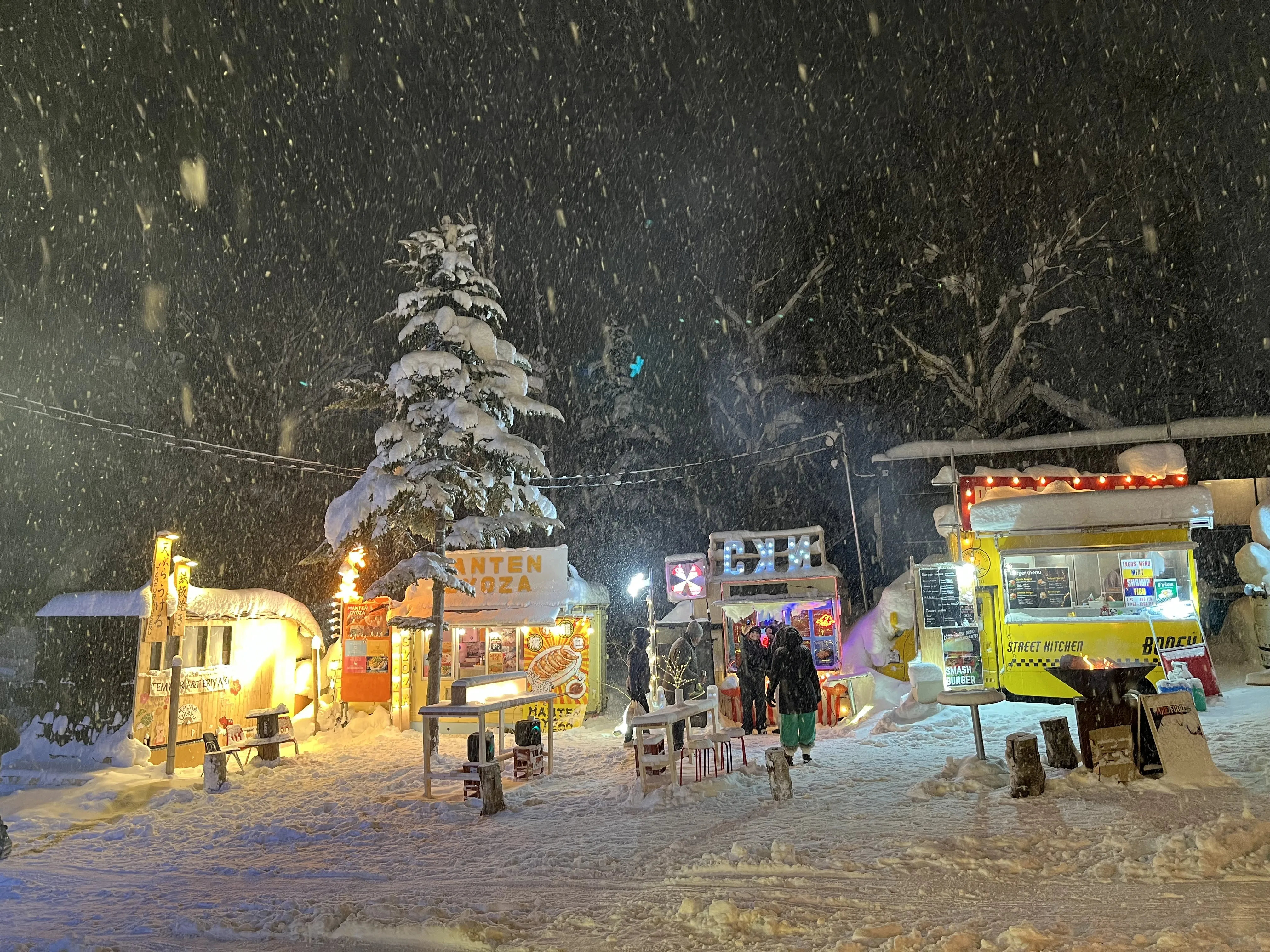
Eating in Hirafu is more fun than you would expect from a ski village. Alongside the restaurants, a cluster of food trucks and stalls sets up in the snow near the base, everything from curry and burgers to gyoza, served out of vans buried to their wheel arches, an easy, cheap night when nobody has the energy to sit down properly.
Where to stay
Like most of our city trip, we went for a self-contained apartment, and in Niseko it makes even more sense. After a day in the cold you want space to spread out wet gear, a kitchen for breakfast before the lifts and somewhere for the kids to crash early. Hirafu has the most accommodation and the easiest access to the village and the main lifts, which is why we based ourselves there. We go into apartments against hotels, and what matters with kids, in where to stay with a family.
You will see “ski-in, ski-out” everywhere, and it is genuinely lovely to step out of your door onto the snow. But it commands a premium, and with a good village location and the local shuttle buses you do not strictly need it. Weigh the convenience against the cost the way you would anywhere. For a family finding its feet, a warm, roomy place a short walk or shuttle from the lifts beats a cramped slope-side studio.
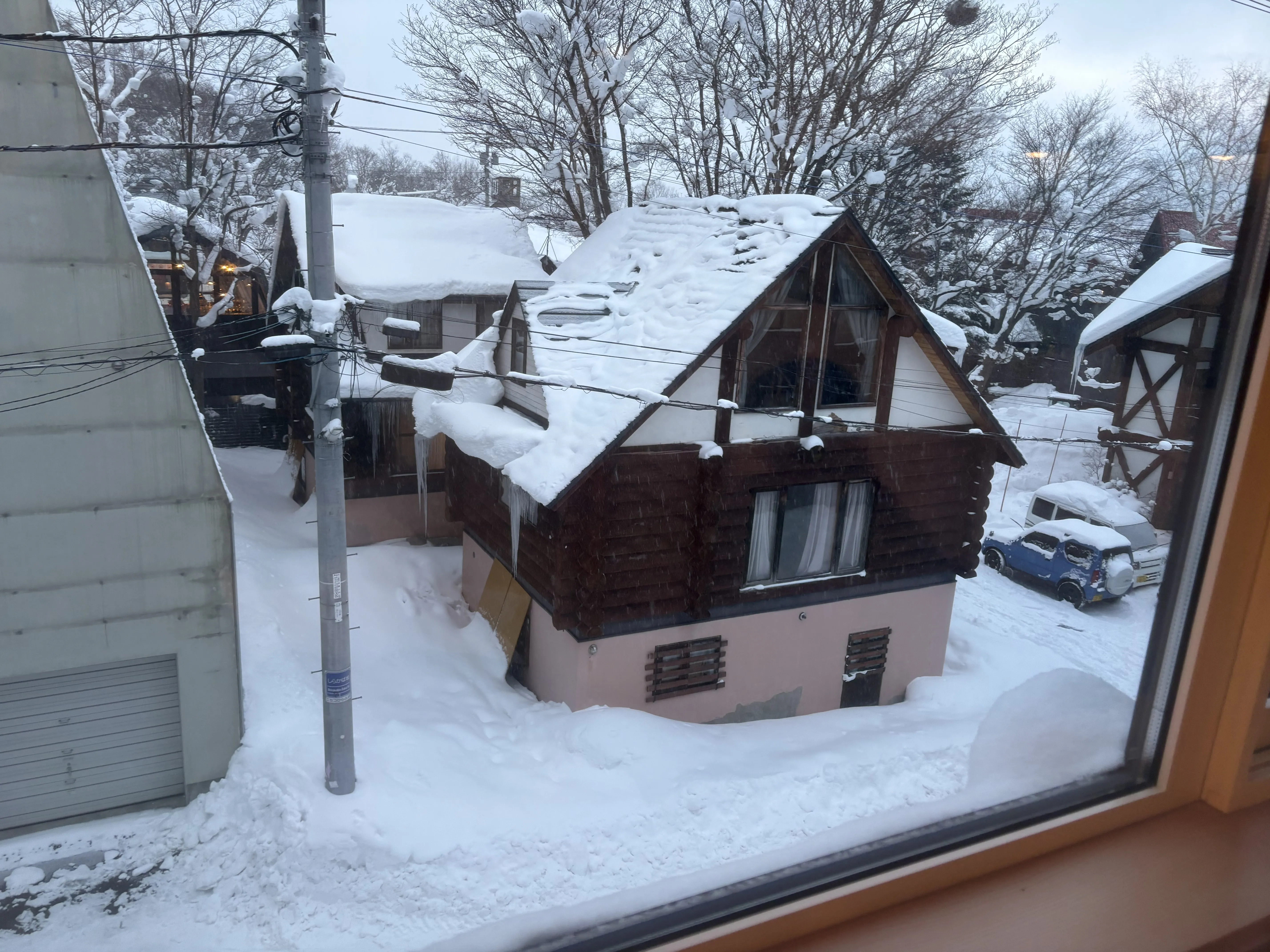
One thing no photo quite prepares you for is the sheer volume of snow around wherever you stay. It piles up over the windows, swallows the parked cars and turns every roofline into a thick white cushion overnight.
Staying in Niseko? Hirafu apartments and family lodges book out months ahead for January and February, the peak powder weeks. Lock in your dates early, especially if you want space for the whole family.
When to go
Niseko’s season runs roughly December to March, and the whole point is the snow, so plan around it. January and February are the deepest, most reliable powder months, when storms roll through and top up the mountain almost daily. They are also the busiest and priciest, so book early. December is building but can be excellent, and March trades some of the depth for longer, brighter days and softer afternoon snow, which is often easier on younger kids who are still learning.
Whenever you come, expect snow to be falling for a good part of your stay. That is not a problem to plan around, it is the reason you are here. The dry, light Hokkaido powder is what makes the place worth the flight north.
Practical tips for Niseko with kids
What we would tell any family heading to the snow. A ski trip moves a family budget more than a city one, so read what our September city trip cost knowing it covers the cities, not the snow.
🎿 Book lessons before you arrive
Niseko’s English-language ski schools sell out peak-season slots weeks ahead. Reserve when you book accommodation. Morning sessions suit kids best.
🛷 Rent gear, don't fly with it
Skis, boards, boots, helmets and outerwear are all available locally and better suited to the conditions. Get everyone fitted on arrival, before your first day on the mountain.
🚐 Pre-book the airport transfer
The road from New Chitose to Niseko is about two and a half hours. Book a shared or private transfer in advance, and leave a weather buffer at the airport.
🧥 Layer up, pack spare gloves
Thermal base layer, mid layer, waterproof shell. Kids heat up moving and chill the moment they stop. Spare gloves are the most valuable thing in your bag.
🎟️ Get the Niseko United pass
One all-mountain pass covers Grand Hirafu, Niseko Village, Annupuri and Hanazono. Simplest option for a multi-day family stay, and you can chase the better snow each day.
❄️ Plan around the snow, not the sun
January and February are the deepest powder. Expect snowfall for much of your stay. That is the feature, not the bug, and it is why the skiing here is so good.
Planning your own Japan trip? Our planning guides cover flights, trains, food, where to stay and what it cost, all from one family's trip.