Japan costs less than you'd think.
It has a reputation for being expensive. For families who travel the way we do, it just isn't. Our own trip ran close to A$17,000 for nearly three weeks, all four of us, flights included. That is roughly US$11,000, though the rate moves, so treat the conversion as a guide and the Australian figure as the real one. Here's roughly how it splits, and how we kept it from being a lot more.
Expensive? Not for families.
That A$17,000 (about US$11,000 or £8,800) sounds like a lot until you spread it across the days. Take out the airfares, the single biggest cost, and if flights ran around A$5,000 that leaves roughly A$600 a day on the ground (about US$390 or £310) for the whole family.
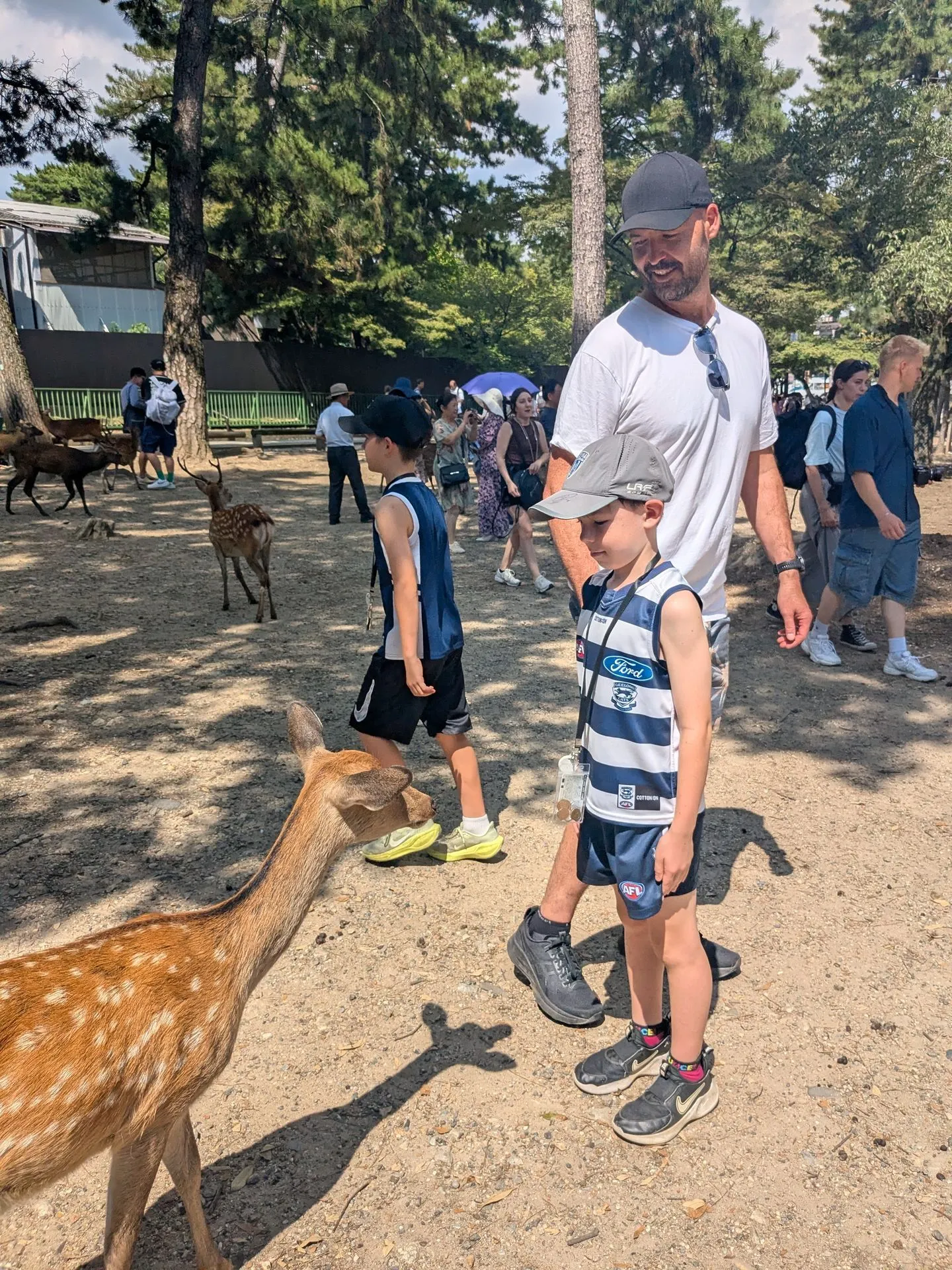
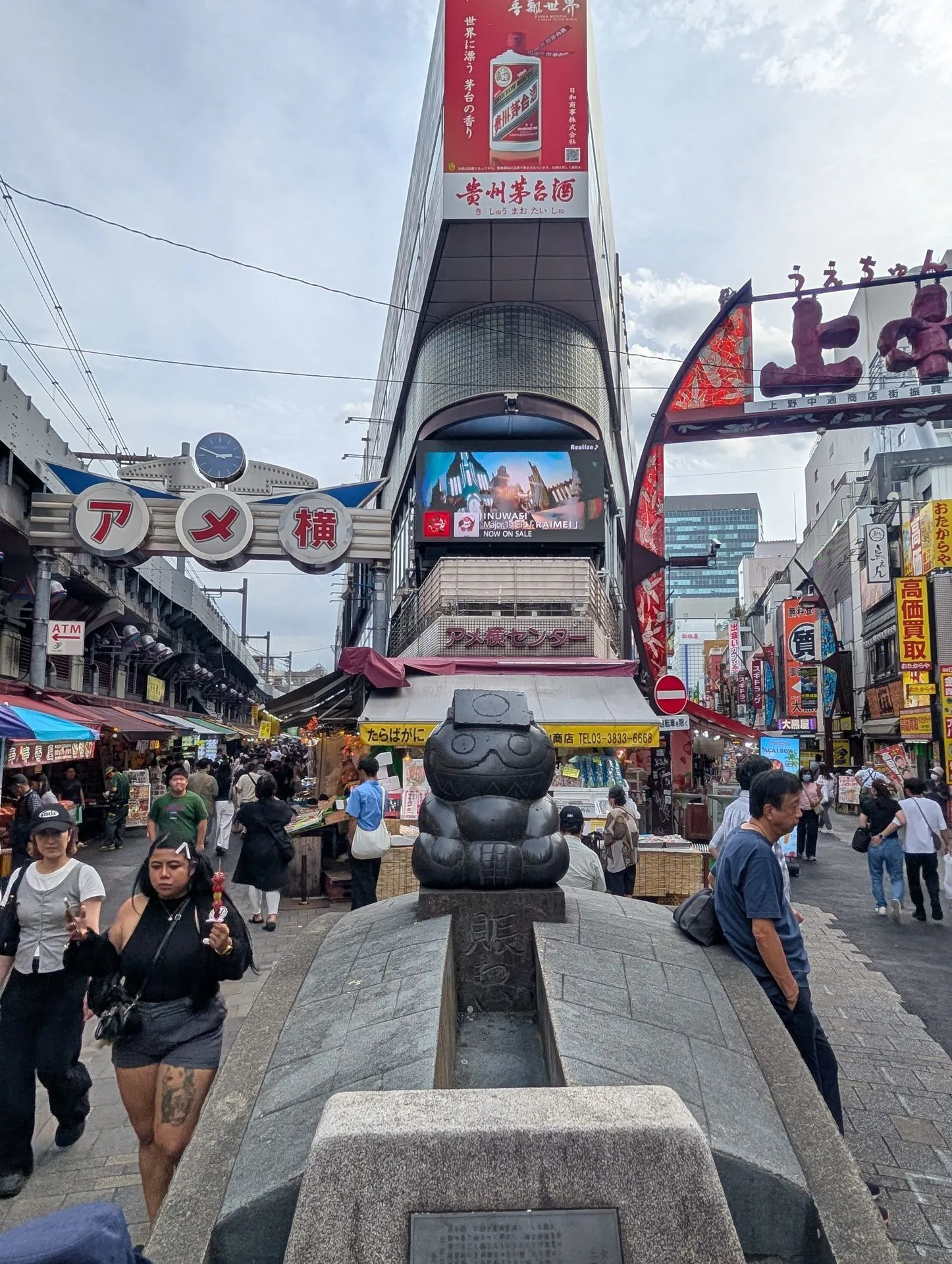
Staying in apartments rather than cramming into single hotel rooms gave everyone space and a kitchen, which quietly cut both the accommodation and food bills. The trains cost a fraction of a rental car, and plenty of our best moments, the parks, the shrines, the deer, were free.
The breakdown, line by line.
Our A$17,000 total was real; how it split is roughly this. The figures below are a starting point for a two-week family-of-four trip, in Australian dollars (roughly A$100 = US$65 = £52 at the time of writing, so check today's rate). Scale them to your own dates. The two big levers are flights and theme-park days.
- Flights
- Return economy for four from Australia’s east coast. Your biggest single line, and the one that swings most with timing and how early you book.
- Accommodation
- A self-contained apartment that sleeps four, which is mostly what we booked, often beats two hotel rooms on price and adds a kitchen. Around A$150 to A$260 a night. Book early for blossom and autumn-leaf seasons.
- Rail & transport
- IC cards for daily trains and buses, plus one Shinkansen leg for four. No rental car, no parking, no tolls.
- Food
- Roughly A$90 to A$140 a day, mixing konbini and supermarket meals with proper restaurant dinners. Eating well here is genuinely cheap.
- Activities & entry
- The big variable. Disney and Universal days push it up fast; temples, parks and the deer cost little or nothing.
As a rule of thumb, allow around A$600 a day on the ground (about US$390 / £310) for four, plus flights and any theme-park days. Our own trip, nearly three weeks with the lot, came to about A$17,000 (US$11,000 / £8,800).
The treats that pushed it up.
Our A$17,000 wasn't a bare-bones trip. We chose a handful of premium experiences that pushed the total up. Trim these and you'll spend noticeably less.
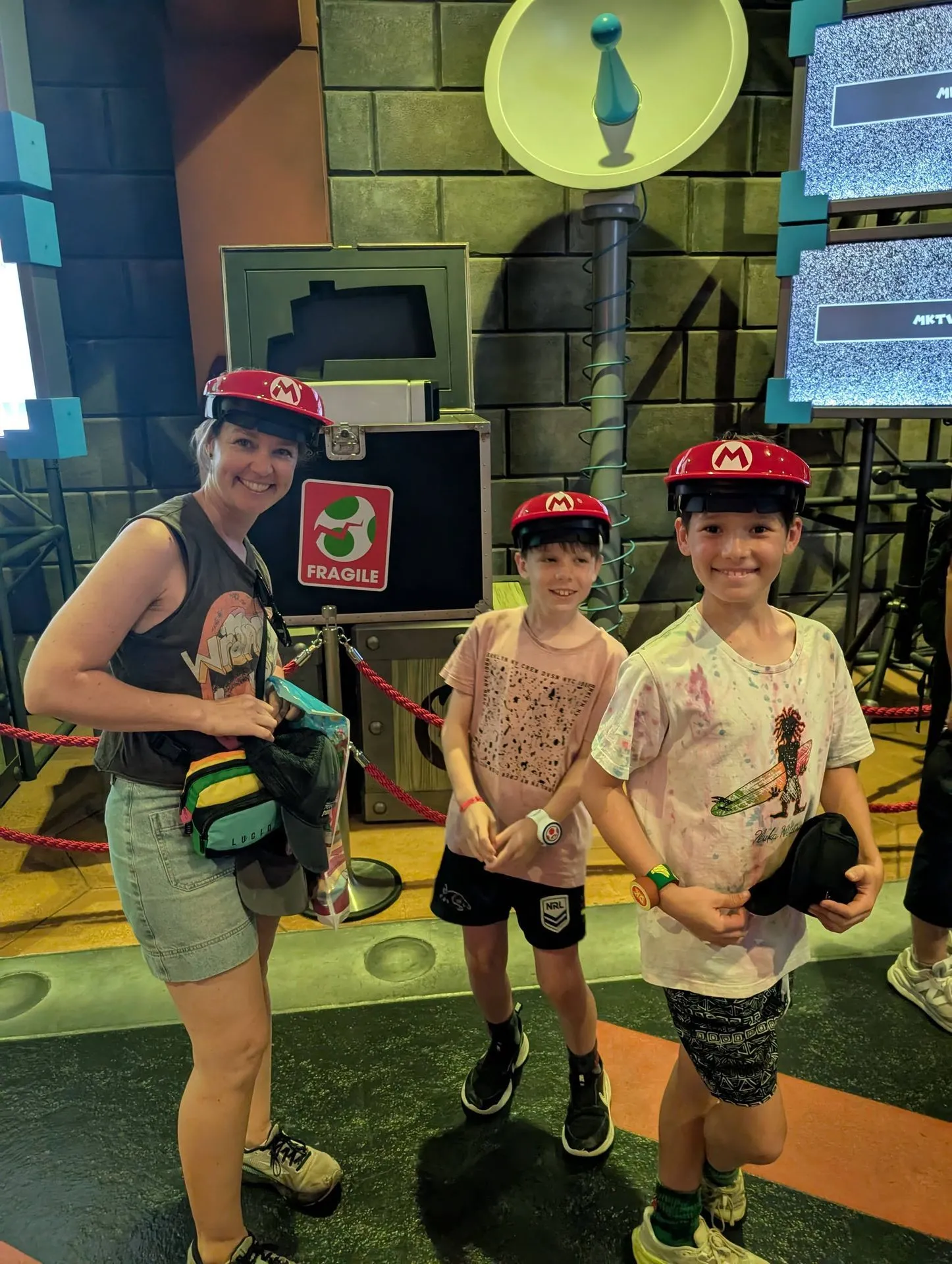
- Theme-park days, Express passes and all
- Disney and Universal are not cheap, and the skip-the-line Express passes at Universal cost extra again. On a packed day we did not regret a cent, and we’d buy the same pass again.
- A sumo show
- The boys watched a match, then dressed up and had a match of their own. Worth every yen.
- A sushi-making class in Shibuya
- Hands-on, genuinely fun, and everyone really enjoyed it. Not cheap, completely worth it.
- The Shinkansen
- Not the cheapest way between cities, buses and slower trains undercut it, but gliding along at up to 285km/h is an experience in itself. We paid for it gladly.
- A few proper restaurant meals
- We did not eat cheap every day. A handful of nicer meals, like lunch at Spring Valley Brewery in Kyoto, cost well above the konbini average.
The savings that actually added up.
None of these felt like going without. They're just how locals do it.
- Book an apartment, not two hotel rooms
- A self-contained unit that sleeps all four usually costs less than a pair of hotel rooms, and the kitchen means cheap breakfasts and the odd dinner in.
- Let the konbini and supermarkets feed you
- Breakfast and lunch from 7-Eleven, FamilyMart or the supermarket hot counter costs a few dollars a head and the kids love it. Save the restaurant budget for dinners.
- Order the lunch set
- The same restaurant that is pricey at dinner often does a teishoku lunch set for half the money. Eat your big meal at midday.
- Do the IC card vs JR Pass maths
- The JR Pass is no longer the automatic deal it once was. For a city-heavy family trip, pay-as-you-go IC cards plus a couple of single Shinkansen tickets is often cheaper. Add it up first.
- Lean on the free stuff
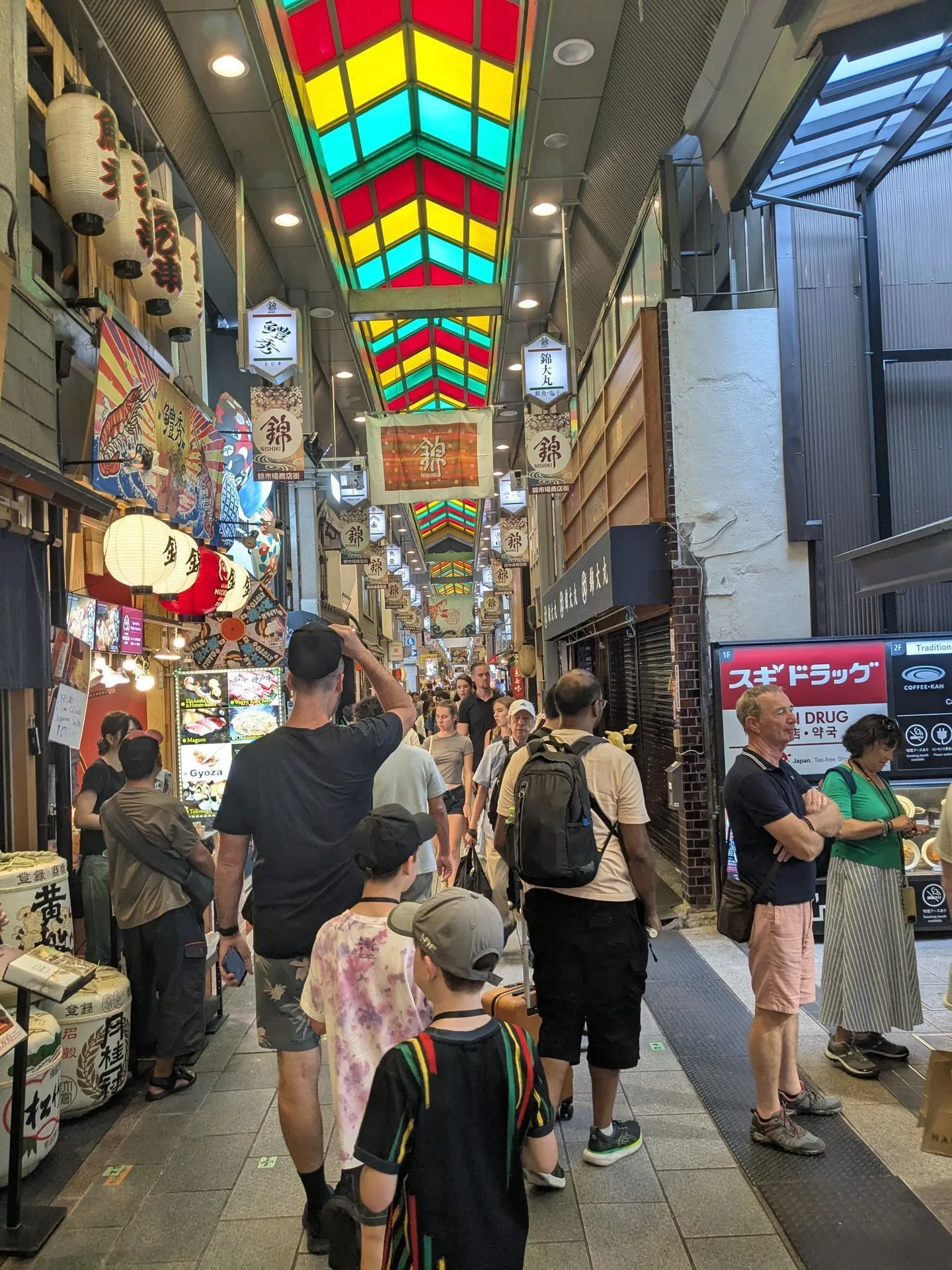
- Parks, shrines, markets, riverbanks and the deer are free or close to it, and they are some of the best days you will have. You do not need a paid attraction every day.
- Refill, don’t rebuy
- Tap water is safe and free, and vending-machine drinks are cheap. A refillable bottle each saves a surprising amount over two weeks.
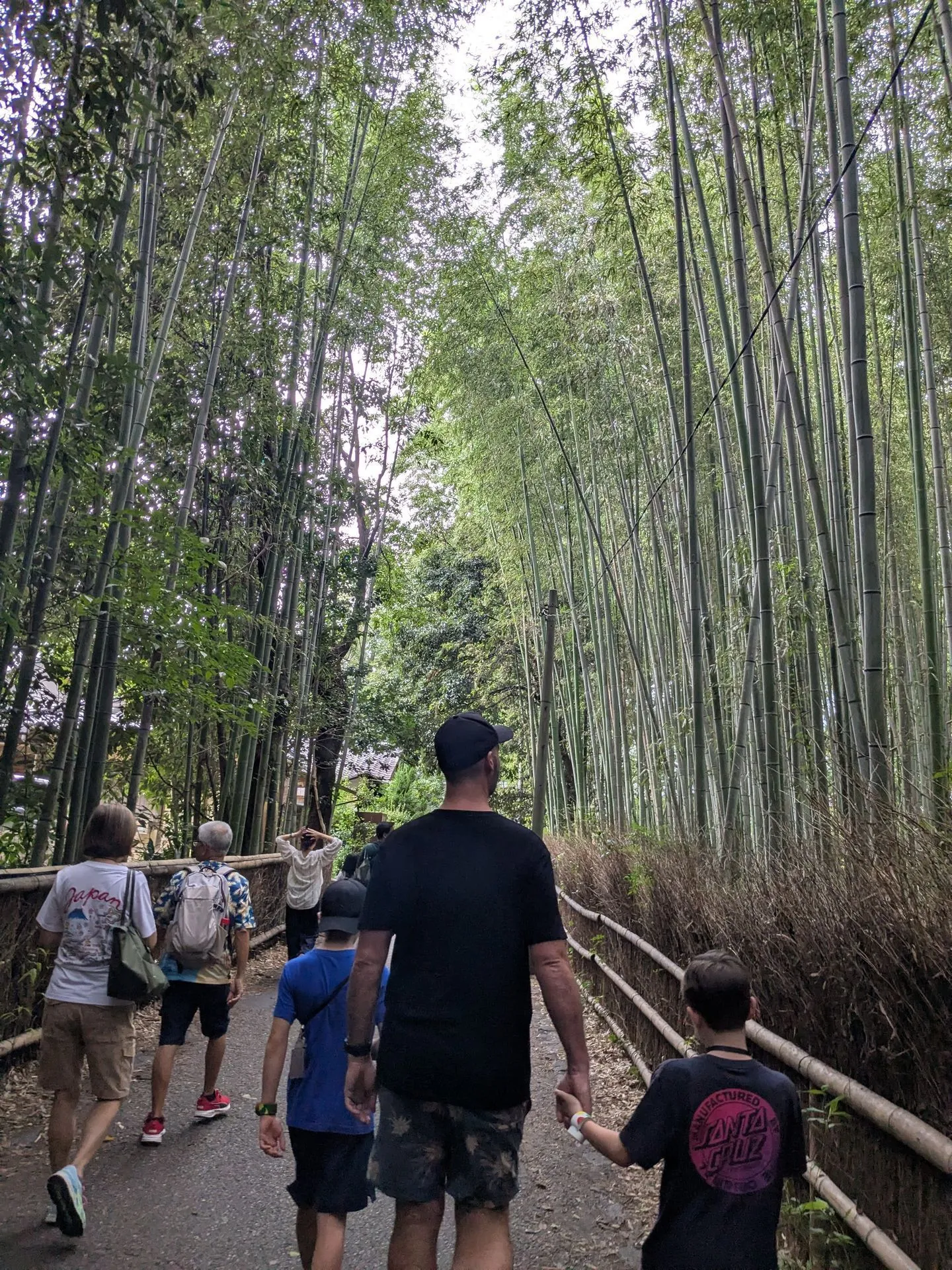
You could fill a week spending almost nothing.
If the budget gets tight, lean into these and you'll still have a brilliant trip.
For where these days actually fell, and the order we did them in, see our two week itinerary.
- Nara’s deer park, bowing for crackers
- Temple and shrine grounds, often free to wander
- The Arashiyama bamboo grove and riverbank
- Covered market arcades, made for window-grazing
- Big-city parks and playgrounds between the sights
- Just riding the trains, an attraction in themselves
Plan it the way we would.
We planned this trip ourselves, paid for it ourselves, and wrote down what worked and what did not. All of it is on the site, free, with nothing to sign up for.
- Where to go, and how long to give each place
- What to book ahead, and what to skip
- Getting around with kids, without the guesswork
- What it actually cost us
The planning guides
Flights, trains, money, food, insurance and where to stay. Written after the trip, not before it.
Read the guides → Browse destinations